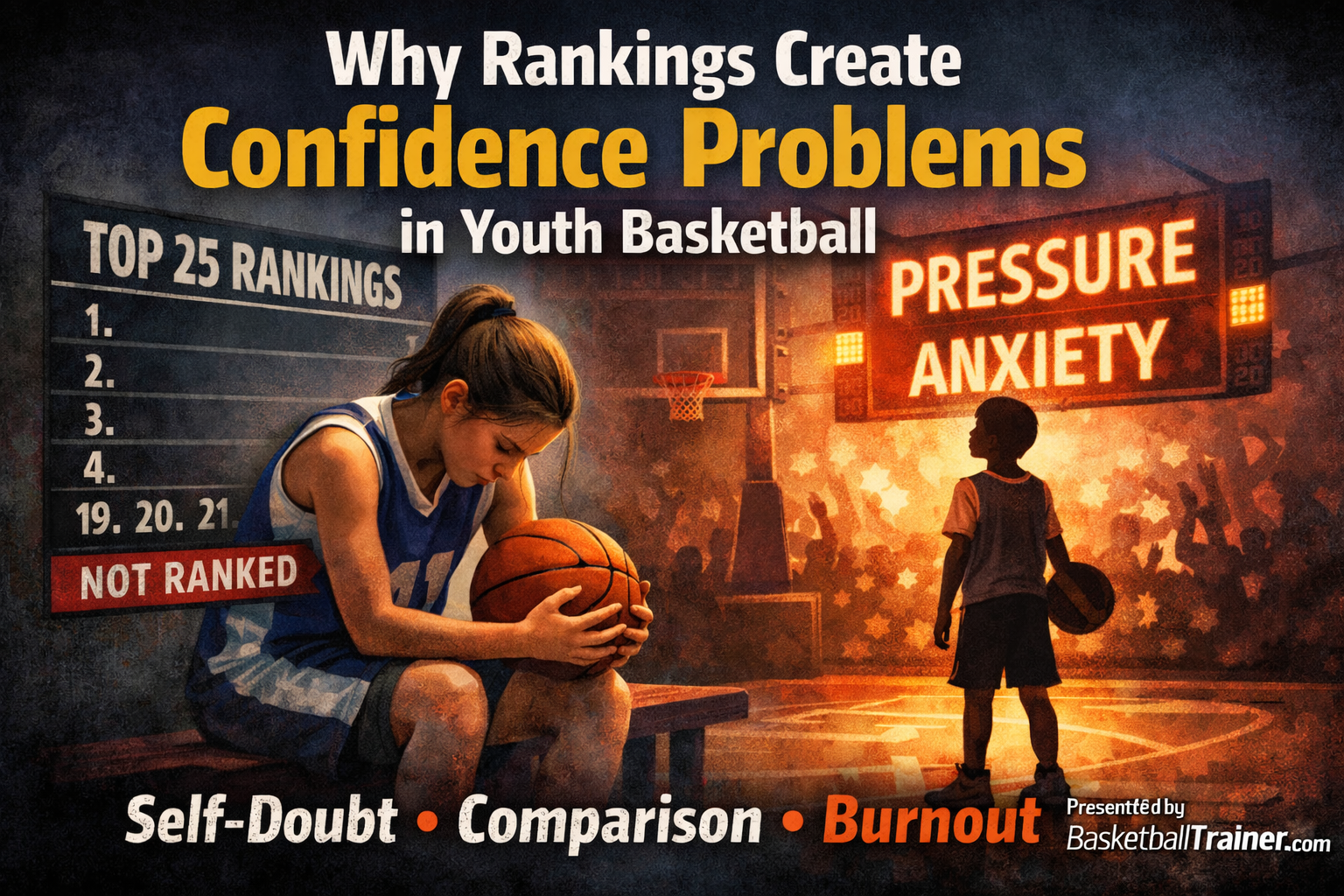
I’ve coached rec leagues, trained AAU players, and raised two unranked daughters who went on to play college basketball. Rankings look innocent—a way to cut through the noise of hundreds of trainers and camps in states like Texas. Parents check them for direction. Kids chase the thrill of climbing.
But after years inside youth basketball, here’s the truth most families don’t hear:
Rankings quietly reshape how young players see themselves, why they play, and the pressure they carry into every gym.
They can be loose reference points. They become harmful when they define worth or drive decisions.
As the founder of BasketballTrainer.com, I didn’t build this platform to rank “the best.” I built it to give families context. Rankings often pull us away from that goal.
How Rankings Shape Identity in Young Players
Picture your 8th-grade daughter.
She’s improved her ball screens. Her footwork is sharper. She leaves the gym feeling good.
Then rankings come out. She’s not listed.
That progress? Invisible.
Identity shifts from “I’m growing” to “I’m nobody.”
Adolescent athletes build self-concept through comparison. Rankings turn comparison into public scoreboards:
“Top 20” signals value
Unlisted signals absence—not learning or development
Sports psychology refers to this as the big-fish-little-pond effect: capable athletes placed in elite environments feel smaller simply by proximity to stars, even as they improve.
I’ve seen it up close.
A strong Round Rock 7th grader in a ranked AAU program doubted herself more than her low-profile YMCA teammate. Rankings keep score around the clock.
As a trainer, I have witnessed this mistake more than once—seeing kids pushed toward a “ranked” camp. All while they continued taking wrong foot layups and having rotation issues on their shots.
Comparison didn’t sharpen them. It muted their purpose.
How Rankings Distort Motivation
Kids usually enter sports driven by:
Enjoyment
Mastery
Belonging
Competence
Rankings replace those motives with status.
The internal questions change:
From “How do I read defenses better?”
To “What gets me ranked?”
That shift matters. Motivation becomes external—likes, clout, list movement. When progress stalls or rankings freeze, confidence erodes.
Performance psychology is clear: process precedes performance. Comparison pulls attention away from the process.
One family I advised chased rankings through five tournaments a month. Their son, a solid wing, lost shooting rhythm obsessing over lists. We scaled back. Focused on skill work.
Six months later, the joy returned—and so did results.
Rankings aren’t evil. They’re simply unstable anchors.
Pressure, Anxiety, and Burnout in Ranked Environments
Rankings turn practices into evaluations.
Miss a free throw?
Your “spot” feels threatened.
Nearly 70% of kids quit organized sports by age 13, with burnout and stress among the most cited reasons. Rankings intensify:
Fear of failure
Fear of parental disappointment
Fear of social slide
Clinicians working with young athletes report rising anxiety, avoidance behaviors, and sleep disruption tied to external evaluation.
Players protect their number instead of exploring their game. I’ve coached kids who froze on drives—not from lack of skill, but fear of a ranking dip.
Long-term cost?
Less creativity. Slower development.
Why Rankings Are Weak Evaluation Tools
Families face overload: teams, trainers, camps everywhere. Rankings promise shortcuts, but flatten context into a single score.
They rarely account for:
Role and minutes
Maturation timing
Coaching fit
Learning style
Psychological readiness
Research consistently shows that fit, trust, and appropriate challenge matter more than brand or ranking.
A “top-10” team may bench your guard.
An unranked coach may unlock them through relationship and understanding.
Rankings are references—not roadmaps. We just treat them like truth.
Long-term athlete development models emphasize growth windows over snapshots. Early bloomers dominate lists. Late developers disappear.
As a dad, I ignored this once. It cost my younger daughter a year of confidence.
A Healthier Way to Evaluate Players Without Rankings
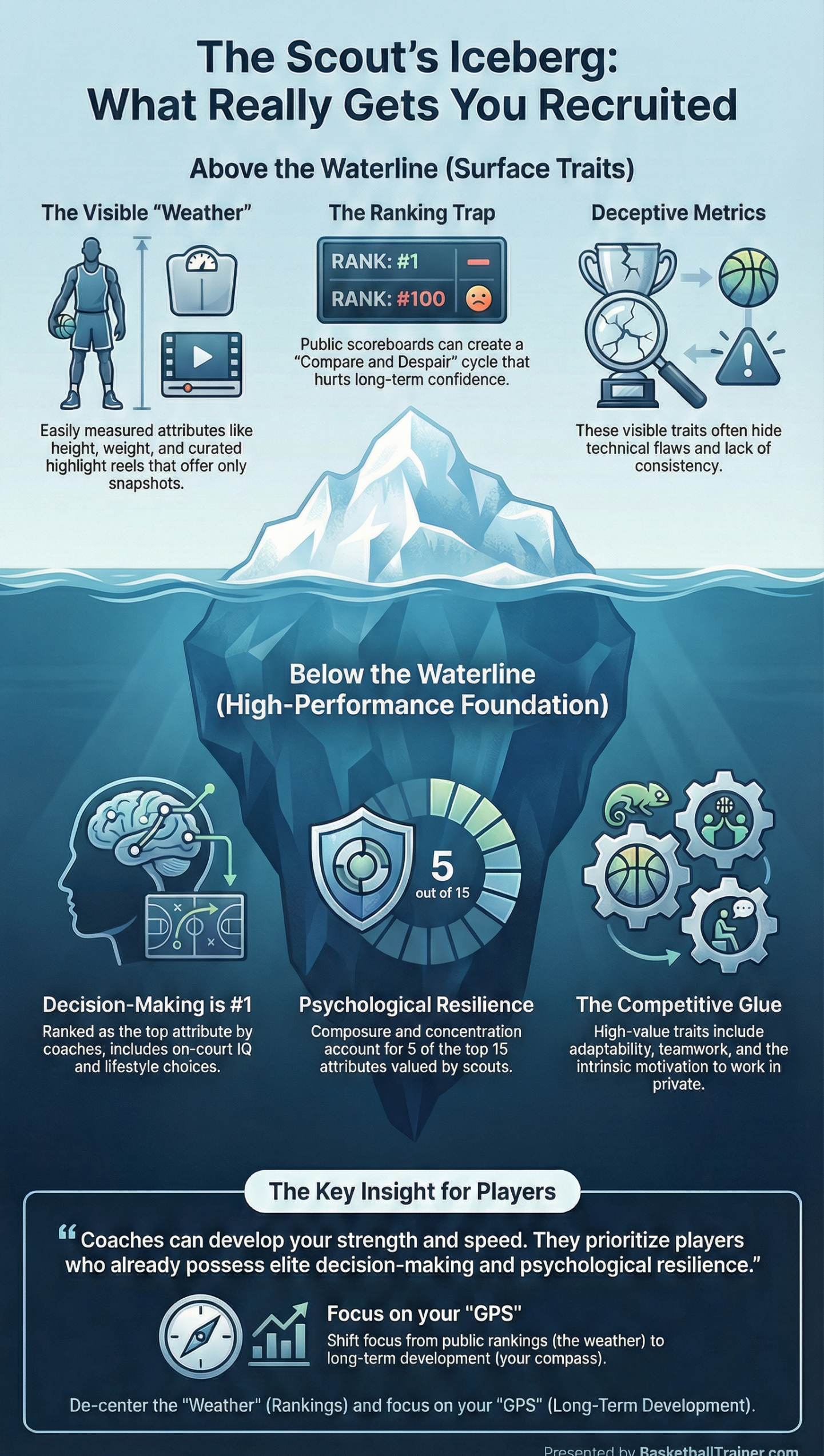
You don’t have to reject rankings outright. You just have to de-center them.
Think of rankings as weather, not GPS:
Temporary
Often inaccurate
Never your compass
Healthier questions for families:
Does this environment support skill growth and emotional health?
Is the challenge appropriate—or performative?
Is joy increasing or shrinking over time?
Accepted athletes tend to gain confidence through sports. Rankings often reverse that dynamic.
Long‑Term Athlete Development (LTAD) as Alternative Framework
LTAD and rankings sit on opposite ends of the spectrum: LTAD is a development roadmap, rankings are a selection shortcut. Both have strengths and weaknesses depending on what you’re trying to optimize.pmc.ncbi.nlm.nih+1
Big-picture differences
| Aspect | LTAD model | Traditional rankings |
|---|---|---|
| Primary goal | Long-term growth, health, and peak performance at the right age.pmc.ncbi.nlm.nih+1 | Short-term sorting, selection, and marketing of “top” players or teams.pmc.ncbi.nlm.nih+1 |
| Time horizon | Multi-year pathway with stages and age-appropriate focus.pmc.ncbi.nlm.nih+1 | Snapshot of current perceived ability, often updated around events. |
| Core question | “What does this athlete need now to grow?”pmc.ncbi.nlm.nih+1 | “Who is better than whom right now?”pmc.ncbi.nlm.nih+1 |
LTAD: pros
Prioritizes long-term health and retention: Emphasizes gradual load, broad skills, and age-appropriate training, which can reduce overuse injuries and burnout.playmakersleague+2
Aligns with how kids actually develop: Recognizes biological maturation, “windows” for different qualities, and the non-linear nature of growth.pmc.ncbi.nlm.nih+1
Shifts focus to training over constant competition: Encourages “practice to develop, play to compete,” helping avoid the “peak by Friday” mentality.[playmakersleague]
LTAD: cons and limitations
Can be too linear and one-size-fits-all in practice: Critics argue that some LTAD implementations assume all kids move through fixed stages in the same way and timing.basketballimmersion+1
Implementation gap: Many clubs pay lip service to LTAD but still chase early wins and selection; research notes practical challenges like competing agendas, time, and education.icoachkids+2
May underplay individuality and creativity: Over-structured development can unintentionally stifle creativity and intrinsic motivation if coaches treat the model as rigid doctrine.academia+1
Rankings: pros (in a narrow sense)
Simple signal for current selection: Rankings provide a crude, easy-to-understand snapshot that can help scouts or event organizers quickly identify known players.pmc.ncbi.nlm.nih+1
Useful as loose reference points: When treated cautiously, lists can prompt exposure opportunities or open doors for kids who already have strong support systems.pmc.ncbi.nlm.nih+1
Rankings: cons (especially for youth)
Poor predictive accuracy and high error risk: Research on talent ID shows early selection tools have low validity, especially at young ages, leading to many “false positives” and “false negatives.”journals.plos+2
Reinforce bias and maturity effects: Rankings tend to favor early maturers, bigger kids, and those in resource-rich programs, amplifying relative age and selection biases.pmc.ncbi.nlm.nih+1
Shift culture toward selection over development: Systems organized around rankings prioritize winning now and showcasing ranked athletes, at the expense of late developers and broader participation.coachingbest+1
How this supports a “no rankings” philosophy
From a development-first standpoint, LTAD is much closer to what you want than traditional rankings, but it still needs to be applied flexibly and individually. Rankings are, at best, a narrow, error-prone selection tool that say little about who will thrive long term and a lot about who is currently favored by the system.pmc.ncbi.nlm.nih+2
For your audience of families and trainers, the key message is: use LTAD-style thinking (fit, stage, long-term growth) to guide decisions, and treat rankings—if you acknowledge them at all—as background noise rather than a roadmap.coachingbest+1
A Practical Alternative: The 4D Player Evaluation Model
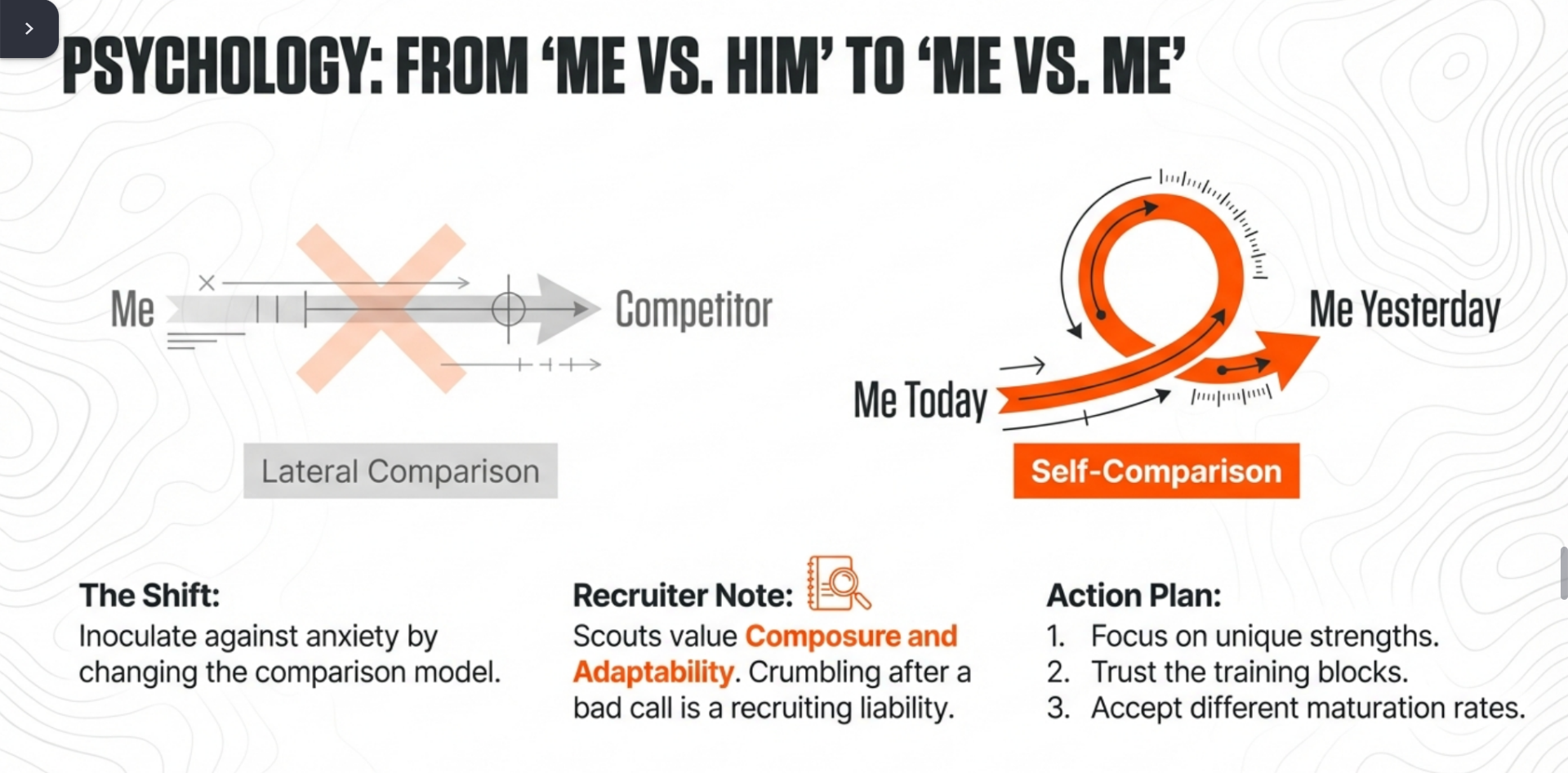
Instead of ranking kids, assess them across four dimensions:
Technical
Tactical
Physical
Psychological
Use tiers—emerging, solid, advanced—not numbers.
Evaluate live:
4v4 no-dribble games for spacing and decision-making
Shell drills for defensive awareness
Small-sided games for communication and resilience
Download: 4D High School Player Checklist
A printable, game-ready tool for tryouts or home reviews.
It highlights strengths like “advanced tactical connector” without hierarchy.
DOWNLOAD: 4D High School Player Checklist
Reclaiming Growth Over Numbers
Basketball builds durable confidence when anchored to process. Rankings provide context at best.
The families I guide thrive when they slow down—matching athletes to environments and prioritizing development over position.
At BasketballTrainer.com, we don’t rank “the best.”
We offer tools to help families decide wisely.
After reviewing the checklist, you can also download our Confidence Rebuild Worksheet—a 7-day guided journal focused on wins, resets, and self-talk.
Your child’s path isn’t a list.
It’s theirs.
Chris Corbett
Founder, BasketballTrainer.com
Coach – Trainer – Dad