Aurora Colorado Basketball Training – Trainers, Camps & Teams
Aurora basketball training spans 142 square miles across one of Colorado’s most diverse cities — from North Aurora’s community rec centers to Southeast Aurora’s fastest-growing neighborhoods. This page helps families navigate the options without the pressure.
Basketball Trainers
Basketball Camps
Select Teams
City Rec Centers
Looking for Basketball Training Options in Aurora?
Skip the background — jump straight to what you need:
Why This Aurora Basketball Resource Exists
Aurora’s 414,000+ residents spread across 142 square miles of Arapahoe, Adams, and Douglas counties — and finding basketball training means navigating multiple school districts, city rec systems, and a metro-wide market where programs from Denver, Parker, and Centennial all serve Aurora families. This page helps you understand Aurora’s unique geography, the Nuggets-era basketball boom, and what questions actually matter when evaluating programs. The best trainer near Buckley Space Force Base won’t necessarily work for a family in Southeast Aurora’s newest developments, and vice versa.
Our Approach: Context, Not Direction
We don’t rank trainers or camps as “best” — we help you understand what makes different programs right for different needs. The best fit depends on your child’s age, skill level, goals, your family’s schedule, budget, and where you live in Aurora’s multi-county layout. This page provides evaluation frameworks and local context, not prescriptive recommendations. Learn how BasketballTrainer.com works • Read our editorial standards
Understanding Aurora’s Basketball Geography
Aurora isn’t linear like some cities — it’s a spread of neighborhoods across three counties, with I-225 cutting diagonally through the middle and I-70 serving the north. Where you live in Aurora significantly shapes which basketball options are realistic. A program 15 minutes away in a straight line might be 30-40 minutes in reality once you hit I-225 during afternoon rush hour.
North Aurora (Adams County)
What to Know: Original Aurora corridor, most diverse area, near Denver’s Park Hill and Stapleton borders. Older neighborhoods along Colfax and Peoria corridors. Home to Moorhead Recreation Center.
- Commute to SE Aurora: 30-40 min via I-225 during rush hour
- Transit Access: R Line light rail at Peoria Station — best transit in Aurora
- School District: Aurora Public Schools (Gateway, Hinkley, Aurora Central)
- Basketball Culture: Diverse immigrant community (Ethiopian, Somali, Nepali, Vietnamese), community-oriented programs
Central Aurora / Havana Corridor
What to Know: Heart of Aurora, Lowry area (former AFB, now mixed residential/commercial), Buckley Space Force Base nearby, established neighborhoods. Near Overland and Smoky Hill high schools.
- Commute Reality: 20-25 min to most Aurora facilities — best positioned area overall
- School Districts: Aurora Public + Cherry Creek (Overland, Smoky Hill)
- Military Connection: Buckley Space Force Base families in this corridor
East Aurora (Arapahoe County)
What to Know: Rangeview High School territory, established east-side neighborhoods along Iliff and Quincy. Mid-tier development era. Central recreation center serves this area.
- Commute to North Aurora: 20-30 min, less I-225 congestion heading north vs south
- School District: Aurora Public Schools (Rangeview Raiders — strong basketball program)
- Basketball Culture: Rangeview vs. Gateway rivalry runs deep — community competition
Southeast Aurora (Fastest Growing)
What to Know: Newest neighborhoods near E-470, bordering Parker, Centennial, Lone Tree. Overland High School territory. Southeast Recreation Center and Fieldhouse serves this area. Zero Doubt Basketball based here.
- Commute to North Aurora: 30-40 min on I-225 during rush hour — worst corridor in city
- School Districts: Cherry Creek (Overland, Eaglecrest, Grandview)
- Basketball Culture: Overland HS state championship tradition, newer private training options growing fast
The I-225 Reality Check
I-225 is Aurora’s main north-south connector — and it’s consistently congested from 3-7 PM Monday through Friday. A program that looks “30 minutes away” on Google Maps at noon might be 50 minutes away at 5 PM pickup. Southeast Aurora families heading to North Aurora for training twice a week should calculate: that’s potentially 3+ hours of driving per week. Over a 5-month season, that’s 60+ hours in the car. Geography isn’t a minor consideration here. Many Aurora families make the smart call to choose a “good enough” program 15 minutes away over an excellent one 40 minutes away. That’s often the right choice for sustainable commitment
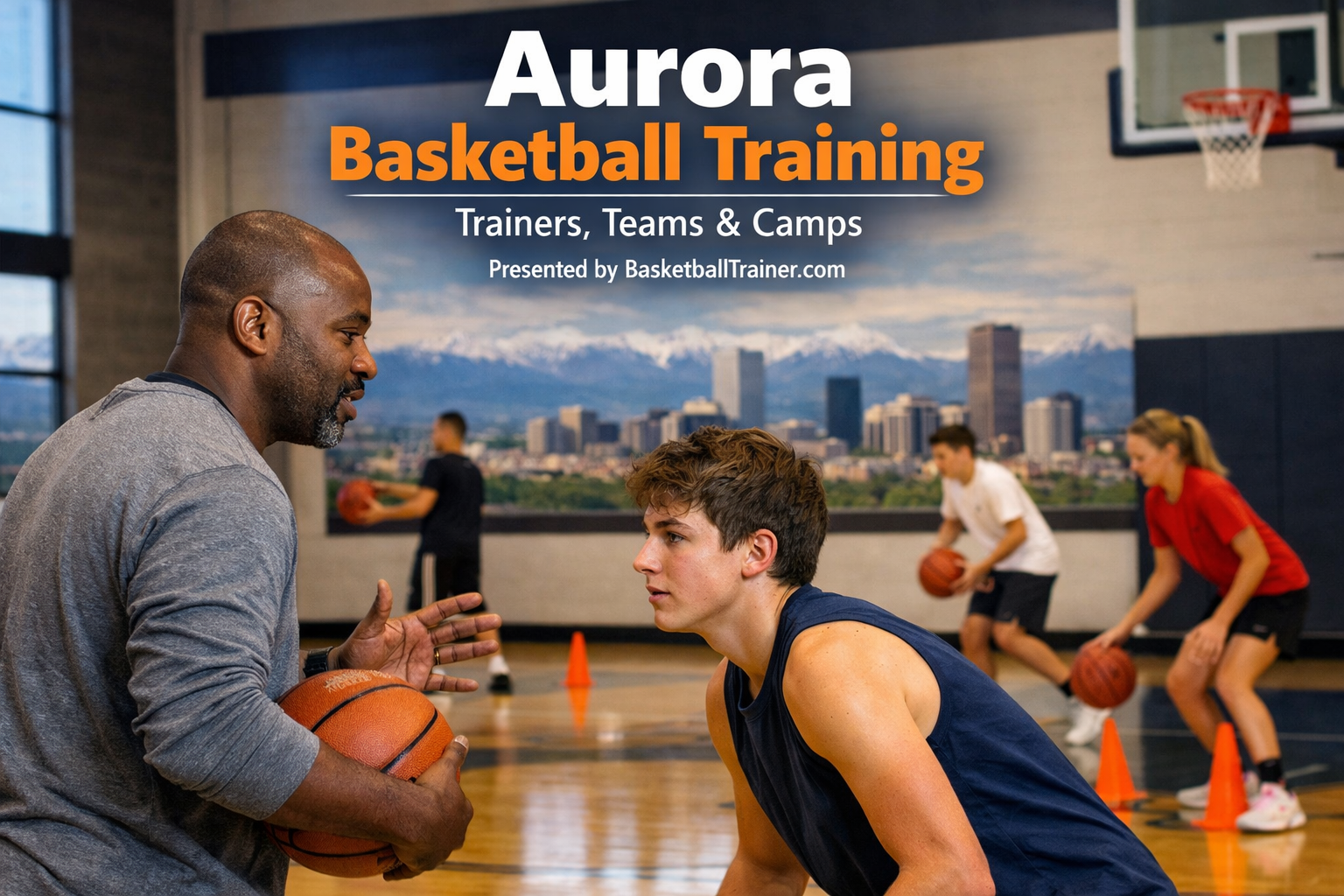
Aurora Colorado Basketball Trainers
These basketball trainers serve Aurora and the broader Denver metro. Aurora’s market is regionally connected — many of the strongest trainers serve families from multiple suburbs including Aurora, Parker, Centennial, and Denver. Use the evaluation questions later on this page when reaching out to any program.
Zero Doubt Basketball (Coach Marko Zelic)
Zero Doubt Basketball operates out of Southeast Aurora, run by Coach Marko Zelic — a Serbian-born trainer who played four years of college basketball (Oklahoma Baptist D-II; Wayland Baptist NAIA D-I) and, notably, played with Nikola Jokic at KK Vojvodina in Novi Sad, Serbia. In 2020, Marko traveled to Michigan to train under Micah Lancaster, one of the world’s top basketball skills trainers, then built a Southeast Aurora-based program around European-style, high-IQ development. He holds a degree in Exercise Science and is certified as a personal trainer, giving sessions a biomechanical grounding most youth trainers lack. Sessions focus on the offensive toolbox — ball-handling, footwork, finishing, and shooting — with an emphasis on building genuine confidence that shows up in games. With over 500 players trained and 36K+ Instagram followers, Zero Doubt has built real credibility in the metro. Works with players ages 8-18. Pricing is session-based; contact via website for current rates (comparable Aurora private training runs $60-100/session). Best for: competitive players ages 10-18 who want European-style skill development grounded in game situations rather than showcase drills.
MONDO Athletics Basketball Training
MONDO Athletics provides private basketball training across the greater Denver metro including Aurora, Centennial, Highlands Ranch, Lone Tree, Parker, and Castle Rock — covering the full southeastern corridor where many Aurora families live. Coaches are described as professional athletes, mentors, and certified coaches, with a philosophy centered on boosting basketball IQ, confidence, aggression, and mental toughness alongside skill. Sessions are 1-on-1 for maximum individual attention, running 1 hour in length. MONDO also fields AAU teams based out of the Parker/Southeast Aurora area (practicing at American Academy – Motsenbocker in Parker), making them a one-stop option for families wanting both private training and competitive team play. They also offer virtual training for players who can’t access in-person sessions — useful for families with complicated schedules. Private training typically runs $60-100/session depending on coach. Best for: SE Aurora and South Metro families wanting a consistent trainer + potential AAU team connection.
Rain Basketball Denver/Aurora
Rain Basketball is a national organization with a Denver/Aurora chapter built around Faith, Family, and Fundamentals. USA Basketball Gold-certified coaches lead skills training, competitive teams, and seasonal camps for boys and girls ages 6-19. The program explicitly serves Aurora, Lakewood, Centennial, Littleton, Englewood, Westminster, and Thornton in addition to Denver — making it genuinely metro-wide rather than neighborhood-specific. The skills training component offers structured development sessions alongside the competitive team track, so families can start with skills and potentially grow into team play without switching organizations. Camps co-hosted with former NBA players run seasonally and have sold out previously, suggesting genuine community demand. The program claims a 90%+ scholarship rate for older participants, though families should ask for specifics rather than accepting that claim without context. Pricing: contact the Denver/Aurora chapter; team fees typically run $800-1,500+ seasonally depending on travel commitment. Best for: families wanting a faith-based organization with both skills training and competitive team options across a wide age range.
Coach Calvin McCoy (Tru Colorado / Independent Training)
Coach Calvin McCoy brings over 20 years of experience spanning roles as Athletic Director, Head Boys Basketball Coach, and collegiate player. He holds a USA Basketball Gold Coach license — the highest certification USA Basketball offers — and currently coaches the Tru Colorado 2029 AAU team on the Adidas 3 Stripe circuit. Calvin works with players at both the private training level and through the AAU program, giving him real insight into what skills translate from practice to competitive play at circuit-level tournaments. Located approximately 7 miles from Aurora with high responsiveness to inquiries. Private training pricing: comparable to Denver metro coaches with Gold certification typically runs $70-100/session. Best for: serious competitive players ages 12-17 looking for both individual skill work and possible connection to a credible AAU program.
Achieve Sports Center — Basketball Programs
Note: Achieve Sports is a multi-sport facility — not a basketball-only trainer. Listed here as an accessible entry point for recreational players and families wanting structured programming without committing to a specialist. Achieve Sports in Aurora offers basketball leagues, camps, clinics, and classes alongside other sports. The facility rents court time at $65/hour for open gym use, making it useful for groups of players organizing their own sessions with an independent trainer. Youth league pricing and camp costs vary by program — contact for current season rates. The multi-sport environment means the basketball coaching staff are generalists rather than specialists, which is appropriate for recreational players ages 6-14 who are still figuring out whether basketball is their sport. Best for: recreational beginners, families wanting structured play without elite training intensity, or players using the space for organized open gym.
Aurora Basketball Camps
Aurora basketball camps range from affordable city-run programs to intensive skill development experiences. Most camps run June through August with some options during school breaks. The city of Aurora also offers year-round youth basketball leagues as an entry point for younger players.
City of Aurora Youth Basketball Leagues & Programs
The City of Aurora Parks, Recreation & Open Space department runs coed basketball leagues year-round for ages 4-13. Programs run through city rec centers and local schools. Players ages 6-11 get one practice per week plus Saturday games led by volunteer coaches; the 4-5 year old program is instructor-led. Pricing as of 2026: approximately $95-105 for residents, $119-130 for non-residents per season — fee includes practices, games, and a team jersey. Financial assistance is available through the rec centers for qualifying families (inquire directly at Central, Moorhead, or Southeast locations). Registration is through AuroraPROS.org. This is the most accessible basketball entry point in Aurora — affordable, locally run, and geographically spread across the city. Best for: beginners ages 4-13 who need structured league play rather than skill-specific training, and budget-conscious families.
Rain Basketball Denver/Aurora — Seasonal Camps
Rain Basketball’s Denver/Aurora chapter runs seasonal camps co-hosted with former NBA players — a notable hook that creates genuine aspirational energy for kids who grew up watching the Nuggets’ 2023 championship run. Camps focus on skill development, conditioning, character, and discipline alongside basketball fundamentals, consistent with the organization’s Faith, Family & Fundamentals model. Boys and girls ages 6-19 are welcome. Previous winter camps sold out, suggesting strong demand — families interested should inquire well in advance of the season they’re targeting. Pricing: contact Denver/Aurora chapter for current camp fees; comparable NBA-affiliated camps in the region run $150-350 per week depending on duration and programming. Best for: players ages 8-16 wanting intensive multi-day skill development with mentorship components in an organized camp setting.
PGC Basketball (Colorado Locations)
PGC (Point Guard College) runs camps across Colorado annually, accessible to Aurora-area players willing to travel within the state. PGC is explicitly not a recreation program — it targets competitive middle school and high school players who want to develop basketball IQ, leadership, and mental performance alongside skills. The curriculum emphasizes the mental side of basketball (decision-making under pressure, competitive mindset, leadership identity) in ways most skill camps don’t address. Parent reviews consistently note the camp demands genuine engagement from players — kids who coast don’t get much out of it, but players who invest come back transformed in their approach to the game. Camp fees nationally run $400-600 per week. Best for: serious competitive players ages 11-18 who have already developed foundational skills and are ready to work on the mental and leadership dimensions that separate good players from great ones.
Achieve Sports — Basketball Camps & Clinics
Achieve Sports in Aurora runs basketball camps and clinics alongside their multi-sport programming. The multi-sport environment makes this a natural fit for younger players who want to stay active during summer without committing exclusively to basketball. Camp formats include skill-focused clinics and league-style programming. Pricing varies by program — contact Achieve directly for current offerings and fees. The facility also hosts open gym time ($65/hour court rental) that families can combine with independent trainer sessions. Best for: recreational players ages 6-13, families looking for summer activity programs, or players wanting light-touch basketball exposure during an otherwise diverse summer schedule.
Aurora Select Basketball Teams
Aurora AAU and select basketball teams operate within a regionally connected Denver metro market. Travel typically means tournaments in Colorado Springs, Fort Collins, Boulder, and occasionally Phoenix, Albuquerque, or Las Vegas. Tryouts for most programs run February through March. Total annual cost — team fees plus travel — often runs $3,000-5,000 for active competitive teams.
Colorado Collective / Mile High Collective
Colorado Collective and Mile High Collective compete on the Puma NXTPRO Circuit — one of the premier AAU circuits for college recruitment exposure. Teams run from 12U through 17U boys, practicing twice per week with additional weekly skill sessions, shooting clinics, and open runs providing more total development than a practice-only program. The tournament schedule is described as thoughtfully selected to maximize college scout exposure while keeping travel manageable, though families should ask specifically about the travel calendar before committing. The organization emphasizes genuine player development philosophy over win-at-all-costs culture. Team fees run $1,500-2,500 depending on age group, plus travel costs for regional and national tournaments that can add $1,500-3,000 annually. Best for: competitive players 12U-17U seeking real college recruitment exposure on a credible national circuit.
Colorado Titans
Colorado Titans is a non-profit AAU organization with a clear brand identity: 100% effort, willingness to accept constructive criticism, team-first mentality, and “Titans Family for Life” culture. Age groups run U10/11 through U17 for boys, with tryouts for Spring/Summer 2026 teams scheduled in late February and early March. The non-profit structure typically means more transparent finances and community reinvestment compared to for-profit programs — worth asking about during the inquiry process. The “brand” language around accountability and effort-based identity suggests a culture that demands more than just showing up and playing. Team fees typically run $1,200-2,000 plus tournament travel costs. Best for: players who respond well to clear standards and accountability culture, families wanting a structured non-profit AAU program with defined tryout windows.
MONDO Athletics AAU Teams
MONDO fields AAU teams specifically for the Southeast Aurora, Parker, Lone Tree, Highlands Ranch, and Castle Rock corridor — practicing at American Academy Motsenbocker in Parker, making this the most geographically specific option for Southeast Aurora families. Boys teams span 4th-5th grade through 9th-12th grade, with tryouts running seasonally. The connection to MONDO’s private training operation means team coaches and skill trainers work within the same organization, which can create more consistent skill development messaging across practices and individual sessions. Team fees and travel costs comparable to other competitive Colorado AAU programs; contact for current pricing. Best for: Southeast Aurora and South Metro families wanting a geographically accessible competitive team with private training integration.
Pro Skills Basketball (PSB) Denver
Pro Skills Basketball Denver operates on a “skills for basketball, skills for life, skills for success” philosophy, explicitly stating that preparing players for the next level matters more than winning championships. Grade-level teams run year-round with a mix of traditional tryout windows (January through March depending on age group) and rolling admissions for open spots. The program runs an interest form system for age groups without immediate openings, following up when roster spots become available — useful for families who discover PSB mid-season. Fees: contact for current team fees; PSB nationally operates in a $1,000-2,000 annual fee range plus tournament travel. Best for: families who appreciate explicit player development philosophy over win-loss focus, players who want year-round commitment with rolling entry opportunities.
Tru Colorado (Adidas 3 Stripe Circuit)
Tru Colorado competes on the Adidas 3 Stripe circuit — Club Adidas — one of the most prestigious AAU circuits for college recruitment visibility. Coach Calvin McCoy (USA Basketball Gold certified, 20+ years experience as coach and AD) leads the program, currently coaching the Tru Colorado 2029 team. The Club Adidas platform means players compete at events where college coaches are actively evaluating prospects, making this relevant for 15U-17U players with legitimate aspirations for college play. The circuit-level commitment also means more travel and higher total costs than regional programs — Adidas circuit programs typically run $2,000-3,000 in fees plus $2,000-4,000 in tournament travel annually. Best for: serious 13U-17U players with realistic college aspirations who are ready for the time, cost, and competitive intensity of a national-circuit AAU commitment.
Aurora High School Basketball
Aurora is served by two major school districts with high school basketball programs: Aurora Public Schools (APS) and Cherry Creek School District. Tryouts typically occur in October for Colorado’s winter basketball season, governed by the Colorado High School Activities Association (CHSAA).
Aurora Public Schools (APS)
- Aurora Central High School — Trojans (North/West Aurora)
- Gateway High School — Olympians (Central/West) | 1300 S Sable Blvd
- Hinkley High School — Thunderhawks (West/Central)
- Rangeview High School — Raiders (East Aurora) | 17599 E Iliff Ave — rival: Gateway; features large gymnasium + small gymnasium + pool
- Vista PEAK Preparatory — Bison (East Aurora, newer school)
- William Smith High School — alternative school with athletics
Cherry Creek School District (within Aurora boundaries)
- Overland High School — Trailblazers (Central/SE Aurora) | 12400 E Jewell Ave — Colorado 5A State Basketball Champions 2015 & 2016; also 6A champion 1993 — the strongest basketball tradition in Aurora
- Smoky Hill High School — Buffalo (Central/South Aurora area)
- Eaglecrest High School — Raptors (SE Aurora)
- Grandview High School — Wolves (SE Aurora, bordering Centennial)
Most Aurora high schools field varsity and JV teams for both boys and girls basketball. Larger schools may also have freshman teams. School team tryouts typically occur in October-November. The Colorado High School Activities Association (CHSAA) governs all prep sports in the state.
How to Use These Listings
These are Aurora trainers, camps, and teams that serve families in the area. We don’t rank them or endorse specific programs. Use the evaluation questions in the next section when contacting any option. The right fit depends on your child’s age, skill level, goals, your family’s schedule, budget, and your location within Aurora’s multi-county geography. Contact 2-3 options before committing to see which feels right for your family.
Aurora Recreation Centers: Basketball on a Budget
Before committing to private training, understand Aurora’s six city recreation centers. Drop-in access runs $3-5 per visit — the most affordable basketball access in the Denver metro. These facilities offer drop-in play, structured youth leagues, and camp programming. Here’s what families actually need to know about each.
North/West Aurora: The Community Hub
Moorhead Recreation Center — The Flagship
Address: 2390 Havana St, Aurora, CO 80010 | Hours: Mon-Fri 6am-8pm; Sat-Sun 9am-6pm
Moorhead underwent a $16 million renovation that transformed it from a 3,000 sq ft community room into a 41,000 sq ft facility with a 3-court gymnasium. This is Aurora’s North Aurora basketball anchor — the highest concentration of basketball community in the city’s northwest. The 3-court setup means less waiting for court time compared to single-court facilities, which matters when you’re driving across town to get a run in.
- Basketball: 3-court gymnasium with scheduled drop-in basketball (check Moorhead Basketball Court Schedule on city website)
- Also offers: Fitness center, indoor pool with lazy river + water slide, teaching kitchen, locker rooms
- Drop-in fee: Youth (2-17) $3; Adults $4 (resident pricing)
- Annual youth membership: $50/year (resident — best value for frequent visitors)
- Transit: Bus-accessible; near R Line corridor for North Aurora families without cars
Commute note from SE Aurora: 35-45 minutes during weekday rush hour via I-225 north. If you’re in Southeast Aurora regularly driving to Moorhead for basketball, that’s a real commitment — factor it into sustainability planning.
South/Central Aurora: The Elevated Track Center
Central Recreation Center
Address: 18150 E. Vassar Place, Aurora, CO 80013 | Hours: Mon-Fri 5:30am-8:30pm; Sat 8am-7:30pm; Sun 8am-6pm
The Central Rec Center serves South/Central Aurora with extended weekday hours (5:30 AM to 8:30 PM) — good for early-morning or post-school/work access. The elevated indoor track means players can do conditioning laps while waiting for court time, which is a real training advantage over facilities without track access.
- Basketball: Gymnasium with sports drop-in play (basketball)
- Also offers: Elevated indoor track, fitness center, pool, eSports Lounge, youth programming
- Drop-in fee: Youth $4; Adults $5
Southeast Aurora: The Fieldhouse
Southeast Recreation Center and Fieldhouse
Address: 25400 E. Alexander Dr, Aurora, CO 80016 | Hours: Mon-Fri 5:30am-8:30pm; Sat 8am-7:30pm; Sun 8am-6pm
The Southeast Rec Center is the destination facility for Aurora’s fastest-growing area. “Fieldhouse” isn’t just a name — the indoor fieldhouse hosts soccer, flag football, and homeschool PE in addition to basketball, making this the most multi-purpose space in the city’s rec system. For Southeast Aurora families, this should be the first stop before paying private training rates.
- Basketball: Gymnasium with drop-in play (basketball, pickleball, volleyball)
- Also offers: Elevated indoor track, training turf area, indoor fieldhouse, pool, personal training, specialty fitness classes
- Drop-in fee: Youth $4; Adults $5
Additional City Recreation Centers
Beck Recreation Center (North Aurora near I-70/Peoria) — part of the city-wide network; experienced a 37% attendance increase after affordable pricing changes; near Peoria light rail station making it the most transit-accessible facility for car-free families
Expo Community Center (10955 E. Exposition Ave) — community center with gym space; part of the city network
Utah Indoor Pool / Aurora Center for Active Adults (ACAA) — specialized facilities; ACAA is adults-only; Utah Pool is primarily aquatics
Aurora Rec Center Membership — What It Costs
Drop-in gives you access to basketball, fitness equipment, and most facility amenities with a single visit. Memberships pay off quickly for regular visitors.
Drop-in rates (approximate — verify current pricing at center):
- Youth (ages 2-17): $3-4 per visit
- Adults (18-61): $4-5 per visit
- Youth annual membership (single center, resident): $50/year
- City-wide annual (all 6 centers, resident): ~$135 youth / ~$310 adult
Note: Aurora rec center rates increased approximately 10% recently for the first time in five years. Verify current pricing at auroragov.org or by calling your nearest center. Financial assistance is available for qualifying residents — inquire directly at Central (720-859-4999), Moorhead (303-326-8315), or Southeast (720-859-4949).
Evaluating Basketball Training Options in Aurora
We provide evaluation frameworks, not recommendations. These questions help you assess trainers, camps, and teams based on what matters for YOUR family in Aurora.
Questions to Ask Private Trainers
Why this matters: Vague promises of “improvement” mean nothing. “Free throw percentage up 20%” or “complete this move at game speed” = clarity. A trainer who can’t describe specific progress milestones is winging it.
Why this matters in Aurora: A trainer based in North Aurora might mean 40 minutes from Southeast Aurora during afternoon rush. Calculate the real commute time at 4-6 PM — not noon on a weekend.
Why this matters: A trainer who primarily works with high school varsity players might not be the right fit for a 5th grader who’s still learning to love the game.
Why this matters: Any good trainer should welcome observation. Watching how they handle a player who’s struggling — or one who’s bored — tells you more than any sales pitch.
Why this matters: Life happens — school conflicts, family emergencies, snow days. Understanding the policy before paying protects your investment, especially in Colorado’s unpredictable winters.
Questions to Ask About Camps
Why this matters: 1 coach per 20 kids = supervised play. 1 coach per 8-10 kids = actual instruction. The ratio tells you whether this is a babysitting operation or a development program.
Why this matters: Neither is wrong, but they’re different experiences. Knowing which one you’re buying helps you match the camp to your child’s current needs.
Why this matters in Aurora: Aurora is a diverse city with wide income range. Many programs — including the City’s own leagues — have financial assistance but don’t prominently advertise it. Always ask.
Questions to Ask About AAU/Select Teams
Why this matters: Team fees are the floor, not the ceiling. A $1,500 team fee can easily become $3,500-5,000 when you add hotel nights in Phoenix, Denver flights to national tournaments, food, and uniforms. Ask for last year’s full cost breakdown.
Why this matters for Aurora families: Regional tournaments in Colorado Springs, Fort Collins, or Boulder are manageable day trips. Phoenix or Las Vegas tournaments mean flights or long drives plus hotel costs. Know the calendar before committing.
Why this matters: “Everyone gets equal time” and “best players play more” are both legitimate philosophies, but they create completely different experiences for your child. Know what you’re signing up for.
Aurora Pricing Reality
City Rec Leagues: $95-130 per season (most affordable baseline)
Private Training: $60-100 per session, or $200-400/month for regular programming
Summer Camps: $100-600 per week depending on program and intensity level
AAU/Select Teams: $1,200-3,000 team fees, plus $1,500-4,000 in tournament travel annually for active programs
Free Basketball Training Evaluation Guide
Download our comprehensive guide with questions to ask before committing to any basketball training program.
Aurora Basketball Season: What to Expect
Understanding when different programs run in Aurora helps families plan without panic. This calendar shows typical timing — not deadlines you must meet. Colorado weather adds a wildcard: winter snowstorms occasionally delay or cancel events, so build flexibility into any training commitment.
High School Season (CHSAA)
Typical Timeline: Tryouts October-November, season runs November through February, state playoffs in February-March.
What This Means: School season is your child’s primary basketball commitment from October through February. Private training and AAU during these months should supplement, not compete with, school program obligations.
AAU / Select Basketball Season
- February-March: Tryouts for most programs — often overlapping with school playoff season
- March-April: Early spring tournaments; teams finalizing rosters
- April-June: Spring tournament season — regional travel to Colorado Springs, Fort Collins, Denver metro events
- June-August: Peak summer season — potential national travel for higher-circuit teams (Phoenix, Las Vegas, Kansas City)
- August-September: Fall ball; some programs begin pre-season training
Basketball Camps
- Spring (March-May): School break clinics; some programs offer spring camp sessions
- June-July: Peak camp season — city programs, Rain Basketball, private trainer-run camps
- July-August: Final summer opportunities; popular camps (like Rain Basketball’s NBA-hosted sessions) may already be full
City Recreation Leagues
Aurora’s city youth basketball leagues run year-round across multiple seasons (spring, summer, fall). Registration through AuroraPROS.org typically opens 6-8 weeks before each season. Financial assistance applications must be completed in advance — don’t wait until the last minute if you need it.
Colorado Winter Note: Unlike Texas or Florida cities, Aurora basketball training is genuinely affected by weather. Outdoor court time evaporates October through April. This makes city rec center memberships and indoor private facilities even more valuable — plan your year-round training around indoor options.
Aurora’s Basketball Culture
Aurora basketball exists at the intersection of two powerful forces: the Denver Nuggets championship era and the city’s status as Colorado’s most diverse community. Neither factor is trivial — together, they’re reshaping who plays basketball here and how seriously families take development.
The Nuggets Effect
When the Denver Nuggets won the 2023 NBA Championship — with Nikola Jokic becoming a three-time MVP — basketball interest across the Denver metro, including Aurora, spiked noticeably. Every trainer and program director in the area will tell you the same thing: kids started taking basketball more seriously after that championship. Jokic’s story (undersized, unheralded, built on skill and IQ rather than athleticism) resonates particularly well with a city full of kids who don’t fit the conventional basketball mold.
There’s even a hyper-local version of that story: Coach Marko Zelic of Zero Doubt Basketball in Southeast Aurora actually played with Jokic at KK Vojvodina in Serbia. It’s a small world, and it’s the kind of connection that gives young Aurora players a genuine thread to one of the game’s greatest players.
Colorado’s Own Path: Billups, White, and the D-II Route
Chauncey Billups — “Mr. Big Shot,” five-time All-Star, 2004 NBA champion — grew up in Denver and now serves as the Nuggets head coach. He’s the gold standard of Colorado basketball product. Overland High School in Aurora produced back-to-back 5A state champions in 2015 and 2016 — still the highest basketball achievement in the city’s prep history. These aren’t abstract success stories; they’re part of the cultural background that makes Aurora families believe their kids can develop into real players.
Derrick White’s path — growing up in nearby Parker, playing D-II college basketball before becoming a starter for the Boston Celtics and a 2024 NBA champion — is especially meaningful for Aurora families. White’s story tells kids in this market that you don’t have to be recruited out of high school to reach the top. Coach Marko Zelic’s own journey (D-II at Oklahoma Baptist, never a high-profile recruit) echoes the same theme. That resonance is real, and it shapes how many Aurora trainers and programs frame development.
The Diversity Dimension
Aurora is one of America’s most diverse cities — roughly 30% Hispanic, 15% Black, 6% Asian, and significant Ethiopian, Somali, Nepali, and Vietnamese communities, among others. About 20% of residents were born outside the United States. This shapes basketball culture in ways that are hard to quantify but easy to feel: the sport draws from an incredibly wide base of athletic talent and family motivation. Programs that understand Aurora’s diversity — rather than treating it as a footnote — tend to build stronger community connections and better retention. The city’s municipal rec program, with financial assistance and multiple neighborhood locations, does this by design.
Frequently Asked Questions About Aurora Basketball Training
The questions Aurora families ask most often about youth basketball programs, costs, and timing.
How much does basketball training cost in Aurora?
Aurora basketball training costs span a wide range. City recreational leagues run $95-130 per season (most affordable). Drop-in at city rec centers is $3-5 per visit, with annual youth memberships at single centers starting at $50. Private basketball coaching in Aurora typically runs $60-100 per session for individual training; monthly programs cost $200-400 depending on frequency. Summer camps range from free (some city programs for qualifying families) to $600+ per week for intensive programs. AAU select teams cost $1,200-3,000 in team fees annually, with travel adding another $1,500-4,000 depending on tournament schedule. Many programs offer financial assistance — always ask, because Aurora’s rec centers and several private organizations actively subsidize costs for qualifying families.
When do AAU basketball tryouts happen in Aurora?
Most Aurora-area AAU programs hold tryouts in February and March, with some running evaluations into April for remaining roster spots. This timing often overlaps with high school playoff season, which creates a real tension for players committed to their school teams. Programs like Pro Skills Basketball also use rolling admissions and interest forms to fill spots outside formal tryout windows — useful for families who discover a program mid-season. If you’re targeting a specific team, contact them in December or January to get on their radar and learn their exact tryout schedule. Colorado Titans, for example, posts specific tryout dates by age group well in advance on their website.
Which rec center should I go to for basketball in Aurora?
The honest answer: whichever one is closest to your home. The geographic reality of Aurora — spread across 142 square miles with I-225 as a congestion point — means facility quality matters less than commute sustainability. That said, Moorhead Recreation Center (Havana St) has the most basketball courts (3-court gym) and serves North/West Aurora families best. Southeast Recreation Center and Fieldhouse (Alexander Dr) is the best-equipped modern facility for Southeast Aurora’s growing population. Central Recreation Center (Vassar Place) is well-positioned for Central and East Aurora families. All charge similar drop-in rates ($3-5 for youth) and offer comparable basketball court access. Check the Moorhead Basketball Court Schedule on Aurora’s city website for specific basketball drop-in hours — courts aren’t always available for open play.
What age should my child start basketball training in Aurora?
There’s no universal right age. The City of Aurora runs coed leagues for ages 4-5 with city instructors — an appropriate entry point for very young kids who need low-pressure introduction to the game. Ages 6-11 participate in league play with volunteer coaches. Private skill training becomes more valuable around ages 8-10 when kids can focus on specific techniques and remember coaching across sessions. Competitive AAU typically starts at 8U or 9U, though most Aurora families find 10U-12U is a more sustainable entry point for travel ball, when kids can handle the competitive environment without burning out. The most important factor is your child’s genuine interest level — not your schedule or your basketball aspirations for them.
Can my child play school basketball and AAU at the same time in Aurora?
Yes, many Aurora-area players do both — but the overlap period (February-March) requires careful coordination. Colorado school basketball runs November through February; AAU tryouts for most programs happen in February-March. Some school coaches restrict or discourage AAU activity during the school season, while others are fine with it. The clearest path is direct communication: talk to your school coach about expectations before committing to an AAU team, and talk to AAU coaches about their flexibility during school playoff weeks. Beyond scheduling, consider your child’s physical capacity — playing basketball year-round at high intensity without proper rest periods increases injury risk and burnout. Many sports medicine professionals recommend at least 2-3 months per year away from competition. Aurora’s year-round rec programs offer a lower-intensity alternative for maintaining skills without full AAU commitment.
Does Aurora’s altitude affect basketball training?
Aurora sits at approximately 5,400 feet elevation — similar to Denver. For players who grew up here, it’s simply normal. For families who moved to Aurora from lower elevations, the first few months of intense athletic activity often involve more fatigue than expected. This matters for training intensity decisions: don’t judge your child’s conditioning level by how they perform in the first month after relocating to Aurora from sea-level cities. The altitude benefit, once adapted, is real — Aurora-trained players who travel to lower-elevation tournaments in Phoenix or Kansas City often feel an aerobic advantage. It’s not dramatic, but experienced coaches in the metro mention it as a genuine factor in long-distance tournament play.
Aurora Basketball Training Options at a Glance
| Training Option | Cost Range | Best For | Time Commitment |
|---|---|---|---|
| Rec Center Drop-In | $3-5/visit or $50/yr (youth) | Open gym, pickup runs, budget-conscious families | Flexible, drop-in anytime during open hours |
| City Youth Leagues | $95-130/season | Beginners ages 4-13, recreational introduction to basketball | 1 practice/week + Saturday games, seasonal |
| Private Training | $60-100/session | Skill development, pre-tryout prep, specific weaknesses | Flexible, typically 1-2 sessions/week |
| Summer Camps | $100-600/week | Summer skill building, intensive immersion, competitive players | 1-week sessions, June-August primarily |
| AAU/Select Teams | $1,200-3,000 + $1,500-4,000 travel | Competitive players, college exposure, high-intensity development | 6-8 months, 2-3 practices/week + weekend tournaments |
Note: Costs represent typical Aurora/Denver metro ranges as of 2026. Many programs offer financial assistance. Verify current pricing directly with each program.
Getting Started with Basketball Training in Aurora
If you’re new to Aurora basketball or just starting your child’s training journey, here’s a practical path forward.
Step 1: Define What You’re Actually Looking For
Are you trying to help your child make their school team? Build fundamental skills? Find structured activity? Connect with competitive basketball? Each goal points to a different option. A 7-year-old who wants to run around and have fun with friends needs something different than a 14-year-old aiming for varsity. Clarity upfront saves time, money, and disappointment.
Step 2: Calculate Your Real Commute
Look up travel time at 5 PM on a Tuesday — not Sunday morning. Aurora’s I-225 corridor changes everything. A program that seems “only 25 minutes” in traffic-free conditions might be 45 minutes twice a week, indefinitely. Pick a neighborhood zone (North, Central, East, Southeast) and start your search there. Proximity and sustainability beat prestige and distance.
Step 3: Start Affordable, Then Upgrade
If you’re new to basketball or new to Aurora, start with city rec leagues or a few drop-in sessions at your nearest rec center. Get a feel for your child’s actual enthusiasm and development trajectory before committing to private training or AAU. Many families spend $1,500 on a private trainer before discovering their kid would rather play soccer. The city’s $95-130 seasonal leagues are a low-risk discovery tool.
Step 4: Contact 2-3 Options and Trust Your Gut
Use the evaluation questions from this page. Reach out to 2-3 programs that match your geography and goals. Most offer trial sessions or initial consultations. After talking to a trainer, ask yourself: Did this person actually listen to what my child needs, or pitch me their standard package? Does my kid seem excited or nervous? Does the schedule actually work for our family? Those gut-check answers matter more than credentials on paper.
Free Basketball Training Evaluation Guide
Comprehensive questions to ask trainers, camps, and teams before committing to any program.
Basketball Resources
Nearby Colorado Cities
About BasketballTrainer.com
© 2026 BasketballTrainer.com. All rights reserved. Aurora, Colorado basketball training resource. Context, not direction.