Basketball Trainer

Connect With Trainers, Camps, Select Teams, and Knowledge

  • Find Trainers
  • Camps
  • Teams
  • Contact
  • Find Trainers
  • Camps
  • Teams
  • Contact

Basketball Training For Free Throws

May 11, 2014 By basketballtrainer

Free Throw Basketball Training Basketball Training & Free Throw Tips
The free throw (n) – a rather unexciting part of the game of basketball, yet a very important one.

If you want to win close games, you’ve got to make free throws.  If you want to lose a close game, and subsequently wake up in the middle of the night thinking about it a year or two later, miss a late free throw.  There are so many reasons that free throws are important that I could write a book about it, but I want to skip that for now and give you some tips to aid you in converting your precious, valuable free throw opportunities.

Free Throw Routine

One thing that all players need is a free throw routine.  A free throw routine is something that you do every single time you take a free throw.  For me, its dribble the ball three times, spin the ball, and shoot.  It’s been that way since I was 12 years old.  Your routine eventually gets stored in your muscle memory, and helps tell your body “Oh okay, I’m shooting a free throw again.  I know how I’m supposed to do this”.  Your routine aids you in getting mentally and physically ready to shoot regardless of gym location, game situation or crowd noise.  This is a very important component of the free throw.  If you don’t have a routine, see if you can develop one that you’re comfortable with next time you go out to practice.

Relaxation and Visualization at the Free Throw Line

Good free throw shooters relax and visualize the “make” at the free throw line.  You can see relaxation when players take a huge breath before they get ready to shoot.  You always want to get into a relaxed state and start thinking about the shot you are about to make instead of the hard foul you just took, the shot you just missed or the game situation.  Some players really do a good job of visualizing by shooting an imaginary shot at the basket before they get the ball from the referee.  Sometimes it can look funny, but you shouldn’t laugh at these players.  Do you know why?  Steve Nash, who is #1 in NBA history in free throw percentage, makes a practice of this.  It’s a proven system that works.

Follow Through On Every Free Throw, Even An Air Ball

I ask my players all the time these two questions.  “Is anybody rushing you at the free throw line?”  “Is anybody trying to block your shot at the free throw line?”  The answer to both of these is no of course.  Then I ask, “Then why not follow through on your shot?”  Sometimes in a game you’re not able to fully follow through because of being off-balance while shooting, but at the free throw line there is no excuse.  You want to finish your shot by following through and giving yourself the best chance to make the shot.  You should hold your follow through until the ball hits or goes through the rim.  There’s no need to rush and truncate your trajectory by not following through at the free throw line.  The follow throw here can only help you, not hurt you.

We just gave you three great tips for the free throw line.  The best way to get better at free throws is to practice, practice, practice and to get with your basketball trainer to work out the kinks.  Good luck with your basketball training at the free throw line and happy shooting!


Filed Under: Basketball Trainer Blog

Basketball Training For Contact

May 9, 2014 By basketballtrainer


Train for basketball contact

Are you Training For Basketball Contact?

If you look at the long history of basketball you find that the sport was originally not intended to have much contact in it even though it was invented as a way for athletes to stay in shape when it was too cold to play football outside. In the general public it is perceived that there isn’t supposed to be much contact in basketball when in reality the higher the competition the more contact is a practiced part of the game taught by coaches and trainers.

Fans, parents, and spectators get upset when a player is knocked to the ground or bodied out of the way during game play but the way the game is played now those things are just part of it and you should be prepared for them. Typically players get pushed around in the paint, when finishing at the rim, and by bigger stronger athletes on defense. There are steps to you can take to improve your ability to finish, navigate the paint, and hold your ground on defense.

Adding lean flexible muscle, improving balance, and practicing against tough physical players constantly can improve your ability to be a physical force on the floor. First of you need to develop muscle that will improve your strength, explosiveness, and prevent injuries. For basketball players they need to have extremely explosive hips, strong shoulders, and strong backs. Along with strength training basketball players need to eat! Especially since along with trying to grow muscle you are usually training or playing 5 plus days a week burning large amounts of calories.

Try to maintain a diet hi in protein and good carbohydrates while staying away from soda, fast food, processed foods (foods that come prepackaged). Second you need to improve balance by strengthening lower body joints (knees & ankles), improving core strength, and master basketball footwork. Single leg exercises and balance exercises will improve knee and ankle strength and prevent injuries. Core strength exercises are easy to find but need to be done every workout. Focus on your footwork needs to be an everyday focus in practice and when working with your skill development coach. Finally playing and practicing against bigger, stronger, and more physical players will teach you to adapt and play through contact.

You will begin to learn how to control your body after contact and just get used other players try and bully you. Also playing against bigger stronger athletes will also teach you how to play against better competition. Your body will also naturally adapt and get stronger if you consistently play against more formidable players. Remember all of these things will come over time and they are a continuing process. Just because you lacking body weight, size, or balance right now doesn’t mean those things won’t come and you can’t overcome them now. If you’re smaller learn to use moves to counter defenders trying to bully you and when fouled punish them by making shots and then making free throws. Just look at player like Kevin Durant and Steph Curry they aren’t the most physically imposing players but they are two of the best players in the NBA. This article was a contribution from Denver basketball trainer Erik Buehler.

Filed Under: Basketball Trainer Blog

Basketball Trainer – Have You Found One Yet?

May 8, 2014 By basketballtrainer

Basketball Trainer Wisdom

Basketball Trainer – Have You Found One Yet?

You’ve taken a big step as a basketball player once you decide you need personalized basketball instruction.  Many players don’t see the need, let alone possess the desire, to go and get another basketball coach.  As a player who is looking to work with or is already working with a trainer, you’ve shown a special level of love for the game, humility, passion and work ethic.  You’re on the right track.  But all basketball trainers are not created equal, and all of them are not worth your precious time as a basketball player.  How do you know when you’ve found a good trainer?


Basketball Trainer Experience

A good basketball trainer will have some experience playing high-level organized basketball.  They don’t have to be the greatest player in the world (many of the best trainers are not), but they should have at least played high school Varsity basketball, and preferably college basketball or some level of professional basketball.  If your trainer played college basketball, that probably puts them in the to 5% of all basketball players.  The reason for this is that they can offer you tips and expertise that quality high-level players are using, because they’ve been around them and played against them.  They have also been exposed to high-level basketball instruction from high-level coaches that help inform their training.  There is nothing wrong with an inexperienced trainer doing his or her best to help you, but be mindful that his or her ability to develop you into the player you want to be may be limited.


Trainer Knowledge and Basketball  Communication

It’s been proven that the best players don’t necessarily make the best coaches and trainers.  The reason for this is that as a player sometimes you can get away with natural talent, athleticism and instinct to guide you to success.  However a basketball trainer is responsible for transferring his knowledge and skills to you the trainee, so he must be knowledgeable and able to communicate.  You want a trainer who can break down important concepts to you, and communicate to you why critical adjustments need to be made.  Your trainer can’t give you his instinct and athleticism, but he can give you knowledge, tips and anecdotes from his basketball life to help you grow.  Don’t spend your precious time or resources with a trainer only because of his playing resume.  If he is not able to build your IQ and skills through effective communication of basketball knowledge, he is not worth your time.


Motivation

A good basketball trainer cares about you improving as a basketball player.  He may care about building his training operation also, but that should never stop him from keeping first things first.  And that first thing is helping you to become a better player.  There are trainers out there who are more concerned about you being one of the foundations of their training business than them being one of the foundations of your basketball development.  If you are a good and well known player in your area, make sure that you are not being used as a promotional tool for a lackluster trainer.  There are a couple of ways you can tell if your trainer’s motivation is in the right place.  Is he giving you good feedback on a consistent basis?  Has he helped you add anything to your game recently?  Is he introducing new skills, drills or tactics to help you improve?  Is he tracking your development and communicating that to you?  Proper motivation is key in a trainer you are going to invest your precious time and resources in.


Is Your Basketball Trainer Invested In You Or Himself?

Your basketball trainer should be invested in your basketball journey.  If you have a trainer who is not, you are missing out on not only a great experience but a key part of the development process.  Invested trainers are committed to seeing you in game action with your school or club team or at least on tape if they are very busy trainers.  This is in part to see your hard work pay off but also to get gameplay feedback to help you improve further. An invested trainer will know when your school or club tryout date is and build a training plan designed to help you peak at the right time.  A trainer may send you written feedback or encouragement before that big day as well.  What you don’t want in your training experience is to just show up and go home, show up and go home once or twice a week.  If that’s all you are getting from your trainer, you may be getting the short end of the stick.  The best trainers we’ve seen attend games, provide constant feedback and encouragement, prepare players for tryouts and even connect players with club and college coaches.  Trainers like this understand that development is constant, and it is not just confined to the training gym.  This is the type of trainer you want.


You’ve made a quality decision to seek out a basketball trainer.  Now don’t short yourself in the execution – find yourself a good one.  Connect with a trainer in your area who is experienced, knowledgeable, properly motivated and invested, and you will be making one of the best decisions of your basketball life.  Here at www.basketballtrainer.com, we’re pleased to help you with that process.

Filed Under: Basketball Trainer Blog

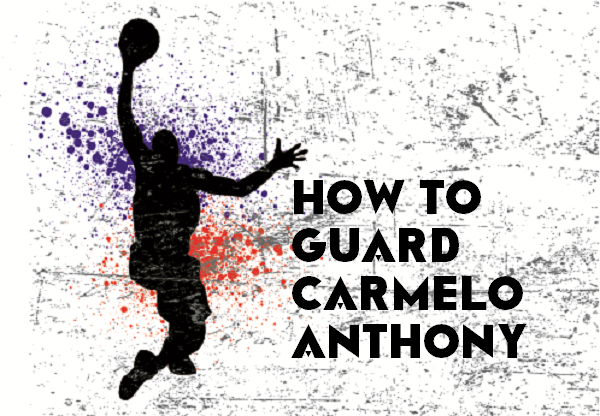
Train to Guard Carmelo Anthony

May 7, 2014 By basketballtrainer

Train to Guard Carmelo Anthony

Train To Guard Carmelo Anthony

Sorry kids, the headline is misleading.  You’re probably not going to be able to successfully guard Carmelo Anthony.  Even if somehow you got the opportunity to defend him, he’s 6’8”, 250 pounds and one of the strongest and most versatile scorers the NBA has seen.  If you played great, sound defense on him, Carmelo would still probably be able to overpower you or shoot over you.  That’s just the way it is.  However, you do you have a chance to guard the Carmelo Anthonys you see in your basketball life.  And when I say Carmelo Anthonys, I am referring to guys are who are super talented scorers.  You’ve seen guys like this, guys who you can’t identify as merely shooters, drivers or post players, but guys who have the talent for simply scoring the basketball.  Here are some tips for guarding those types of guys.


Do Your Defensive Work Early

Unless the talented scorer you are defending is a point guard, you will have the chance to do your work early.  And that means stopping your man from getting the ball when and where he wants it.  An effective strategy is to make body contact early and make your man fight through you to get to the basketball.  You don’t want to foul him, but you do want to play aggressive (and physical) deny defense.  When a scorer has to work hard to get the ball, this accomplishes a couple of things.  One, he may decide not to fight every possession and may take some offensive plays off.  Two, his teammates trying to get the ball to him may see him struggling to get open (and not getting open cleanly) and may look elsewhere on a couple of possessions.  And lastly, doing the extra work to get the ball can tire a scorer out by the end of the game and may make him less effective by that time.


Speed a Scorer Up

When great scorers get the ball, they have many options available to them.  The really great ones feel like that they can do anything with the ball, and that can sometimes be a detriment.  Instead of letting a scorer get the ball and dictate the possession, speed him up.  Put defensive pressure on him at the catch and make him make a quick decision.  This can lead to him passing the ball quickly or rushing into a quick, poorly selected shot.  The worst thing you can do is let a scorer size you up for one or two seconds and find the weakness in your defense he wants to exploit.  Many scorers are used to doing this and are not used to be making quick, high quality decisions.


Change the Defensive Look

Another thing you can do to help your cause is to change how you defend a scorer throughput the course of a game.  Good scorers take note of how they’re being defended and will adjust to that defense in just a handful of possessions.  If you’ve been guarding someone straight up for the first quarter, maybe at the beginning of the second quarter you take away the driving lane to the right and force him to drive left.  This doesn’t allow him to get comfortable and dictate possessions like he wants to, and it also takes away one of his options – one less thing for you to worry about.  If you continue to change looks throughout the game, you will make the scorer’s job tougher than it normally would be and you can more effectively stop him from having a career night against you..


Guarding the Carmelo Anthonys of the world is not easy.  These tips can really help you slow a good one down, or at the very least make his job tougher.  However if you really want to improve at the nuances of high-level defense, contact an experienced basketball trainer in your area today.  Remember that working with a basketball trainer can help you step up your defensive game and happy guarding!


Filed Under: Basketball Trainer Blog

Basketball Training: Body Language

May 5, 2014 By basketballtrainer

basketball body language training

Basketball Trainer wants to know:  Do you know what body language can tell us about your game?

Combining all the youth, high school, and college basketball games I watch live in a year I think it is safe to say I watch over 100 games a year. This allows me to not only watch what athletes do as basketball players but it allows me to see how they act before, during, and after the game. By just watching a players body language I how confident or unconfident they are, if they are a good teammate, if they are coachable, and if they a good kid in general. Like your game itself you need to work on your body language and use it to communicate to everyone in the gym who you are.

Why body language? Won’t my game just speak for itself? Honestly you probably need all the help you can get whether it is getting college scouts to notice you or just trying to get a starting spot as a freshman. I had a conversation with a college coach a few weeks ago and asked, “What is the first thing you look at when watching a specific player at a game?” He told me that the first thing he watches is how the kid warms up. He wants to see a kid with a focused “game face” on while at the same time having positive communication with coaches and teammates. Then he said I want to see what he does the first time he is subbed out of the game. Does he communicate with his teammate? Does he show disappointment if coming out after a mistake? Does high five his coaches and teammates on the bench? Then the coach told me he looks at how the kid comes back into the game. Do they pop up and hustle to the scorer’s table? Do they communicate and talk as soon as they step on the floor so they are on the same page defensively and offensively?  Finally the coach said he wants to see a kid that has some fire in their personality to win, exudes confidence but cockiness, and is even keeled in pressure situations.

You see these body language skills when watching elite high school players, college games, and many NBA athletes.  Another area that you will notice it is when watching Triple Crown horse racing events. You are probably thinking what can horse teach me about basketball? Horses are the best athletes there are in the animal kingdom so why not learn from them? Watch all of the horses before the race and then look at the winner after. They are usually calm, cool, and collected. These horses enjoy being in front of over 100,000 people and competing against other horses. People base million dollar decisions on how a horse carries himself to the starting gate. Just like how you should carry yourself with some swagger walking into a gym and warming up for the game.

So what can you do to improve your body language? Be aware of it in practice, ask your basketball trainer for feedback on your body language during your sessions, make an effort to carry yourself with confidence “swagger”, still be humble when you succeed, and attack every opportunity you have on a court because you never know who is watching.

Filed Under: Basketball Trainer Blog Tagged With: basketball body language

College Basketball Decisions & Questions

May 3, 2014 By basketballtrainer

Do You Want To Play College Basketball

College Basketball Decisons

Do you want to play college basketball? It’s okay to answer yes. Most people will tell you that it’s a long shot to make it to the college level, but it’s not up to most people whether you get there or not. It’s largely up to you. If you want to play college basketball in the near future, there are some questions you should be asking yourself now to get yourself ready. Here are a couple of questions to help get you started.

Do I love the game of basketball?

This is an important question because no matter what college you attend, you will be dedicating a lot of time to team practice, individual practice, film study and travel as a part of the basketball team. You don’t have to love the game of basketball to play at the college level (I knew guys who didn’t), but you have to be willing to commit the time to being what I like to call a “full time student athlete”. This means sacrificing some of the recreation time non-athlete students get and dedicating it to basketball. If you don’t love or at least really like the game of basketball, that time can quickly start to feel like a burden and college basketball may not be a fit for you.

Am I good enough to play college basketball?

It is important to gauge whether you have what it takes to seriously pursue playing college basketball. There are a couple of ways to determine this if you’re not sure. You can attend local college basketball games and look to see if you’d be able to play with the guys on the court. Be honest with yourself. Also, do a little research and identify the players being recruited by colleges in your area. Watch their games, and also see if you can go to open gyms where they are playing so you can compete against them. In so doing, you can determine where you’re at in relation to other college basketball prospects and players in your area.

What can I do to improve my chances of playing college basketball?

If you determine that you aren’t good enough to play college basketball, is there anything you can do to get good enough? Is there a skill you can develop into being “college level”? Maybe this is something like shooting, rebounding, or perimeter defense, three things that every college program needs.

How are my grades?

It is a common misconception that it is all about skills and not about the total student athlete at the college level. If you are a high school All-American player, it may not matter if you barely do enough to get by in the classroom. That may be good enough. For everybody else, grades can be a bigger factor. At smaller colleges and universities if you are a good student you may be eligible to receive financial assistance based on your grades. If you don’t need financial assistance, good grades can still be a draw for a college coach. Schools that are members of the NCAA, for instance, are required for their teams to achieve certain academic standards. If the highly recruited players on the team are not contributing positively to holding those standards, the rest of the team can pick up the slack. An opportunity to join a quality team as a good student and a decent basketball player could be your ticket in. Conversely, being a poor student may keep certain doors closed to you.

What college do I want to attend?

A lot of kids don’t think about this question, and they should. Every college or university may not be a fit for you, and you might want to think specifically about it. Is there a school in the city or state I’d like to be in? Is there a school that offers a perfect degree program for me? Will I have a chance to get playing time at this school? Does the team play a style that I can be successful in? Thinking more specifically can help you to make not only a good basketball decision, but also a good life decision. Also, the benefit of identifying the school you want to play at is that you can make a concentrated effort of getting into that school and onto that team. Making contact with the head or assistant coaches, researching the roster and seeing where you fit in, and training with a more specific purpose are all things you can do once you identify what school or schools you’d like to attend.

These are just a couple of questions you should be asking yourself if you are thinking about playing college basketball. Get with your local basketball trainer, who should have experience playing at the college level, to help you answer these and other important college basketball-related questions.

Filed Under: Basketball Trainer Blog

  • « Previous Page
  • 1
  • …
  • 50
  • 51
  • 52
  • 53
  • 54
  • …
  • 56
  • Next Page »

WELCOME TO BASKETBALL TRAINER…

your connection to expert & passionate basketball trainers, basketball teams, basketball camps and all basketball products and apps designed to improve your game.  We are committed to your basketball success.

Meet our team and learn more about our mission.  Click here…

Featured Course

basketball course of the week

There are many basketball courses for all skills, ages, budgets and goals.   We help you sift thru all the garbage to find the goals for each of … Learn more...

Featured Drill

 We Hope You Enjoyed The Basketball Trainer Drill of The Month Special Thanks To Friend USC Coach Chris Capko for his excellent teaching and my … Learn more...

Featured Product / App

basketball training apps and products

  Looking for the best basketball training apps? We have all the most popular basketball training apps here. Improve your basketball skills … Learn more...

Have A Basketball Biz?

Our team gathers basketball training resources from basketball trainers and in some cases for basketball trainers and their students.  Stay tuned for … Learn More

  • How It Works
  • Editorial Standards
  • Privacy Policy
  • Terms of Service
  • Contact

© Copyright 2026 Basketball Trainer

Design by BuzzworthyBasketballMarketing.com

Privacy Policy