Waukesha Basketball Training – Trainers, Camps & Teams
Waukesha basketball training in Milwaukee’s western suburb — from Tyler Herro’s hometown gym to Carroll University’s D3 campus. This page helps families navigate options across Waukesha County’s basketball landscape.
Basketball Trainers
Basketball Camps
Select Teams
High Schools
⚡ Looking for Basketball Training Options?
Skip the background info — jump straight to what you need:
Why This Waukesha Basketball Resource Exists
Waukesha’s 71,000 residents have more basketball training options than most families realize — from elite private trainers with NBA credentials to affordable city rec leagues running year-round. This page helps families understand the local landscape and find the right fit for their child, their schedule, and their budget. The best trainer on the north side near Carroll University may not make sense for a family in South Waukesha, and vice versa.
Our Approach: Context, Not Direction
We don’t rank trainers or camps as “best” — we help you understand what makes different programs right for different needs. The best fit depends on your child’s age, skill level, goals, your family’s schedule, and your budget. This page provides evaluation frameworks and local context, not prescriptive recommendations. Learn how BasketballTrainer.com works • Read our editorial standards
Understanding Waukesha’s Basketball Geography
Waukesha is compact by Milwaukee metro standards — just 25.5 square miles compared to Milwaukee’s 96. That compactness works in your favor: nothing is truly far away, and cross-town drives rarely exceed 15-20 minutes even during rush hour. The Fox River cuts through downtown, creating natural north/south divisions. The I-94 corridor along the south edge connects you to Milwaukee in about 20 minutes, which matters when evaluating whether training options in Brookfield, Pewaukee, or the city itself make more sense for your family.
Downtown / North Side
What to Know: Historic downtown along the Fox River, Carroll University campus, older established neighborhoods. The city’s cultural and academic center.
- Key Facilities: Carroll University (D3 basketball, camps at Center Court), downtown community courts
- Commute Reality: 10-12 minutes to South Side; 5-10 minutes to Schuetze Rec
- School: Waukesha North High School
South Side
What to Know: Home to Les Paul Middle School (league play hub), Waukesha South High School, and established residential neighborhoods. Heavy basketball activity year-round.
- Key Facilities: Les Paul Middle School (325 Carroll St), Waukesha South Field House (401 Roberta Ave)
- Commute Reality: 10 minutes to Schuetze Rec; easy I-43 access to Milwaukee
- School: Waukesha South High School (Blackshirts)
West Side
What to Know: Newer suburban development, Waukesha West High School, growing family neighborhoods. The Pro Lane training facility serves this corridor.
- Key Facilities: The Pro Lane (1814 Dolphin Drive), Waukesha West HS gym
- Commute Reality: 10-15 minutes to Schuetze Rec; 5-10 minutes to Pewaukee options
- School: Waukesha West High School (Wolverines)
East Side / Brookfield Border
What to Know: Older neighborhoods transitioning toward Brookfield. Schuetze Recreation Center anchors this area. Good highway access to broader metro Milwaukee options.
- Key Facilities: Schuetze Recreation Center (1120 Baxter St) — primary city gym
- Commute Reality: 10-15 minutes from most Waukesha neighborhoods; 20 minutes to Milwaukee training options
- Highway Access: I-94 on-ramp connects Milwaukee metro options
The Milwaukee Metro Reality Check
Waukesha’s proximity to Milwaukee opens up a broader training ecosystem — but also creates a decision point. Milwaukee has more trainers, more facilities, and more competitive programs. Whether that’s worth a 20-30 minute drive (each way) depends on your child’s age and goals. For most younger players (K-6th grade), Waukesha options are plenty. For serious high school players pursuing college recruitment, the Milwaukee metro pipeline becomes more relevant. That’s a conversation to have with your child and their school coach, not a decision to make based on marketing.
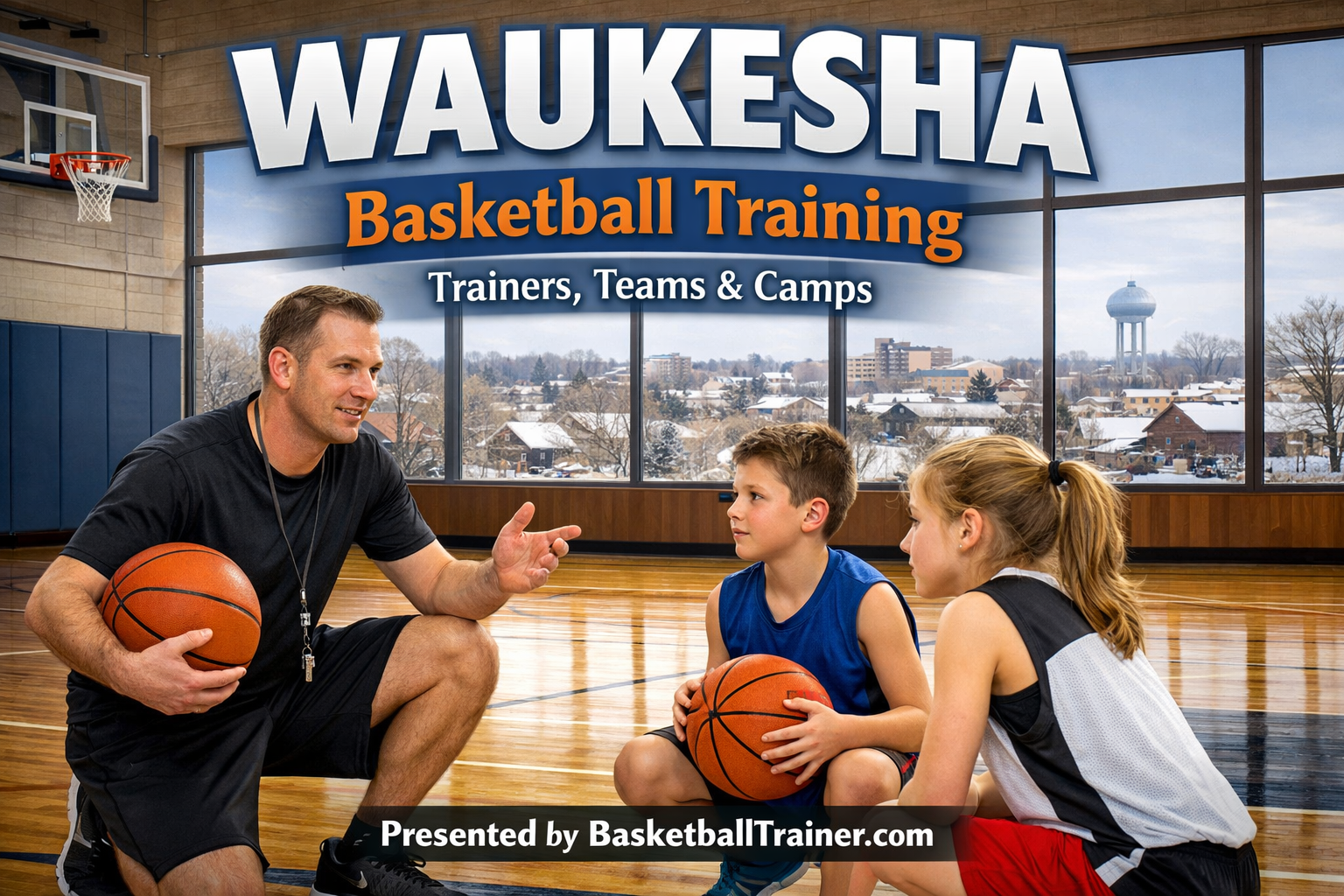
Waukesha Basketball Trainers
These Waukesha-area basketball trainers work with players across skill levels. Use the evaluation questions later in this page when reaching out to any of these options — the right fit depends on your child’s age, goals, and your family’s schedule.
The Pro Lane
The Pro Lane at 1814 Dolphin Drive is Waukesha’s most credentialed private basketball training facility. Head coach Drew Dunlop brings 14+ years of experience including working with Tyler Herro (Miami Heat), players in the Chinese Basketball Association (CBA), and the Philippines Basketball Association (PBA). The facility uses NOAH basketball analytics technology to provide data-driven feedback on shooting mechanics — a level of technical detail you rarely find outside elite training environments. Sessions run Monday through Thursday afternoons and evenings (3:30–8 PM) with Sunday morning slots (8 AM–12 PM). The Pro Lane focuses on developing adaptable, confident players who perform in real game situations rather than just drills, which is a meaningful distinction. Individual and small group sessions available. Well-reviewed by local families, with a 4.8-star rating across 25+ reviews.
Wisconsin Focus Basketball
Founded by Brian Staffeldt, Wisconsin Focus Basketball (wifocusbasketball.org) brings over 30 years of Waukesha-area coaching experience to its training programs. Staffeldt previously coached at Waukesha West, Waukesha South, and Waukesha North high schools, as well as West Allis Hale and Heritage Christian — which means he knows the local competitive landscape from the inside. The program emphasizes fundamentals (“FOF” — Focus on Fundamentals) alongside college exposure opportunities for older players. The coaching staff includes Josh Gierhahn (Carroll University alum) and Matt Vraney (UW-Waukesha Hall of Famer), giving players access to coaches with direct knowledge of Wisconsin’s college basketball pathway. Wisconsin Focus also partners with The Pro Lane for certain camp programs, creating a natural pipeline between the two organizations. The organization runs club basketball teams at various levels in addition to individual skill development.
Hooper Hands Basketball Academy
Hooper Hands Basketball Academy serves the youngest players in the Waukesha area, with programs specifically designed for children ages 4–11. The academy operates through both independent programming and partnerships with Waukesha Parks & Recreation, which keeps costs accessible for families. For parents of young children who want structured basketball instruction without the intensity of competitive programs, Hooper Hands fills a real gap. Sessions emphasize age-appropriate fundamentals — dribbling, passing, footwork — through games and activities that keep young kids engaged rather than burned out. Multiple Waukesha-area locations. Good first step for families new to youth basketball who want their child to learn the basics in a low-pressure environment.
Carroll University Basketball Staff / Player Trainers
Carroll University’s Division III basketball program creates an informal training ecosystem in Waukesha. Current and former Pioneers players are often available for individual training sessions, typically at more affordable rates than credentialed private trainers. Working with a college athlete gives developing players a perspective they can’t get from recreational leagues — how to practice, how to prepare mentally, what coaches actually look for at the next level. Reach out directly to the Carroll University athletics department to ask about player-coaching programs or camp sessions that include one-on-one instruction. Rates, availability, and structure vary; this is more of a “know the ecosystem exists” recommendation than a formal listing.
Waukesha Basketball Camps
Waukesha basketball camps run primarily June through August, with some options during school breaks. Costs range from affordable city programs to premium facility camps. Here’s what to know about each option.
TNBA Milwaukee Bucks Camps at Schuetze Recreation Center
The National Basketball Academy (TNBA) partners with the Milwaukee Bucks to offer camps at Schuetze Recreation Center that draw on Bucks coaching methodology and branding. Programs serve ages 7–14 with both day clinics and week-long camp formats. Shorter clinics typically run around $75; week-long camps run higher. The Bucks brand creates some cachet, but more practically, the curriculum reflects professional-level thinking about skill development — ball handling, shooting mechanics, passing, defense — structured by age group. For families wanting a summer camp experience with recognizable credentials and good facility infrastructure, this is worth a look. Registration typically opens in spring through the TNBA website. Schuetze’s full-sized court with premium wood flooring and adjustable hoops provides a quality training environment.
Carroll University Basketball Camps
Carroll University’s basketball program hosts summer youth camps at Center Court Sports Complex (815 Northview Road, Waukesha). The program runs separate tracks — morning Fundamental Camp open to grades K–12 ($85 per week) and afternoon Competition Camp for grades 5–12 ($160 per week all-day, or $85 for half-day). The two-track structure lets families choose based on their child’s experience level and goals. Fundamentals track = learning the game in a structured, low-pressure environment. Competition track = applying those skills against peers with actual game situations and coaching feedback. Having a Division III coaching staff run the curriculum adds real basketball knowledge to the experience. This is also an opportunity for older players to be seen in a Waukesha setting by coaches who understand the Wisconsin college basketball pipeline, even at the D3 level.
Waukesha Parks, Recreation & Forestry (WPRF) Youth Basketball
The City of Waukesha’s Parks, Recreation & Forestry Department runs organized youth basketball programs through Schuetze Recreation Center and Les Paul Middle School Central Campus. These seasonal programs offer the most affordable entry point into structured basketball for Waukesha families. Youth leagues focus on fundamentals, teamwork, and recreation — this is not elite training, but it’s real basketball in a city facility with reasonable costs. Adult recreational leagues also available for parents who want to stay connected to the game. Contact WPRF directly (search “Waukesha Parks Recreation” for current contact information) for current season schedules and registration details, as programming evolves seasonally. A solid starting point for kids just learning the game or families who want basketball as an activity rather than a pathway to elite competition.
Hooper Hands Basketball Academy Camps
Hooper Hands runs seasonal camps alongside their regular academy programs, serving the younger end of Waukesha’s basketball community (ages 4–11). Camp formats emphasize fun and fundamentals over competition, making these a good fit for families whose child is curious about basketball but hasn’t committed to the sport yet. Camp costs tend to be accessible given the youth/recreational focus. Check their current schedule directly, as programming updates seasonally. Also note: Hooper Hands works through WPRF partnerships, so some of their offerings may appear under the city’s programming umbrella rather than as a separate listing.
Waukesha Select Basketball Teams
Waukesha-area select and club basketball teams compete in Wisconsin Youth Basketball League (WYBL) events and state qualifier tournaments. Tryouts typically occur in August and September. Travel is primarily regional — Milwaukee metro, Madison, Green Bay — with occasional out-of-state tournaments for top-level programs.
Waukesha South Youth Basketball Club
Waukesha South Youth Basketball Club is tied to the Waukesha South High School feeder system and runs programs for 2nd through 8th grade boys and girls. Tryouts are held at Waukesha South Field House (401 Roberta Ave). The school-affiliated structure means developing players build familiarity with South’s coaching philosophy and style of play early — which matters for families whose kids attend Waukesha South or plan to. The program competes in regional Wisconsin tournaments and provides a structured pathway from youth ball toward high school varsity consideration. Annual fees vary by age group and tournament level; ask about the full cost breakdown including tournament travel when inquiring.
Waukesha West Jr. Wolverines
The Jr. Wolverines program serves as the feeder system for Waukesha West High School varsity basketball. Tryouts typically occur in September at Waukesha West HS. If your child attends West or plans to, this program provides the most direct developmental pipeline to the school team — players build familiarity with West’s system, coaching staff, and competitive culture earlier than peers who come from outside programs. The program runs seasonal competition in Wisconsin regional circuits. Families considering this program should ask specifically about how the youth program connects to JV/varsity consideration and what the coaching staff’s philosophy is around playing time at younger ages.
Youth Girls Select Basketball League (YGSBL)
The YGSBL serves girls select basketball in the Waukesha area, with 5th/6th grade games held at Waukesha South High School and 7th/8th grade games at Waukesha West High School. This league-focused structure provides organized competition for girls developing their skills outside of school-season limits. The school facility venues mean good court quality and established infrastructure. For families with daughters interested in girls basketball development in the Waukesha area, YGSBL is the most established local girls-specific option rather than co-ed programs. Ask about tryout timing and team formation process when contacting the organization.
Wisconsin Focus Basketball Club Teams
Wisconsin Focus Basketball runs club teams at various age levels alongside their training programs. Founded by Brian Staffeldt with 30+ years of Waukesha coaching experience, these teams benefit from coaching staff who understand the Wisconsin high school and college landscape — where local players have gone on to play, what coaches look for, and how development timelines realistically work. The college exposure focus is notable: Wisconsin Focus coaches actively attend exposure events to help older players get in front of college coaches. For families with serious high school players (14U–17U) thinking about college basketball, this organizational focus on the recruitment pathway is worth asking about specifically during your initial conversation.
How to Use These Listings
These are trainers, camps, and teams that Waukesha families work with. We don’t rank them or endorse specific programs. Use the evaluation questions in the next section when contacting any of these options. The right fit depends on your child’s age, skill level, goals, your family’s schedule, and your budget. Contact 2–3 options before committing to see which feels right.
Waukesha High School Basketball
Waukesha has three public high schools plus Catholic Memorial as a private option. All compete under WIAA (Wisconsin Interscholastic Athletic Association). High school tryouts typically occur in late October to early November.
Waukesha West High School
Nickname: Wolverines
Notable Alums: Multiple players to Division I and II programs; Tyler Herro (Miami Heat) trained locally in Waukesha
Feeder Program: Waukesha West Jr. Wolverines
Waukesha South High School
Nickname: Blackshirts
Moving to: Woodland Conference in 2025–26 school year
Feeder Program: Waukesha South Youth Basketball Club (tryouts at 401 Roberta Ave)
Waukesha North High School
Location: North Side, near downtown and Carroll University
Moving to: Woodland Conference in 2025–26
Note: Wisconsin Focus Basketball coaching staff has deep history coaching at North over the years
Catholic Memorial High School
Type: Private Catholic school
Note: Competes in WISAA (private school association) alongside some WIAA divisions
College Program on Campus: Carroll University (D3) — creates unique basketball culture with college presence directly in Waukesha
All three public high schools field varsity and JV teams for both boys and girls basketball. Tryouts typically occur in late October. The conference realignment for North and South (moving to Woodland Conference) may shift competitive dynamics somewhat — ask coaches about how conference competition has changed when evaluating school teams.
Waukesha Basketball Facilities: The Affordable Baseline
Before investing in private training or select teams, understand Waukesha’s public basketball infrastructure. Unlike sprawling metro areas with dozens of rec centers, Waukesha has a smaller but solid set of public facilities. Here’s the honest picture of what’s available, what it costs, and who each facility serves best.
The Primary Hub: Schuetze Recreation Center
Address: 1120 Baxter St, Waukesha, WI 53186 | Contact: Waukesha Parks & Recreation
Schuetze is the anchor of Waukesha’s public basketball ecosystem. The facility features a full-sized basketball court with premium wood flooring, six glass backboard hoops with adjustable heights (which matters for youth training — not every gym makes this accommodation), and two scoreboards for organized game play. TNBA Milwaukee Bucks Camps run their summer programming here. WPRF organizes youth leagues and adult recreational leagues in this space year-round.
What Makes It Notable: The adjustable hoop heights are genuinely useful for younger players — shooting on an adult-height rim is developmentally counterproductive for kids under about 10. Schuetze addresses this correctly.
Access: Contact WPRF for current drop-in hours, league registration, and fee schedules. Fees for organized leagues typically run $60-150 per season for youth programs.
The League Play Hub: Les Paul Middle School Central Campus
Address: 325 Carroll St, Waukesha, WI 53186
Les Paul Middle School (named for Waukesha’s famous son, the inventor of the electric guitar) serves as a secondary basketball venue for city-organized leagues. The school gym provides quality hardwood court space in a central downtown-adjacent location. WPRF uses this facility alongside Schuetze to spread programming capacity across the city.
Access: Through WPRF league registration. Not typically available for open drop-in play — this is a league/program venue rather than a public gym.
The Camp & Tournament Venue: Center Court Sports Complex
Address: 815 Northview Road, Waukesha, WI 53188
Center Court is Waukesha’s multi-court private facility primarily used for tournaments, camps, and organized programming. Carroll University runs its summer camps here. The facility hosts Athletes In Motion and other tournament series that bring in teams from across the Milwaukee metro area. Multiple courts allow simultaneous games, which is necessary for tournament formats.
Access: Primarily through organized programming (Carroll camps, tournaments) rather than open drop-in. Check the facility website for current availability.
The Broader Milwaukee Metro Option
Waukesha families have a geographic advantage Milwaukee families don’t: reasonable access to both Waukesha’s smaller-city community feel and Milwaukee’s larger facility ecosystem. Milwaukee County has extensive recreation center infrastructure — the Pettit National Ice Center area, Menomonee Falls facilities, and more private training gyms. The 20-minute I-94 drive is sustainable for families whose kids are training seriously. For most younger players, Waukesha’s own facilities are plenty. For serious high school players, it’s worth knowing the broader ecosystem exists.
Evaluating Basketball Training Options in Waukesha
We provide frameworks for evaluation, not recommendations. These questions help you assess trainers, camps, and teams based on what matters for your family in Waukesha.
Questions to Ask Private Trainers
Why this matters: A trainer who specializes in high school varsity prep may not be the right fit for your 5th grader, even if they’re excellent. Good trainers know their best age range.
Why this matters: Vague promises mean nothing. Specific targets — “30% better free throw percentage,” “complete this drill at game speed,” “handle pressure defense without turning it over” — mean your trainer has thought about your child’s actual development.
Why this matters: You’re paying for results, not just hours. A trainer who updates you on what your child is working on and why creates a real development partnership. One who doesn’t can leave you wondering if the investment is working.
Why this matters in Waukesha: Waukesha is small enough that geography rarely kills a decision the way it does in El Paso or Houston. But check that session times don’t conflict with school commitments, especially as fall and winter sports seasons start.
Why this matters: Wisconsin winters, school schedules, and family life create interruptions. Understanding the policy before paying protects your investment and sets clear expectations.
Questions to Ask About Camps
Why this matters: 1 coach per 20 kids = organized supervision. 1 coach per 8 kids = actual skill instruction. Know which you’re buying.
Why this matters: Carroll University’s camp separates these into distinct tracks. Not all camps do. Understand what percentage of time is drills vs. scrimmage.
Why this matters: Some camps include lunch and a camp shirt; others are instruction only. Understand total out-of-pocket before registering.
Questions to Ask About Select Teams
Why this matters: Team fees plus tournament entry, gas, hotels (even for overnight Wisconsin trips), food, and uniforms. Real cost often doubles the advertised fee. Get the full picture before committing.
Why this matters in Waukesha: School-affiliated programs (Jr. Wolverines, South YBC) build direct pathways to school teams. Independent programs may have broader development focus. Neither is inherently better — depends on your goals.
Why this matters: “Everyone plays equal” and “best players play more” are both valid approaches, but very different experiences for your child. Know which you’re signing up for.
Waukesha Pricing Reality
City Rec Leagues: $60–150 per season (most affordable baseline)
Private Training: $40–100 per session; small group programs often $150–250/month
Summer Camps: $75–160 per week depending on facility and program
Select Teams: $800–2,000+ annually in team fees, plus travel costs (primarily Wisconsin regional)
Free Basketball Training Evaluation Guide
Download our comprehensive guide with questions to ask before committing to any program.
Waukesha Basketball Season: What to Expect
Understanding when different basketball programs run in Waukesha helps families plan without panic. This calendar shows typical timing — not deadlines you must meet.
High School Season (WIAA)
Typical Timeline: First practices late October, games begin early November, regular season through February, WIAA sectionals and state tournament late February through early March.
What This Means: October through March, school basketball is your child’s primary commitment. Everything else — AAU, private training, open gyms — competes for physical energy during these months. Many coaches prefer players focus on school ball exclusively in-season.
Club / Select Team Season
- August–September: Club tryouts (South YBC, Jr. Wolverines, Wisconsin Focus teams)
- September–November: Fall league play before school season intensifies
- March–May: Spring club season begins after school playoffs end
- June–August: Peak summer tournament season; WYBL events, regional travel
Basketball Camps
- June: Carroll University camps open (Center Court); early Bucks TNBA camp sessions at Schuetze
- July: Peak camp season across Waukesha — most options available
- August: Final summer camps; club tryouts begin for next club season
Year-Round Rec Leagues
WPRF runs programming at Schuetze Recreation Center and Les Paul Middle School year-round, creating an accessible baseline available regardless of season. Contact WPRF for current schedule and registration windows — seasonal programming varies and registration periods are specific.
Wisconsin Winter Reality: Unlike Sun Belt cities where basketball moves outdoors in summer, Waukesha basketball stays inside year-round. The indoor gym competition increases in winter when outdoor sports can’t compete — plan ahead for Schuetze court availability during peak evening hours.
Waukesha’s Basketball Culture & Heritage
Waukesha sits in Milwaukee Bucks country, which shapes youth basketball culture in ways both visible and subtle. Kids grow up watching professional basketball at Fiserv Forum 20 minutes away — a connection to the highest level of the game that some basketball cities can’t offer. The local high school tradition runs through three distinct programs with genuine rivalries, and Carroll University’s Division III presence gives developing players a college basketball environment directly in their city.
The Tyler Herro Effect
Tyler Herro, who plays for the Miami Heat, trained at The Pro Lane in Waukesha. That fact matters to the local basketball community — not because every Waukesha player will reach the NBA, but because it demonstrates that serious training infrastructure exists here, not just in Milwaukee or Madison. Local trainers with NBA credentials create credibility for the broader training ecosystem. When a facility can point to that level of connection to professional basketball, it signals they understand what elite development actually looks like.
The Tri-School Rivalry
Waukesha West (Wolverines), Waukesha South (Blackshirts), and Waukesha North share the same city while competing as genuine rivals. That rivalry creates a basketball culture where kids understand that playing matters beyond just their own school’s community — the game gets personal when your neighbors are on the other team. The conference realignment moving North and South to the Woodland Conference in 2025–26 may shift some of these matchups, but the intra-city dynamic remains.
Carroll University: D3 Basketball in Your Backyard
Having a college basketball program in your city creates advantages that aren’t always obvious. Carroll University’s Pioneers play at the D3 level, which is genuinely competitive basketball despite the lower profile. Local youth players can attend games, watch practice environments, interact with college-age athletes, and understand what the next level of the sport actually looks like — not through TV, but in person. The Carroll coaching staff’s involvement in summer camps creates another touchpoint between high school players and the college game.
“GuitarTown” and the Midwest Basketball Mindset
Waukesha is known as GuitarTown for Les Paul — the inventor of the solid-body electric guitar was born here. That Midwest working-class ingenuity runs through the city’s basketball culture too. There’s a practical, substance-over-hype quality to how Waukesha coaches and families approach the game. Programs like Wisconsin Focus Basketball, founded by a coach who spent 30+ years in the trenches of Waukesha high school basketball, reflect that ethos. It’s not flashy. It’s fundamentally sound, community-rooted, and honest about what development actually takes.
Frequently Asked Questions About Waukesha Basketball Training
These are the questions Waukesha families ask most often about youth basketball programs, costs, and timing.
How much does basketball training cost in Waukesha?
Basketball training costs in Waukesha vary significantly by type. City rec leagues through WPRF run $60–150 per season — the most affordable organized option. Private basketball training in Waukesha typically costs $40–100 per individual session; small group programs often run $150–250 monthly. Summer camps range from $75 for single-day clinics (Bucks TNBA) to $85–160 per week for structured camp programs (Carroll University). Select and club team fees run $800–2,000 annually, plus tournament travel costs primarily within Wisconsin. Many programs offer reduced rates for siblings or families demonstrating financial need — it’s always worth asking.
When do youth basketball tryouts happen in Waukesha?
Most Waukesha club and select teams hold tryouts in August and September for the upcoming season. Waukesha South Youth Basketball Club and Waukesha West Jr. Wolverines both typically hold tryouts in this window. High school team tryouts (WIAA) occur in late October to early November, after the football season concludes and before basketball practice officially begins. If your child is interested in a specific program, reach out in June or July to ask about their timeline — some programs fill spots from returning players first, and spots for new players may be limited.
Should Waukesha players consider training in Milwaukee instead?
For most players under high school age, Waukesha’s options are sufficient. The city has a credentialed private training facility (The Pro Lane), youth leagues through WPRF, Carroll University camps, and school-affiliated club programs. For serious high school players pursuing college basketball at higher division levels — D1 or D2 programs — the Milwaukee metro opens up more specialized training, more competitive AAU circuits, and more college coach visibility at exposure events. That calculus changes around 14U–15U for players with legitimate division-level aspirations. For younger players and recreational-level development, the 20-minute drive to Milwaukee rarely creates enough additional value to justify the time commitment.
What’s the best age to start organized basketball in Waukesha?
Hooper Hands Basketball Academy starts at age 4, and that’s developmentally appropriate for kids who are simply active and curious about basketball — structured play, basic motor skills, having fun. WPRF and city recreational leagues serve K–2nd graders well. Private lessons and more skills-focused instruction typically become more productive around ages 8–10, when kids have the attention span and physical coordination to build specific skills. Club tryouts generally start at 2nd or 3rd grade but the competitive intensity picks up meaningfully around 4th–5th grade. The most important factor isn’t age — it’s your child’s interest level and your family’s capacity for the time and financial commitment involved.
Can my child do both school basketball and club in Waukesha?
Many Waukesha players participate in both. School season runs October–February/March; club season peaks in spring and summer with some fall activity. The potential conflict arises in the August–September window when club tryouts occur during preseason training periods, and again in February–March when school playoffs overlap with spring club starts. The most important step is communicating with your school coach — some Waukesha coaches actively support club basketball as supplemental development, while others prefer players focus exclusively on school ball in-season. That conversation should happen before committing to a club program, not after.
Does Carroll University offer any youth basketball programs?
Yes. Carroll University’s basketball coaching staff runs summer youth camps at Center Court Sports Complex (815 Northview Road, Waukesha). Programs include morning Fundamental Camps open to grades K–12 and afternoon Competition Camps for grades 5–12. The two-track structure gives families flexibility based on their child’s experience level and goals. Carroll camps tend to be well-run given the D3 coaching staff involvement. This is also one of the few opportunities in Waukesha for older players to be seen in a camp setting by coaches with genuine college basketball knowledge, even if Carroll is D3. Contact the Carroll University athletics department directly for current camp schedules and registration information, as dates and formats can change season to season.
Waukesha Basketball Training Options at a Glance
| Training Option | Cost Range | Best For | Time Commitment |
|---|---|---|---|
| City Rec Leagues (WPRF) | $60–150/season | Beginners, recreational players, budget-conscious families | Seasonal, 1–2x/week plus games |
| Private Training (Individual) | $40–100/session | Skill development, pre-tryout prep, specific weaknesses | Flexible, typically 1–2x/week |
| Private Training (Small Group) | $150–250/month | Consistent skill work, cost-effective alternative to individual | 2–3 sessions/week, year-round or seasonal |
| Summer Camps | $75–160/week | Skill building, new players, summer structure | 1–2 week sessions, June–August |
| Club/Select Teams | $800–2,000+ (plus travel) | Competitive players, tournament experience, high school prep | 6–8 months, 2–3 practices/week, weekend tournaments |
Note: Costs represent typical Waukesha ranges as of 2026. Always ask about sibling discounts, scholarship opportunities, or financial assistance — many programs offer options not prominently advertised.
Getting Started with Basketball Training in Waukesha
If you’re new to Waukesha basketball or just starting your child’s training journey, here’s a practical path forward that doesn’t require you to figure everything out at once.
Step 1: Clarify Your Goal
Is your child trying to make their school team? Develop fundamental skills? Stay active and try a new sport? Your goal determines which training option makes sense. Many Waukesha families start with a city rec league or summer camp before committing to private training. There’s no single right starting point — clarity about what you’re trying to accomplish helps you evaluate options honestly.
Step 2: Locate Your Starting Zone
Waukesha is compact enough that geography rarely kills a decision — most facilities are within 15 minutes of each other. But consider whether your child attends (or plans to attend) West, North, or South, since school-affiliated programs create a natural development pathway toward those school teams. That connection can matter when tryouts come around.
Step 3: Contact 2–3 Options
Use the evaluation questions from this page. Review the trainer, camp, and team profiles above. Reach out to 2–3 that match your goals and schedule. Most trainers offer trial sessions, and most camp programs have easy online registration or phone contact. Don’t commit after one conversation — talking to multiple options reveals what the range looks like before you decide.
Step 4: Trust What You See
After a trial session or initial conversation, trust your read. Does your child seem excited or dreading practice? Does the trainer communicate clearly with you? Are logistics actually sustainable for your family’s schedule and budget? Sometimes the option with fewer credentials is the better fit because your child connects with that coach. The most important variable is whether your kid actually wants to show up.
Free Basketball Training Evaluation Guide
Download our comprehensive guide with specific questions to ask trainers, camps, and teams before committing.
Waukesha Quick Links
Basketball Resources
Nearby Cities
About BasketballTrainer.com
© 2026 BasketballTrainer.com. All rights reserved. Waukesha, Wisconsin basketball training resource. Context, not direction.