Basketball Trainer

Connect With Trainers, Camps, Select Teams, and Knowledge

  • Find Trainers
  • Camps
  • Teams
  • Contact
  • Find Trainers
  • Camps
  • Teams
  • Contact

Test gif format

April 27, 2015 By basketballtrainer

slideshare-as-a (4)

slideshare-as-a (10)

Filed Under: Uncategorized

Basketball Trainer Interview With Rich Stoner

March 26, 2015 By basketballtrainer

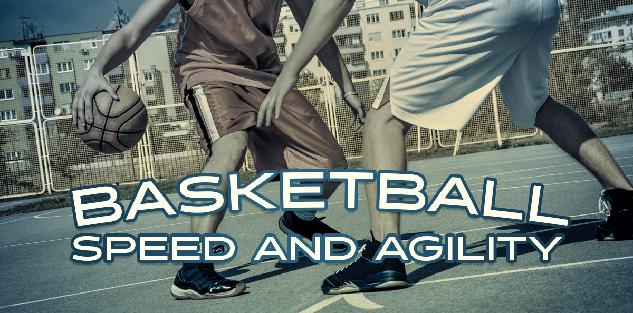
Basketball Speed and Agility Course

Basketball Speed and Agility – 9 Questions For An Expert Trainer


I had a chance to interview Rich Stoner of Elite Basketball Training.  Rich is known as one of the best basketball trainers in New Jersey and is highly respected by trainers all over the nation.  I personally rely on Rich for solid advice on topics ranging from basketball nutrition to basketball strength training.   I most admire his expertise on basketball speed and agility issues.

BasketballTrainer.com (BT): How exactly did you craft your expertise on the topic of basketball speed and agility?

Rich Stoner (RS):I have always been highly involved in creating the sports performance programs for any basketball team that I have coached both as an assistant or as a head coach. This prompted me to get my USAW Sports Performance Coach certification early on in my career. From there on I have consistently analyzed the game of basketball watching how players move on the basketball court in order to come up with the best ways to improve those movements along with their skills. Speed and agility rank near the top in terms of the factors that lead to an athlete’s success on the court and therefore have become a focal point of our training at Elite Basketball Training.


Basketball Speed and Agility Trainer Rich StonerBT:  It seems like football dominates the speed and agility scene and basketball is an afterthought. What are the differences and why is it important to stay basketball focused?
RS: Regarding speed and agility, basketball differs from football and is unique in the sense that there are more constant changes of direction and changes of movement. Basketball also requires players to make changes of speed and direction while dribbling a basketball and this is something that is foreign to football. Basketball is a stop and go kind of game and it is far from linear. Whether on defense or offense, with or without the basketball the game requires players to cut off angles or take advantage of angles. To do so effectively requires a player to be not only quick but also agile (change directions effectively) and to possess the basketball skills and footwork to operate in this manner efficiently.


BT:  What is the number 1 reason people don’t start a speed and agility program?

RS: It is an afterthought, not a priority. Players seem to focus more on game play first, then skill development, and then if they have some time, they will incorporate sports performance training, which includes speed and agility work. This is a terrible way to look and the basketball training spectrum. Basketball training should include predominantly, skill development and sports performance training and lastly game play. To improve your ability on the court, you need a ton of repetitions and these are repetitions that you just cannot get when playing games.


BT: Having run plyometric programs before myself, it seems like kids need a small group to perform best. Do you see similar issues in speed and agility work, and if so, why do you think this is the case?

RS: Smaller group training is definitely the best case scenario. It allows a coach to really break down the movements for each individual and explain how that particular player can be better. However, over time, once players have learned these movement patterns and the correct way to execute them, a large group with an extra trainer or two would work just fine.


BT:  What are the biggest obstacles to achieving success in a basketball speed and agility program?

RS: Misinformation and time. Players and parents are being inundated nowadays with information that pushes them in the direction of playing more basketball games. So they end up signing up to play for two or more teams. This severely limits their time to train and develop their skills and athleticism. I cannot count the number of times that parents have told me that, “They don’t have the time for sports performance training.” Yet, these will be the same parents that come back to me after a long AAU season of doing nothing but play games and tell me that their son or daughter has not improved at all and, in fact, has gotten worse. Basketball skill development and performance training should make up the bulk of your basketball training regimen, and that requires cutting back on the number of teams you play for in order to open up more time to train for things like speed and agility.


BT: What age should players begin this type of training?

RS: I’ve worked with players as young as seven. As long as the program is well designed which includes it begin physically appropriate for the age and ability of each player they will most certainly see the benefits.


BT: How does rest factor into the training schedule with this focus?

RS: Rest is an interesting component to speed and agility training. There is a lot of this type of training that requires max effort so optimal rest between sets is ideal. However, the game of basketball is not played that way and your rest time can and usually is limited by the clock and the whistle. With this in mind, it is best to train some drills for max effort in order to develop components like starting speed but it is a must that you train other drills with limited rest time in order to better simulate actual gameplay.


BT: What questions should I be asking you that I have not?

RS: What role does strength training play in the development of speed and agility?
Our strength programs are designed to develop, among other things, strength and power. Increased strength and power with allow the athlete to exert more force on to the ground and explode off of it. Simply stated, the more force an athlete can apply on the ground, the quicker they will be. Furthermore, the extensive core work that we do in our training will ensure that our players bodies have the ability to work from the core to the extremities. This will help them remain stable and balanced when changing directions and changing movements on the court.


BT: What can people expect to get from your program you devised?

RS: They can expect a more efficient way of looking at training speed and agility for basketball. As I mentioned earlier, time is one of the deciding factors in a player not committing to a speed and agility program. My program not only shows players the drills to use to develop their speed, agility, and quickness but also incorporates skill development into these same drills. You will be killing two birds with one stone. Not having time can no longer be an excuse. My program will save time and allow you to improve your speed and agility with and without the basketball.

BT: Rich- thanks for making the time to answer some of our questions, we hope to have you back soon.  I am going to share your course and also some of your contact info in this space.


Click On Below Image To View Rich Stoner’s Basketball Speed And Agility Course

Basketball Speed and Agility Course


We love interviewing passionate and expert basketball trainers here at BasketballTrainer.com.  Rich Stoner is a client of BuzzworthyBasketballMarketing.com.   If you have interest in being interviewed here shoot us an email or give us a call. 

Filed Under: blog Tagged With: basketball agility training, basketball speed and agility, basketball speed training, rich stoner

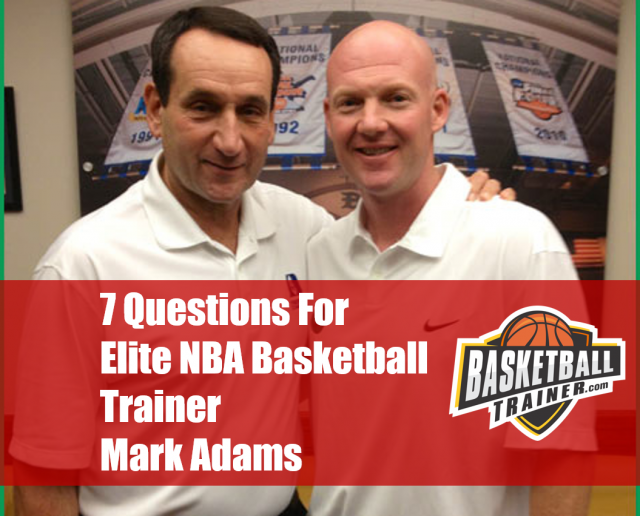
Mark Adams – Basketball Trainer Interview

March 1, 2015 By basketballtrainer

Basketball Trainer Mark Adams

Who Is Mark Adams?

If you have not already heard…Mark Adams is an Elite Basketball Trainer who helps several NBA clients, college teams and the training and camp community.  His portfolio of experience allows him to share a very unique perspective.  He has served as a collegiate assistant at Syracuse, a highly successful high school coach, and was a 1000 point scorer as a player in high school and college.  We were introduced to Mark by BasketballHQ.com partner and South Alabama Basketball Assistant Coach Russ Willemsen who spoke very highly of him.  Mark is committed and passionate about player development and has the growth mindset that the BasketballTrainer.com team looks up to.

BasketballTrainer.com (BT): What is the biggest problem in basketball training today?

Mark Adams (MA): The disconnect between the basketball trainer and the player’s coach.  Ideally the basketball trainer should communicate with the players coach and build a relationship. Together they can devise a plan for purposeful training so that the player can maximize time and energy.  The basketball trainer should get as much input and data from the coach as possible and use it to devise specific workouts.

BT:  What is your training approach with a younger player?

MA:  My approach with younger players is simple… I focus on the fundamentals. When working with young players more teaching and explaining often takes place.  Make sure that all the skills and drill work translates to actual game like situations. Young players should learn the importance of competition, but most importantly have fun training.

 BT: Why do you still make time for youth basketball?

MA: I love the game and I enjoy working with young players. It’s the truest form of teaching that exists. You can have a huge impact on kids and help them get better.

BT:  If you  could go back in time as a young player, what would you tell yourself?

MA: I would work on all skills and total development of my game. I made the mistake of focusing too much on my position (shooting guard) and didn’t develop other skills such as ball handling, passing, etc. Today’s players need to be more versatile and multi-skilled.

BT:  Who were your key influences?

MA:  I have been very fortunate to have some of the best in the game as mentors and friends. – My first job was working for Jim Boeheim at Syracuse University.  – Coach K – have been fortunate to have him for advice and counseling over the years.

– Alan Stein and Dee Brown were extremely influential in my decision to become a player development coach full-time.

– Currently, NBA Skills trainer Aubrey McCreary, is my main mentor and like a big brother to me.

BT:  Mark, you have a reputation of being one of America’s best camp demonstrators and teachers.  What can campers expect across the nation?

MA: To learn the fundamentals, to be taught and develop skills that translate.  Train extremely hard.  They can expect energy, enthusiasm and passion I want all of my players to

1) Get Better

2) Have Fun

3) Develop Meaningful Relationships

BT:  Where can they find out more information about you and your programs?

MA: 

– www.markadamsbasketball.com

– twitter – @MarkAdamsBball

– facebook – facebook.com/MarkAdamsBasketball

– email – [email protected]

BT: Finally Mark can you share the qualities you most admire in two NBA Players you have worked with and what younger players could learn from them?

MA:  Ryan Kelly – Los Angeles Lakers – Resilient — Despite numerous injuries, Ryan keeps a positive attitude and continues to work on his game.

– Paul Millsap – Atlanta Hawks – Work Ethic — Paul is a true professional. He has a willingness to go outside his comfort zone to expand his game.  Tremendous off season commitment and takes care of his body.

BT:  Mark – thanks so much for joining us here, you are welcome back anytime and we look forward to catching up on your visit to Austin this summer!!  Also, congratulations on making the list of best basketball websites!

Filed Under: blog Tagged With: basketball trainer, Basketball trainer mark adams, Mark adams basketball camp, Mark Adams Basketball Trainer

Basketball Energy: 5 Superfoods & Herbs For A Boost

February 2, 2015 By basketballtrainer

Basketball Energy Foods and Herbs

Looking For A Basketball Energy Boost?

Basketball is certainly not a game for the faint of heart and players often seek a basketball energy boost to increase performance.  Requiring speed, agility, and most importantly endurance, the physical toll it takes on a player’s body can be exhausting no matter what level of shape they are in.

A little pick-me-up can be just what’s needed during those long stretches of intense game play during the season or even for those tough pre-season workouts when players are pushed to the max physically and mentally to learn new plays, positions and fine tune their skills.

While the obvious healthy diet and lifestyle are first on the to-do list for all basketball players, recruiting an array of adaptogenic herbs and nutrient packed superfoods to promote energy, endurance and recovery may be able to give the competitive edge needed to pull through those physically taxing and mentally stressful points during the basketball season.

Superfoods are simply foods that are known for containing above average nutrition content that provide the body with a powerful concentration of health benefits.

Adaptogenic herbs, also known as endurance herbs, are plants that have been shown to help the body adapt to physical, mental and emotional stress.  Exercise and competition in general are stressors to the human body and there are several unique herbs from around the world that can provide the body with special active compounds to withstand even the most intense basketball workouts, practices and games.

The following adaptogenic herbs and superfoods have been highly touted for their ability to provide the body with energy, stamina, endurance and contribute to overall recovery.

My top five superfood and herb picks for basketball players include:

Chia Seeds For Basketball Energy and Endurance

The tiny, yet mighty chia seed originates from the desert plant salvia hispanica and packs an incredibly nutritious punch. It was first discovered between 1500 and 900 BC in Mexico and South America and was one of the ancient Aztec and Mayans most prized foods for its ability to provide energy and endurance as well as anti-inflammatory benefits.  Considering their light, easy to carry nature – Aztec warriors depended on the chia seeds for survival as they were quick energy, loaded with endurance giving nutrition and easy to chew on-the-go while they marched.  The power of the nutritious chia seed is still widely popular today and is most often used in smoothies, salads, baking, oatmeal, cereals, yogurt, puddings and more!  There truly is no limit to what you can do with this tiny, mildly nutty flavored seed that has earned the term ‘superfood’ because of it being a complete food that contains protein, complex carbohydrates, healthy fats and fiber.  In fact, 2 Tablespoons of chia seed contains only 138 calories, 9 grams of fat, 10 grams of fiber, 5 grams of protein and 18% daily value of calcium – simply incredible!  Basketball players can greatly benefit by adding a few tablespoons of chia seeds into their daily nutrition plan.  Not only are chia seeds capable of increasing energy and endurance levels in athletes, but it also provides 1/3 of the daily recommended amount of fiber to help maintain healthy digestion as well, which we all know is incredibly important for overall health and well-being.

Moomiyo (Shilajit) For Basketball Energy and Performance

Moomiyo is a very unique and rare herb originating from the mountainous regions of Central Asia where it is harvested twice each year by only those willing to climb the mountains in order to collect this powerful adaptogenic herb. First identified by ancient Greek philosopher Aristotle for its powerful rejuvenating effects on the human body, Moomiyo has since been adorned by not only emperors and royalty of ancient cultures but by Olympic athletes and non-athletes today alike for its ability to boost the immune system, protect the body against stress and anxiety, reduce inflammation, promote longevity, balance hormones, raise vitality, increase muscle strength and mass as well as improve recovery time after physical exertion.

Moomiyo can prove very effective for basketball players for all of the above listed reasons and I highly recommend giving it a shot to increase the body’s ability to withstand the general ‘wear and tear’ of playing basketball.

You can find Moomiyo extract at most local supplement stores, however considering that this herb is so rare and there are many products out there that would not be considered high quality, it’s best to recruit your online sources for picking a Moomiyo supplement that’s right for you. Moomiyo is most effective for basketball players if taken about 15 minutes before playing with a glass of water.

Avocados – A Basketball Training Table Staple

Avocados are certainly no secret to the modern world, with guacamole being one of the most favorite traditional Mexican appetizers, it’s safe to assume that most people have had a taste of this creamy and nutrient powerhouse of a superfood.

Originating in Mexico and Central America, avocados provide a rich history for that area dating back more than 10,000 years.  Traditionally used as butter, avocados are today often used in guacamole, omelets, sandwiches and to replace meats for many vegetarian diets considering their high healthy fat content.

Avocados provide a very impressive nutrition profile with the most notable being their high levels of monounsaturated (healthy) fats that can be a quick source of energy for basketball players. This healthy fat promotes a healthy heart by shifting cholesterol levels for the better when eaten often. Aside from the fat content, avocados also give the body much needed calcium, potassium, Vitamin E, Vitamin C, fiber, magnesium, B-Vitamins and the powerful antioxidant glutathione. Avocados are the richest fruit source of glutathione which is an important antioxidant that aides the body in cellular regeneration – another great reason to add this delicious fruit to your basketball nutrition plan!

Rhodiola Rosea

Rhodiola Rosea, also known as “Golden Arctic Root”, is indigenous to colder regions of the world including the Rocky Mountains, Eastern Siberia and the mountains of Central Asia. A bright yellow and red flowering plant that can be seen from a long distance away, this potent adaptogenic (root) has been known to provide many health benefits for the human body including increased resistance to stress, promotion of longevity, enhanced fertility, promotion of neurotransmitter levels in the body including serotonin and dopamine for improved moods and sleep patterns.

Rosavins and rosins are the active compounds that give the Arctic Root its unique health benefits, and for basketball players this means increased oxygenation to the brain and muscles providing a profound energy boost.   It’s been found that where more oxygen travels, so do nutrients and blood, meaning an improved uptake of vitamins and minerals from healthy foods and other nutritional supplements as well.

Rhodiola Rosea is easily found at local health foods and supplements stores and can be taken as a capsule or liquid tincture.  Capsules are typically easier to administer and for basketball players it’s best to take Rhodiola each day with breakfast and lunch.

Coconut For A Basketball Boost

Coconuts are a globally popular exotic fruit that have been found in tropical areas all over the world. It has earned the nicknamed “tree of life” because the entire tree can be harvested and used to make food as well as other non-edible goods. The actual coconut fruit itself has several different parts that are used to make naturally nutritious goods including water, milk and oil.

Coconut water is extracted from the interior cavity of the coconut and is fat-free, low in natural sugar and sodium and high in antioxidants, amino acids, vitamins and minerals. It is a naturally high source of potassium making it an ideal choice to hydrate with during a basketball practice, workout or game. It’s so much more effective at boosting the body’s hydration levels that any good nutritionist will recommend drinking coconut water over conventional electrolyte drinks like Gatorade and Powerade. Coconut water is also a great source of energy and metabolism boosting B-complex vitamins which is another reason why basketball players ought to not overlook this tropical treasure when feeling a bit tired. You can reap the benefits of coconut water by drinking it straight or making it the base of your most favorite smoothie or fresh fruit and veggie drink.

Coconut milk is another great way to add this versatile superfood into your daily basketball nutrition. Coconut milk is made using meat or flesh of the coconut and is much higher in healthy fat than coconut water. You can buy unsweetened coconut milk at your local grocery store to use in cereals, oatmeal, smoothies and baking – it is a much healthier alternative to artificial hormone-laden dairy and is also a great source of calcium and magnesium as well as other vitamins and minerals.

Coconut oil is a derivative of coconut milk and is the perfect healthy fat addition to add to your basketball diet because of its short and medium chain fatty acid content.  These fatty acids are much shorter than other fats making them easier to digest and assimilate in the body by the liver. By adding a few tablespoons daily into your smoothies, oatmeal or baking you are providing your body with instant energy that can also help with metabolic and muscular endurance.  The lauric acid present in coconut oil has been known to promote a strong immune system as well as helping to keep the heart healthy.

Key Basketball Energy Takeaways

Superfoods and herbs are a great way to boost your natural energy and endurance levels as a basketball player. They are easy to attain and add into your daily regimen and will greatly benefit your overall health and stamina as you go through this upcoming basketball season.  We all need an extra boost from time to time, and hard-working basketball players tend to need it most during those long stretches of intense conference games, after late nights studying and to help you make gains in the weight room.  By adding these 5 foods to your nutritional tool belt, you’ll be able to go faster and for a longer period of time thanks to all the added nutrients, vitamins and minerals your athletic body craves!  Consult your doctor today to find out how you can safely boost your basketball energy with some of these superfoods and herbs.

Basketball Trainer Writer Danielle McDonald

Filed Under: Basketball Trainer Blog, blog

College Basketball – 3000 Miles From Home

January 26, 2015 By basketballtrainer

College Basketball Away From Home

Considering College Basketball Away From Home?

I’m from San Francisco, California. I grew up playing ball on the playgrounds. Then in high school (Balboa High School) and junior college (Contra Costa College) I graduated to playing playground basketball with referees. The city game is fast paced, lots of in your face defense in crowded tiny gyms where the wall is the out of bounds line. Lots of razzle dazzle and competing against cross town schools with guys who you just played against at the park last Saturday afternoon. Picture the movie “Hoop Dreams”. When I was offered the opportunity to play college ball in rural Northern Maine at the University of Maine at Fort Kent I jumped at the chance, as weird as that might sound.

Basketball Adventure – Taking The Show On the Road

Playing far from home was exciting to me. I was ready to leave home. I had spent way too long in San Francisco. Of course I would miss my family and friends back home but I knew that I was here for a reason: to finish my bachelors degree, and play ball. Northern Maine is pretty much as far as you can get from San Francisco while still being in the United States. If you look on a map my home is at the most far left of the country and Maine is in that top right corner. I barely remembered that Maine was a state when I first learned of this opportunity. The one thing that I did know about Maine was that it gets cold in the Winter, extremely cold. Brutally cold. San Francisco due to it being a peninsula in between the Pacific Ocean and the San Francisco Bay experiences mild temperatures year round, it’s only an hour drive at most to some sunny beaches and surfing in the beautiful Golden State. I knew coming in that Maine was going to be vastly different in that regard.

UMFK Campus

As you can see from the UMFK campus picture above, I was right.  Aside from the weather, Northern Maine is a lot slower than the big city. I think there’s only a handful of stop lights in the entire town of Fort Kent. In San Francisco, there is always something to do. We have a plethora of museums, clubs, restaurants, and all sorts of attractions. In Fort Kent, your social gathering options are pretty limited outside of hanging with your buddies in the dorms. That’s why I spend most of my spare time in the gym.

Leaving The City Game Behind

The city game and the Maine game as I call it have their differences too. The game up in Maine is slower, not a lot of superb athletes. The city game can turn into a track meet quick. In Maine, lots of teams like to slow it down and execute in the half court. But the biggest difference I’ve noticed is the athletes, which makes sense. Any guy with a little bit of bounce who can run and jump is not going to end up playing in the USCAA in the cold of the North East. I haven’t seen an alley-oop play drawn up all season. Most of the players here in Maine are short, you see a lot of guys around six feet tall playing the 3 spot. Most of these guys handle the ball well, but nothing too fancy. They can all shoot the three and always make their free throws. Very fundamentally sound. Back home, a guy would rather miss a dunk in traffic and excite the crowd as supposed to trying and finishing the lay up with contact.

Another cool thing for me is the road trips. I’m getting to see a lot of the East Coast. I’m getting to see Maine, Vermont, Boston, New York, and Pennsylvania among other places. The road trips can be as long as 16 hour bus rides. When I was in High School, we took the city public bus 20 minutes across town to play games. Also, this being my first season in Maine, I don’t know any of the guys I’m playing against. Which is nice for me having grown up playing against the same guys from the area since I was in the 8th grade.

The Advantage Of Small College Basketball

Fort Kent MaineHowever, the biggest change is that since San Francisco has so much to offer, there is no type of community feel around a team. Here in picturesque Fort Kent, the community really rallies around the sports teams at the university and they support them heavily. If I walk through town, people know that I play basketball for the local college and I take pride in representing not only the school but the entire Fort Kent community when I play. Back in High School in a big city with six major professional teams and another handful of NCAA  schools in the area I could be one of the best prep players in the city but only a sliver of the population would know my name or know who I was. When we played our rival, University of Maine at Presque Isle, which is only an hour away, faculty members and staff on campus were coming up to me telling me that it didn’t matter if we lost every game this season as long as we won this one. The community here takes their sports very seriously and they are invested in the well being of their local team.

All in all, being away from home can bring you down sometimes, not having the support of your friends and family at the games; but those feelings are made up for quickly with such  a warm communal feeling around the area. Also, Maine and Northern Maine specifically is rich in basketball tradition. People in the area tend to stay here and raise their families here and they create legacies and generations of basketball players in each small town throughout Maine. I didn’t know it but Mainers really care about hoops and they are so willing to embrace someone who is representing their community on the court.

Although it may be by default since life is slower up here and there aren’t as many distractions, it doesn’t matter to me because for the first time in my life I have the backing of a ton of people and I feel I am playing for something other than myself.  I am glad I had a sense of adventure and have been able to play small college basketball 3000 miles away from home.


Fletcher Brown - Small College Basketball PlayerFletcher Brown was kind enough to share his basketball journey with us… a journey spanning the borders of the USA.    Our hope in sharing this story is that it will encourage other basketball players to look beyond the confines of their local area when pursuing the dream of college basketball.  Great universities and colleges like the University of Maine at Fort Kent want to hear from talented young basketball players.  Embrace a growth mindset and learn to keep your basketball dream alive by expanding your vision of possibilities.


Filed Under: Basketball Trainer Blog, blog, Training, Uncategorized Tagged With: Fletcher Brown, small college basketball, UMFK basketball, University of Maine at Fort Kent Basketball

Basketball Academics – 5 Keys To Overcoming Academic Failure

January 20, 2015 By basketballtrainer


Basketball & Academics - Bouncing Back From FailureGetting knocked down by avoidable events and poor choices stink, but are an inevitable issue in everyone’s life. We are human, we make mistakes, but life is about perseverance, we have to be able to get up after life knocks us down and don’t give up on our dreams of becoming (in this case) an excellent student athlete and here are some tips to make this process easier.

1.  HAVE AN ACADEMIC AND LIFE  PLAN

The first step and arguably the most important is having a plan. In order to strive for success you must first have an idea what the end result will be. Know why you are there other than to be a basketball player. Make sure you understand which classes you plan on taking each semester, a degree plan is highly recommended. Take the time to understand why you are in college, why you are taking a course and why you need to stay disciplined.  Without a goal in mind it makes it easy to think the journey is pointless.

2.  RESISTING TEMPTATION

I personally struggled with my grades as an 18 year old freshman in college. The main issue I seemed to be faced with was temptation to live the “star life” but ignore the academic side of being a college student. The answer is so obvious yet is easily ignored.  Resisting temptation is the key! Its understandable that you’re young and meeting new people and want to broaden your horizons socially, but you must realize you’re not there to socialize. Most of us in this situation have basketball as a priority and its probably the only reason we are at this school in the first place, but basketball cannot exist without good grades and motivation in the classroom and if basketball truly means that much to you, you will do anything to keep it in your life.

3.  LIVING AN ORGANIZED LIFE OFF THE COURT

When you enter college it is your leap of faith out of your parents nest. You might be used to having your parents take care of your needs or your teachers in high school making exceptions for why your big assignment isn’t done, this is the real world, it doesn’t work like that anymore and its time to grow up! The key to staying on top of your assignments is organization, an academic planner became my best friend in college and it should be yours too, its about understanding when each assignment is due and the feeling of self-satisfaction you get when you cross it off in your planner. Another extremely important piece to being organized is keeping your living area clean. When your dorm is cluttered and messy it becomes easy to lose track of important items that are imperative to your success.

4.  STRONG SUPPORT SYSTEMS

We all feel at times we are in over our head, but this shouldn’t worry you. Fortunately, in college we establish strong bonds with people who are willing to do anything they can to make sure you find success along your college venture. We all run into issues we cannot tackle alone, but instead of hiding from these problems, attack them head on, proactively seek your issues and then go to that person that is willing to help and let them guide you through it. Mentors love to help people who want to help themselves, if you truly want to succeed academically, college will provide you the tools to make this dream a reality. Please do not be afraid or ashamed to ask for help when you need it.

5.  BELIEVE IN YOURSELF ACADEMICALLY

The last bit of advice I will give is to believe in yourself. Confidence is key! In basketball we fear nobody we envision ourselves out on the court doing nothing but the right things. Why shouldn’t it translate over to the academic side of being a student athlete? The answer is it should! Don’t expect to fail because if you do, more often than not you will! Be confident, be ready for anything your professors  throw at you, and most importantly have passion for success.

Academic Success and Basketball.jpg


Joe McCloskey - Bouncing Back On The Court

Joe McCloskey is a basketball player at the University of Maine at Fort Kent.  We asked him to share his story with us after learning of his dramatic academic turnaround.  Joe is currently averaging 20.9 points, 8.9 rebounds and 1.8 blocks per game.  He is most proud of his journey to improve his academic focus and looks forward to building on his success.  Joe was reluctant to share his name and transcript here, but when learning of how it could positively impact other young student athletes he did not hesitate to tell his story.


Filed Under: Basketball Trainer Blog, blog, Training Tagged With: basketball academics, basketball grades, basketball ineligibility, failing grades and basketball, student athlete

  • « Previous Page
  • 1
  • …
  • 40
  • 41
  • 42
  • 43
  • 44
  • …
  • 56
  • Next Page »

WELCOME TO BASKETBALL TRAINER…

your connection to expert & passionate basketball trainers, basketball teams, basketball camps and all basketball products and apps designed to improve your game.  We are committed to your basketball success.

Meet our team and learn more about our mission.  Click here…

Featured Course

basketball course of the week

There are many basketball courses for all skills, ages, budgets and goals.   We help you sift thru all the garbage to find the goals for each of … Learn more...

Featured Drill

 We Hope You Enjoyed The Basketball Trainer Drill of The Month Special Thanks To Friend USC Coach Chris Capko for his excellent teaching and my … Learn more...

Featured Product / App

basketball training apps and products

  Looking for the best basketball training apps? We have all the most popular basketball training apps here. Improve your basketball skills … Learn more...

Have A Basketball Biz?

Our team gathers basketball training resources from basketball trainers and in some cases for basketball trainers and their students.  Stay tuned for … Learn More

  • How It Works
  • Editorial Standards
  • Privacy Policy
  • Terms of Service
  • Contact

© Copyright 2026 Basketball Trainer

Design by BuzzworthyBasketballMarketing.com

Privacy Policy