Basketball Trainer

Find Basketball Trainers, Camps & Teams Near You

  • Find Trainers
  • Camps
  • Teams
  • Contact
  • Find Trainers
  • Camps
  • Teams
  • Contact

Move From Good To Great In Basketball Training

June 1, 2014 By basketballtrainer

Basketball Training From Good To Great

Skill development is great for youth basketball players. Developing skills is great for players of al levels in fact. But it takes more than just skills to be a great basketball player. There is an intangible component to greatness that one can’t measure in a per game average or shooting percentage. But you can still see greatness when it’s there. From over 20 years of being a diehard basketball fan in addition to being a player at various levels, there are 3 qualities I’ve noticed that most, if not all, great players have. Here are 3 major keys to being great on the basketball court. And these are things that you can implement starting today.

Here Are Three Keys To Go From Good To Great In Basketball Training

Great Basketball Players… Set the Tone

Great players set the tone on the basketball court. There’s a quote by author Robert T. Kiyosaki that sums up what setting the tones means: “There are those who make things happen, there are those who watch things happen and there are those who say ‘what happened’?” Great players make things happen. And they do that from the opening tip. No waiting for your teammate to give you the ‘green light’ to go block a shot on one end or attack the rim with the ball on the other. No waiting to see how good the other team is before you start to exhibit your skills. Great players go out and cause the other team to react to what they are doing, not the other way around. If you want to be a great player, you have to be a tone setter with your skills, no matter what your skills may be. You can set the tone with shot blocking, perimeter defense, running in transition, 3 point shooting, passing, driving, post scoring, etc. Whatever it is that you do, there is some way for you to set the tone for your team. And great players make sure to do it.

Great Players… Take Responsibility

Great players take responsibility for their own performance and sometimes even the performance of their team. Taking responsibility for your own performance means not blaming the refs for an off night, holding yourself to a high standard, and working on your game in the offseason. Players who take responsibility allow themselves to be great because they take complete ownership of their game and performance. When you take ownership like this, you can effectively correct mistakes and work to improve your game in the areas where it is lacking. Conversely, players who don’t get what they want in the game of basketball can choose the lower road of blaming referees, politics, and teammates, etc. for their own lack of success. These players limit their ability to improve because of their “it’s not my fault” attitude. Players who take responsibility for the performance of their team don’t blame teammates after losses. Even when he or she might have played well, a great player will ask themselves “what could I have done better to help my team win?” This attitude causes great players in the NBA to raise their production in the playoffs. Instead of saying “Well, I scored about what I usually did tonight; I did my job”, a great player will say “Well, I’ve scored 30 so far but I need to do more so we can get this win.”

Great Players… Play with Competitive Fire

Truly great players play and train with a competitive fire. Do you know what this means? A competitive “fire” refers to an insatiable appetite. That appetite “burns” inside the great player just like a fire. The figurative fire or appetite cannot be quenched by looking good on the basketball court. It can’t be quenched by a few highlight plays. It cannot be quenched by “not messing up”, and it cannot even be quenched by statistics. A competitive fire can only be quenched by competing and winning! Players with this mindset often end up looking good, making highlight plays and having pretty good statistics. This is because that competitive fire drives you to put it all on the line and do whatever it takes with whatever skills you have to win the game. When you are playing this way, those other things are the by-product.

My advice to youth basketball players work on being GREAT on the basketball court. Do not settle for anything less than greatness in doing what you do. Being great does not mean you have to average 30 points per game, nor does it mean you must have the best skills of those around you. It means bringing greatness to the things that YOU do on the basketball court. We encourage you not to settle for anything less than greatness in this wonderful game of basketball. Be great!

Filed Under: Basketball Trainer Blog Tagged With: basketball training, basketball training tips

How To Be a Better Basketball Teammate

June 1, 2014 By basketballtrainer

How To Be a Better Basketball Teammate

What Do You Want From Your Teammates?

Do you want to be a great basketball teammate?  What should youth basketball players want from their teammates? It sounds like a strange question, but it is one that needs to be answered.

Why is it important you understand what you want from your teammates? Well, it took me a long time as a player to figure out what I wanted from my teammates. This affected how I treated them, how I approached the game, and even how I selected teammates in pickup basketball. I want you to bypass some of the issues I had in this area. I want you to be a great teammate and view your teammates in the right way. Pay attention to these four things to look for in your current and future teammates.

You want teammates who can play basketball

For a long time, I wanted to play with guys who would give me the ball. I didn’t care how good they were; I just cared if they were going to pass to me when I wanted it. So I “encouraged” my teammates to give me the ball whenever possible. If you’re a pretty good offensive player, you may have this train of thought as well. And this is wrong thinking. I eventually realized that I wanted teammates who could play basketball whether I was on their team or not. Do you know why? It’s because when you really start to understand cutting, setting and using screens and the two-man game, the game is so much easier. You never want to play on a team where the defense only has to key in on one person trying to do it all himself, whether that person is you or somebody else on your team. It makes any scorer, shooter or playmaker’s job much harder. And it makes the game less fun overall. Once this clicked for me, I began encouraging teammates to play their games. And I began helping them to do just that. I began setting on-ball screens for driving teammates, getting in position to receive passes from playmaking teammates and looking to find shooting teammates for open 3 point shots. The game became easier for me as a playmaker and as a scorer. It also became more enjoyable for my teammates because I was encouraging them to use all of their skills to help our team win.

You want teammates who play hard

This is another thing I learned over time. You don’t necessarily want the tallest guys on your team. Or the most athletic guys. Or the most skilled guys. Or the most confident guys. You want players on your team who are going to play hard. As a youth basketball player, you’ve probably already experienced that it takes more than just skills to pay the bills. You need players who play hard to score in those underutilized ways, to play effective team defense and to win those 50/50 balls that often make the difference in close games. My college coach would say “playing hard is a skill”, and he was right about that. All players don’t exhibit that skill, but you want to be around the ones that do. You can make an effort to encourage teammates to play hard by being a player who plays hard himself.

You want teammates that are committed to process

You might have heard your coach or trainer talk about the difference between “process” and “results” based training. Being committed to process means that you are committed to the correct things even if they don’t always produce the correct results. This is because over time, correct processes yield the correct results more and more. For example, let’s say you have a teammate who is a good shooter. Your point guard drives in and passes it out to him for a wide open shot and he misses. The next time down the court, the point guard makes the same drive but doesn’t make the pass to the open teammate. Instead, the point guard tries to take a contested layup over two defenders at the rim. During the next timeout, you ask your point guard why he didn’t pass to your wide open shooter teammate, and he says “’Cause he missed the play before. I’m not gonna pass it to him if he’s gonna miss.” This point guard is showing a commitment to immediate results instead of the process of getting a good shooter open shots. Do you know what you should do in that situation? You should tell your point guard that hey, this guy’s a shooter so pass him the ball. He’s gonna make that shot. You want teammates who are going to keep doing the right things and not abandon ship the first time something doesn’t go right. That goes for team defense, shooting, playmaking, etc. Teammates who are committed to process are going to encourage you when you miss a couple of shots that you usually make. This creates a healthy, positive team environment. You can get the ball rolling by encouraging your teammates to do what they do best, especially after they make a mistake or miss a couple of good shot attempts. Be the same type of encouraging teammate you’d like your teammates to be when the shoe is on the other foot.

You want teammates who stay encouraged!

It is easy to get discouraged when things aren’t going right. That’s human nature. But you need teammates to stay encouraged to keep up the fight until the end. Let me repeat that: you need teammates to stay IN-COURAGE. That means keeping an aggressive, hopeful, competitive attitude throughout the game. Every time one of your teammate makes a mistake, this is an opportunity to encourage them. Even though you may have a much stronger urge to do something else. When you see a mistake weighing heavily on one of your teammates, take the onus to tell them “it’s alright”, “don’t even worry about it”, or “shoot it again next time”. These words can do wonders, and can make sure your entire team stays in-courage and ready to keep fighting. Whatever happens, be the encourager for your teammates because an encouraged teammate is exactly type of teammate you really want!


Filed Under: Basketball Trainer Blog Tagged With: basketball mental training

Defensive Basketball Training

May 30, 2014 By basketballtrainer

Defensive Basketball TrainingHow Much Time Do You Spend On Defensive Basketball Training
“Defense wins championships” – Youth Basketball coaches around the country.

We’ve heard the clichés and we’ve heard the exhortations to “play defense”, but let’s talk a little bit about what that means. Here are some tips for playing sound defense.

Have a Quality Defensive End Goal

We see a lot of players giving effort on defense without a clear end goal in mind. But what are you trying to accomplish by playing defense? Are you trying to get a steal? Are you trying to block a shot? A lot of players play defense as if they don’t know. Unless you are executing a certain defensive scheme at the direction of your coach, how about this: stop your man from getting a layup or an uncontested jumper. A contested jumpshot is one of the lowest percentage ways to score in basketball. Whereas a layup is the highest percentage look, and an open shot can be a good percentage shot depending on the player. If as a player you know your goal is to stop your man from getting to the basket, you are going to be less inclined to gamble for steals and blocked shots. When you gamble on those things, a lot of times that’s how you get blown by or commit a costly shooting foul. Players who play defense to stop their man from getting to the basket focus on moving their feet to stay in front of him. If you are able to stay in front of your man, even when he shoots you will be in position to contest the shot and make it tougher for him to convert.

Understand You Can’t Stop Everything On Defense

This point ties in with the previous point. The greatest defender still is not going to be able to stop a player from doing everything. If we focus on taking away the best thing the offensive player can do – get to the basket – then we can be good at doing that. When we try to stop him doing anything at all, this is when we start to reach for steals and lunge for blocked shots. Players need to understand that “allowing” a player to shoot a contested jump shot is not the worst thing in the world. Players can even get into the habit of staying on the ground on their contest instead of jumping high to try to block the shot. The blocked shot attempt may produce a block for you, but it also may produce a shooting foul or open up a lane to the basket. Players who stay grounded while contesting can avoid these troubles while also giving the offensive player one of the toughest shots to make. It takes discipline to stay closer to the ground and to understand that you’ve played good defense even when a shot is sometimes made over you. If you can discipline yourself to make staying grounded and committing to sound defensive practice a habit, you will have sustainable success as a defender… even if a shot is hit over you from time to time.

Don’t Be Fooled

Offensive players frequently use ball fakes and dribble moves to get by defenders. A lot of fakes and moves play on the nature of a defender to reach for the basketball with his hands or follow the basketball with his eyes. If you have committed to stopping your man from getting to the basket and contesting jumpers as a sound defender, you have given up playing for steals and blocks in most 1-on-1 situations. Since you are not playing for steals and blocks, you have no reason to be fooled by an offensive player’s dribble moves and pump fakes. A helpful practice to counteract your natural inclination to follow the ball is to keep your eyes focused on a single part of the offensive player. Don’t watch the head of a player or their hands, but try watching their hips. Or the jersey number. An offensive player is not going anywhere without their torso going also, so the torso is a good place to tether your eyes. The torso also doesn’t move as much as the feet and hands, so tying your eyes on it won’t leave you jerking from side to side. If you can put this into practice, you can make your job of keeping a defender in front of you easier. And you will still be in position to contest a jumpshot.

These are just a few of the many tips you can put into practice regarding playing sound defense. This is an area that 95% of players can improve in, regardless of if they are already pretty good defenders. Give your local basketball trainer a call today to start your development as a sound defender. We can’t wait to see you winning at this end of the floor!


Filed Under: Basketball Trainer Blog Tagged With: defensive basketball training

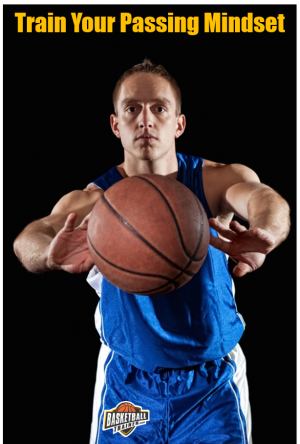
The Importance of Passing

May 29, 2014 By basketballtrainer

The Importance Of Passing In Basketball

Passing is an area not as heavily addressed as we think it should be in youth basketball. I personally didn’t learn the value of passing until college, where we spent dedicated time each practice working on passing. The guys on my team were standout players in high school and future pros, but we were in practice doing things you might see kids at a summer camp do. If passing was that important to a college coach, shouldn’t it be important to youth basketball players? Passing is a skill that must be developed with practice, quality coaching and quality training, but here are some reasons that passing is important in the game of basketball. Maybe after reading you’ll ask your trainer to begin developing you as a passer, so you can develop into the best player you can possibly be.

The Importance of Passing in Basketball:

  • Passing is the language of teamwork. The ball is the most precious thing in the game, so delivering that ball safely to teammates is very important. The delivery of the ball safely to teammates can be as precious as delivering a message to a loved one outside of the court. Passing is the way we connect to our teammates in basketball as spoken language is the way we connect with others in life. With good basketball communication (passing), a good team cannot stand. But with it, a team can thrive on the offensive end.
  • Good passing leads to easy buckets. The easiest way for a team to score is not to have a player make the greatest dribble move or make an outstanding post move, although those things are great. Arguably the easiest way to score is for a player to find an open teammate with a pass. Now a teammate can get open when his defender helps on a drive or a post move, but a good pass can turn that sequence into two easy points via the assist.
  • Passing makes offense easier. Teams that pass well, like the San Antonio Spurs in the NBA, have an advantage over defenses because of their passing ability. When the ball moves quickly and frequently, the defense has to move as well. When a team has 5 capable passers on the floor, the ball can move until an opening is found because the defense did not rotate well or quickly enough. The Spurs use their passing to eventually get open 3 point shots. Youth basketball teams can use team passing as an effective weapon against zone defenses.
  • Passing can make up for deficiencies in other areas. Players who are great passers can stay on the floor because of this one quality alone. Former NBA player Mark Jackson was able to play professionally for 17 years because he had standout court vision and passing ability. He was not considered a great athlete by NBA standards. Current NBA players Steve Nash and Andre Miller are examples of players extending their careers because they possess elite passing ability. Remember that a basketball on the move is the fastest moving thing on the court – it is faster than any player. So if you can control it well with passing, you can make up for a lack of athletic quickness or speed.
  • Without passing, basketball would be an individual sport. Passing is a big part of what allows for 5 players to play as a unit offensively and defeat a more individually talented opposition. Passing, along with screening and cutting, are the three tools that allow 5 players to play “bigger than the sum of their parts”. Teams that understand this give themselves a shot to win against anybody they’re up against.

Train your game to place appropriate importance on your basketball passing.

Filed Under: Basketball Trainer Blog Tagged With: basketball training tips

Leave The Basketball Refs Alone

May 27, 2014 By basketballtrainer

Leave the Basketball Refs alone

Leave the Refs Alone!

Youth basketball players must learn to leave the referees alone.

Somehow complaining verbally, making faces and hand gestures, and even talking back to referees in response to calls has become a part of youth basketball culture. On top of that, players are now deciding to emulate some NBA players by flopping and baiting referees to make foul calls. These practices do much more harm than good, and they should not be a part of your game as a youth basketball player. Although you may not be able to change those around you, you can make the quality decision to stop complaining and flopping today. Here are the reasons to stop complaining and stop flopping, i.e. to leave the refs alone.

Reasons to Stop Complaining

• Complaining is disrespectful plain and simple. Are you going to be able to aggressively complain to your future boss every time he makes a decision you don’t like? No. Or if you do, you may not keep your job for long or leave the door open for promotion and future success. So get in the habit now of respecting the decisions of those in authority over you, even if you don’t agree 100% of the time.
• Referees are human. If you are constantly complaining about calls you don’t get or calls made against you, are you going to get the benefit of the doubt from the ref later in the game? With a lot of refs the answer is no. On the contrary, you may get on a referee’s bad side and create an officiating bias against you, even if it is an unconscious one.
• You risk the chance of a drawing a technical foul when you complain. In youth basketball this means 2 free throws and possession for the other team. In a close game, this is a huge difference maker. Also a technical foul puts you a step closer to being disqualified from the game, whether that comes via ejection or fouling out.
• You start worrying about the refs instead of the opposing team. When you become a complainer, you began to put some of the responsibility of winning and losing on the referees. When you feel like you don’t have control on the basketball court, you begin to get disheartened and may not give full effort for your team. I’ve seen this happen plenty of times. Stay focused on beating the opposition, even if the refereeing IS poor. You can overcome poor refereeing with your play. You can’t overcome a lack of focus or a defeated attitude.
• You give up points in transition. Players who stop to complain about getting fouled spend a second or two complaining to refs and don’t get back immediately on defense. That second or two is all the advantage the opposing team needs to get an easier transition basket.

Reasons to Stop Flopping

• It’s dishonest. Players who flop to draw foul calls are violating the integrity of the game. Integrity is something that players need on the court and in their lives. You should not get in the habit of violating your integrity to gain an advantage, as in many areas of life that can get you into real trouble.
• You leave your success in the hands of the referees. When you are looking for the whistle you are walking by faith in something you can’t control. You want to be in complete control of your game on the basketball court. Leaving YOUR success in the hands of anybody else on the basketball court is essentially weakness.
• Flopping takes energy. And flopping is misdirected energy. It takes work to “create” a foul when there is none there. Players who flop are not using all the energy they can to score a basket, even when the potential to score is there.
• Flopping creates the potential for a turnover or score. What happens when you try to sell a foul call and you don’t get it? More often than not, a turnover is created. This happens when you let the ball drop to the ground while you are acting out exaggerated contact, or the ball sails out of bounds while you are flailing your arms in the air. Flopping is a risky proposition; if you don’t get the foul call, bad things usually happen. On the defensive end, a flop to sell a charge that is not whistled can result in a clear path to the lane for the man you are guarding.
• Have you ever read the Boy Who Cried Wolf? If you are in the habit of trying to sell a foul when it is not there, you are at risk of not getting the call when it is there. When a referee begins to look at your reactions skeptically, you lose the benefit of the doubt when it is not 100% clear to him if you were fouled or not. This can hurt you late in games when you actually are fouled and it is not called. We see this happen frequently at the pro level.

Young players, stop complaining. And stop flopping. It is hurting youth basketball and it is hurting you as an individual. Remain strong in your effort to score the basketball and continue to give full defensive effort on the other end. If you do these things, not only do you build positive habits for yourself, but you remain in control of your success and you make the world of youth basketball a much better place.

Filed Under: Basketball Trainer Blog Tagged With: basketball mental training

How Do You Handle Basketball Criticism?

May 26, 2014 By basketballtrainer

Tips On Handling Basketball Criticism A big part of the growth and development process for players is getting critical feedback from a team coach or basketball trainer. It is sometimes hard for players to accept criticism, but without it they are limiting their potential. We don’t want you to fall into the trap of rejecting or reacting strongly against criticism, so here are some tips on how to accept and grow from criticism.

Four Tips To Handle Basketball Criticism

1.  Delay Your Response

Criticism can be very hard to hear. It can shock you. It can hurt. And it can make you angry. Criticism can even rob you of the confidence you’ve built in a certain skill you’ve developed, or on your overall ability as a basketball player. A natural, human reaction to criticism is to lash out at the person giving it to you, or to instantly defend yourself against it. Try delaying your response to the criticism, as this will do a couple of things for you. First, it will give you time to ponder what your coach or trainer is saying to see if it is true. After the initial hurt or anger wears away, did the criticism have any merit? Sometimes with a little time to reflect you may see that it does. Secondly, if a response to the criticism is warranted, a delayed response will allow you to respond without anger. Although you may very well want to express a feeling of anger towards the giver of criticism, that anger may cloud the clarity of the message you want to get across.

2.  Ask Questions

Nobody has a perfect command of the English (or any other) language. Maybe your coach is meaning to say one thing, but you are hearing another thing because of how it is communicated. When it comes to criticism, this can happen often. Ask your coach or trainer questions about things you don’t understand or may not agree with. This may give your coach or trainer the opportunity to give examples that can help you see what he is saying, or it may give him an opportunity to change the wording of the criticism such that you can understand it better. Players who deeply care about their development may also ask “how can I improve in this area”, turning the conversation from a hard one to one that ends emotionally positive for the player.

3.  Get a Second Opinion

Getting a second or third opinion on a coach’s or trainer’s criticism can be helpful for you as a player. This does not mean to go find someone who is going to tell you that your coach doesn’t know what in the world he’s talking about. It means finding a trusted buddy, a parent, or other knowledgeable basketball person and asking them, “Hey, my coach said [fill in the blank] to me. Do you know why he would say that? Do you see it like that?” Sometimes hearing the same criticism from a different source can help you accept it better. Also, if you are receiving criticism that you simply don’t agree with and can’t understand, maybe hearing someone else validate your feelings can be helpful for you. If you are receiving criticism you don’t agree with, you can simply have a later conversation with your trainer or coach, and ask questions about why it was given.

4. Consider the Basketball Source Consider the Source

From the outside looking in, you may understand the value of constructive criticism. But when you are receiving it, criticism may not seem so constructive. And it actually may not be constructive in delivery. For that reason, try considering the source. If you have a coach who you believe both knows the game of basketball and wants what’s best for you as a player, you might be very well be able to trust his intentions. If he gives you criticism that hurts you on delivery, it is likely for your good and will help you in the long run. If you have a coach who is tough and hard nosed but good at heart, you might assume the same. Maybe the delivery wasn’t optimal, but you can see the good in it. However if you have a coach you do not trust, criticism can feel like a personal attack and you might want to disregard it. But the aforementioned tips may help you deal with this. Even if the criticism is not given constructively, you may still take the message and grow from it. Mature players learn how to do this because they know that every team coach they have may not be on their side. For instance if a coach tells you, “I’m not going to play you because you’re the worst shooter on this team. I would hate to have to ever put you in the game” you can internalize a response like “okay, I may not be in a good situation on this team, but I know I can work on my shooting. That will help me in the future whether it’s with this team or not.” Negative criticism has actually fueled the fire of many a great player as they have looked to prove doubters wrong. You can do the same thing with the negative criticism you receive. Criticism is a critical part of youth basketball, player development and life in general.

Learn how to deal with and accept criticism to better yourself as a basketball player. Whether it is given constructively or not, we’ve given you methods here to either validate or qualify criticism, understand criticism, as well as considering using some negative criticism for your own good. Take everything in stride, and don’t let any piece of criticism steal your love for and drive in the game. Allow criticism to be one of the things that helps you become great in this great game of basketball!

Filed Under: Basketball Trainer Blog Tagged With: basketball mental training, basketball training

  • « Previous Page
  • 1
  • …
  • 45
  • 46
  • 47
  • 48
  • 49
  • …
  • 54
  • Next Page »

WELCOME TO BASKETBALL TRAINER…

your connection to expert & passionate basketball trainers, basketball teams, basketball camps and all basketball products and apps designed to improve your game.  We are committed to your basketball success.

Meet our team and learn more about our mission.  Click here…

Featured Course

basketball course of the week

There are many basketball courses for all skills, ages, budgets and goals.   We help you sift thru all the garbage to find the goals for each of … Learn more...

Featured Drill

 We Hope You Enjoyed The Basketball Trainer Drill of The Month Special Thanks To Friend USC Coach Chris Capko for his excellent teaching and my … Learn more...

Featured Product / App

basketball training apps and products

  Looking for the best basketball training apps? We have all the most popular basketball training apps here. Improve your basketball skills … Learn more...

Have A Basketball Biz?

Our team gathers basketball training resources from basketball trainers and in some cases for basketball trainers and their students.  Stay tuned for … Learn More

  • How It Works
  • Editorial Standards
  • Privacy Policy
  • Terms of Service
  • Contact

© Copyright 2026 Basketball Trainer

Design by BuzzworthyBasketballMarketing.com

Privacy Policy