Basketball Trainer

Find Basketball Trainers, Camps & Teams Near You

  • Find Trainers
  • Camps
  • Teams
  • Contact
  • Find Trainers
  • Camps
  • Teams
  • Contact

Practical Modern Basketball Book Summary

April 25, 2023 By basketballtrainer

Practical Modern Basketball Book Summary

Summary: 🏀 Practical Modern Basketball by John Wooden 📚

Main Topic or Theme of the Book 📖

Practical Modern Basketball is a 🏀 basketball coaching and strategy book, written by legendary coach John Wooden.

Key Ideas or Arguments Presented 💡

The book presents Wooden’s philosophy of 🏀 basketball coaching, which emphasizes the importance of fundamentals, teamwork, and a positive attitude. Wooden also discusses specific strategies and tactics for offense and defense, as well as principles for managing a team.

Chapter Titles or Main Sections of the Book with a Paragraph on Each 📝

  • Chapter 1: Introduction 🎉: Wooden introduces his coaching philosophy and the principles that guide his approach to the game.
  • Chapter 2: Offensive Fundamentals 🏀: This chapter covers the basics of offensive strategy, including passing, shooting, and ball handling.
  • Chapter 3: Defensive Fundamentals 🛡️: Wooden outlines his defensive philosophy and teaches readers how to play effective man-to-man defense.
  • Chapter 4: Offensive Patterns 🔄: This chapter covers more advanced offensive strategies, including fast breaks, pick-and-roll plays, and zone offenses.
  • Chapter 5: Defensive Strategies 🎯: Wooden discusses various defensive strategies, including pressing and trapping, and explains how to adjust to different offensive styles.
  • Chapter 6: Team Management 🤝: This chapter covers the logistical aspects of coaching a basketball team, including communication, motivation, and practice planning.

Key Takeaways or Conclusions 🚀

  • Emphasize fundamentals: Wooden stresses the importance of mastering basic skills like shooting, passing, and dribbling.
  • Work as a team: Wooden’s coaching philosophy emphasizes the importance of teamwork and unselfish play.
  • Positive attitude: Wooden believes that a positive attitude is essential for success in basketball and in life.

Author’s Background and Qualifications 👨‍🏫

Practical Modern Basketball John Wooden is widely regarded as one of the greatest 🏀 basketball coaches of all time. He led the UCLA Bruins to 10 NCAA championships in a 12-year span, and his coaching philosophy has been influential for generations of basketball coaches.

Comparison to Other Books on the Same Subject 📚

Practical Modern Basketball is similar to other basketball coaching books in its focus on strategy and technique, but Wooden’s emphasis on fundamentals and team play sets it apart.

Target Audience or Intended Readership 🎯

This book is aimed at 🏀 basketball coaches and players, particularly those who are interested in developing a strong foundation of fundamental skills and teamwork.

Reception or Critical Response to the Book 🏆

Practical Modern Basketball has received positive reviews for its practical advice and clear writing style. It is widely regarded as a classic in the field of 🏀 basketball coaching.

Publisher and First Published Date 📅

The book was first published in 1966 by Prentice-Hall.

Recommendations [Other similar books on the same topic] 📚

  • The Art of a Beautiful Game by Chris Ballard
  • Eleven Rings: The Soul of Success by Phil Jackson and Hugh Delehanty
  • Coaching Basketball Successfully by Morgan Wootten

The Book’s Biggest Takeaway and Point in a Singular Sentence 🥇

Practical Modern Basketball emphasizes the importance of mastering fundamentals, working as a team, and maintaining a positive attitude, providing a comprehensive guide to basketball coaching and strategy.

Takeaways and Action Steps for Basketball Players

Takeaways from the Book 📝Action Steps for Ambitious Basketball Players 🏀
Master the fundamentals, such as passing, shooting, and ball handling. 🔑📌 Devote time to practice each fundamental skill until it becomes second nature. Incorporate drills to focus on specific aspects of each skill. 🏋️‍♂️
Focus on developing a positive attitude on and off the court. 🌞📌 Practice visualization exercises to build a positive mindset, and avoid negative self-talk. Surround yourself with positive people who encourage and support you. 🧑‍🤝‍🧑
Work as a team and focus on unselfish play. 🤝📌 Communicate with your teammates and establish trust. Be willing to make sacrifices for the good of the team. 🤜🤛
Emphasize defensive fundamentals, such as man-to-man defense. 🛡️📌 Practice defensive drills to improve footwork, positioning, and reaction time. Focus on studying your opponent’s strengths and weaknesses. 🎯
Understand the principles of different offensive strategies, such as fast breaks, pick-and-roll plays, and zone offenses. 🔍📌 Watch game footage and study successful teams to learn how they execute different offensive strategies. Incorporate drills to practice each strategy. 📈
Pay attention to your conditioning and overall fitness. 🏋️‍♀️📌 Develop a workout routine that includes strength training, cardiovascular exercise, and stretching. Stay hydrated and maintain a healthy diet. 🥦
Stay mentally focused and resilient in high-pressure situations. 💪📌 Practice mindfulness and meditation techniques to help you stay calm and focused. Develop a pre-game routine to help you get in the right mindset. 🧘
Set clear goals for yourself and work to achieve them. 🎯📌 Write down your goals and break them down into smaller, achievable steps. Create a plan and hold yourself accountable. Celebrate your successes along the way. 🎉
Learn from your mistakes and use them to improve. 📈📌 Keep a journal to track your progress and reflect on your successes and failures. Use mistakes as learning opportunities to identify areas for improvement. 🔎
Seek out constructive feedback and coaching. 👨‍🏫📌 Ask your coaches and teammates for feedback on your performance. Work with a coach or mentor to help you develop specific skills and strategies. 🙋
Pay attention to your body language and how it affects your performance. 💃📌 Practice positive body language, such as maintaining eye contact and standing tall. Avoid negative body language, such as slouching or appearing defeated. 🙅
Develop a strong work ethic and put in the necessary time and effort to improve. 💪📌 Create a schedule that includes dedicated time for practice, conditioning, and recovery. Stay disciplined and focused on your goals. 🗓️
Stay mentally and emotionally balanced to avoid burnout. 🧘‍♂️📌 Take breaks and practice self-care activities, such as meditation, yoga, or spending time with friends and family. Prioritize rest and recovery to avoid physical and mental fatigue. 🛀
Be adaptable and willing to adjust to changing circumstances. 🌀📌 Practice flexibility and adaptability in your game strategies and in your approach to challenges. Embrace change as an opportunity for growth. 🌱
Focus on the present moment and avoid getting distracted by past or future events.Practice mindfulness techniques to help you stay focused on the present. Develop a pre-game routine to help you get in the right mindset.

Takeaways and Action Steps for Basketball Trainers and Basketball Coaches

TakeawaySpecific Action Step
🏀 The importance of mastering the fundamentals👨‍🏫 Emphasize the importance of mastering basic skills such as dribbling, passing, shooting, and footwork. Provide drills and practice routines to help players improve in these areas.
🤝 The value of teamwork🤝 Encourage players to work together and develop a sense of camaraderie. Emphasize the importance of communication and unselfish play.
💪 The need for physical fitness🏋️ Develop conditioning programs to help players improve their endurance, speed, agility, and strength. Monitor players’ nutrition and hydration to ensure they are fueling their bodies properly.
🧠 The importance of mental toughness🧠 Help players develop a resilient mindset by teaching them how to deal with adversity, stay focused under pressure, and maintain a positive attitude.
🚫 The value of discipline🛡️ Set clear expectations for behavior and work ethic. Enforce consequences for negative behavior and reward positive behavior.
🏋️ The importance of practice🏀 Structure practice sessions to be productive and efficient. Provide feedback and guidance to help players improve.
📝 The need for strategy📊 Develop game plans and tactics to maximize the team’s strengths and exploit the opponent’s weaknesses. Provide players with clear roles and responsibilities.
🔄 The importance of adaptability🔀 Encourage players to be adaptable and able to adjust to different game situations. Provide them with strategies and options to use when facing different opponents.
📚 The value of preparation📖 Study opponents’ strengths and weaknesses to prepare the team for upcoming games. Provide players with scouting reports and video analysis.
🗣️ The importance of communication🗣️ Teach players how to effectively communicate on the court. Emphasize the importance of listening and responding to teammates and coaches.
🏅 The need for leadership🏅 Encourage players to take on leadership roles and responsibilities. Develop leadership skills through mentorship and guidance.
💤 The importance of rest and recovery🛌 Develop recovery routines and schedules to ensure players are getting enough rest and are able to recover properly.
📈 The value of feedback📈 Provide players with constructive feedback on their performance. Encourage them to use feedback to improve their skills and game.
💯 The importance of confidence😎 Develop players’ confidence through positive reinforcement and encouragement. Help them set achievable goals and celebrate their successes.
🌱 The need for a growth mindset🌱 Encourage players to have a growth mindset and view challenges as opportunities for growth and development. Provide them with tools and resources to help them continue to learn and improve.

Filed Under: Basketball Parenting, Basketball Player Development, Basketball Product Reviews, Basketball Trainer Blog, Basketball Trainer Business, blog, Uncategorized

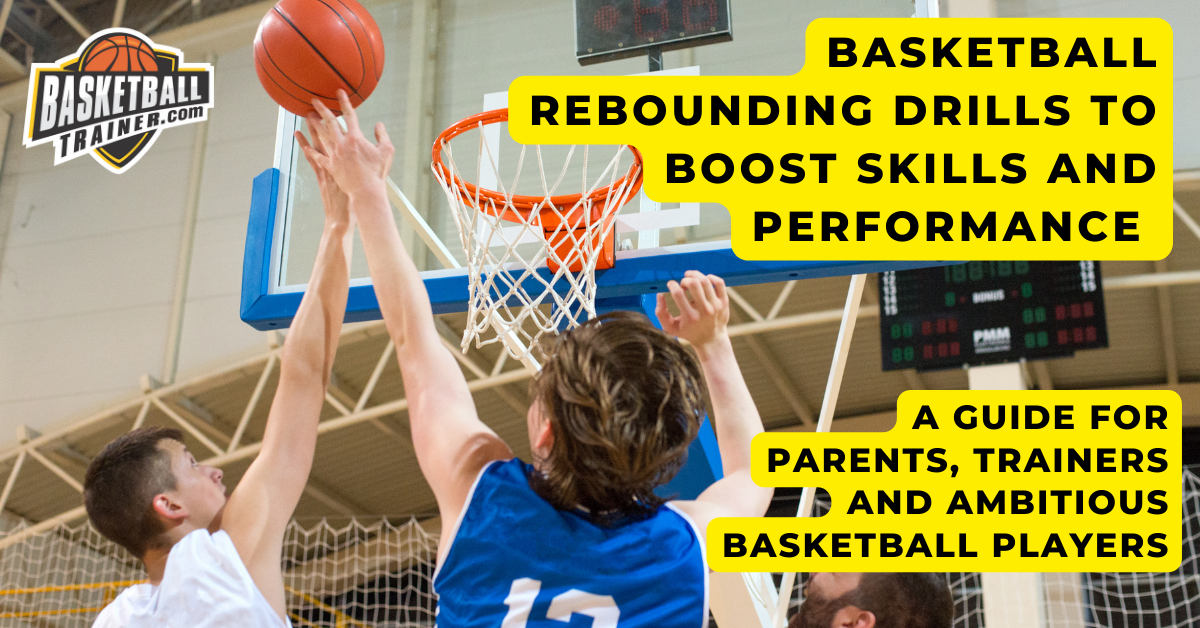
Basketball Rebounding Drills: Boost Skills & Performance

April 24, 2023 By basketballtrainer

Basketball Rebounding Drills To Increase Skills & Performance

Basketball rebounding drills are  crucial for any ambitious player looking to excel in the game by  increasing their skills and adding to their team’s performance. Rebounding not only secures possession but also provides opportunities for fast breaks and additional playing time. In this blog post, we will delve into various aspects of rebounding, including fundamentals, techniques, strength building exercises, agility training, endurance enhancement methods and specific drills that can help you become a dominant force on the court.

We will also discuss factors affecting rebounding performance and advanced basketball rebounding drills tailored to challenge even the most skilled players. Furthermore, we’ll explore the mindset and mental side of rebounding – an often overlooked yet vital aspect of being successful in securing those all-important offensive rebounds with your hands ready in an athletic position.

Table of Contents:

  • Master Rebounding Fundamentals & Basics
    • Definition and Types of Rebounds
    • The Importance of Rebounding in Basketball
    • Essential Rebounding Drills
    • Develop Rebounding Technique
      • Boxing Out
      • Trajectory Anticipation & Timing
      • Body Control & Positioning
      • Jumping Ability & Explosiveness
    • Increase Rebounding Strength
      • Strength Training Exercises
      • Battle Ropes & Medicine Ball Drills
      • Core Strength
    • Improve Rebounding Agility
      • Athletic Position Drills
      • Fast Break Drills
      • Plyometric Exercises
    • Increase Rebounding Endurance
      • Suicides
      • Shuttle Runs
      • Jumping Rope
      • Resistance Band Drills
      • Sand Training
    • Utilize Rebounding Drills
      • Tips Drill
      • Quick Put-Back Drill
      • Rebound and Score Drill
      • Shoot and Rebound Drill
    • Track Your Progress
      • Maintain a Rebounding Journal
      • Analyze Game Footage
      • Benchmark Against Other Players
    • Factors Affecting Rebounding
      • Height and Weight of the Players
      • Positioning and Body Control
      • Timing and Anticipation
      • Jumping Ability
    • Advanced Rebounding Drills
      • 3-Man Rebounding Drill
      • Zigzag Rebounding Drill
      • Toss and Rebound Drill
    • Mindset and Mental Side of Rebounding
      • Visualization Techniques
      • How Visualization Can Improve Rebounding Skills
      • Focusing on Positioning and Body Control
      • Anticipate the Ball’s Trajectory
      • Timing Is Key
      • Be Aggressive and Persistent
    • Conclusion

1. Master Rebounding Fundamentals & Basics

Rebounding is an essential factor in basketball that can have a major influence on the game’s outcome. By mastering the fundamentals and basics of rebounding, you will become an invaluable asset to your team. In this section, we will discuss the definition of rebounding in basketball, types of rebounds, their importance in different game situations and some essential drills to improve your skills.

Definition and Types of Rebounds

In basketball, rebounding refers to gaining possession of the ball after a missed shot attempt by either team. There are two main types:

  • Offensive rebounds: When a player from the shooting team retrieves the ball after a missed shot.
  • Defensive rebounds:: When a player from the defending team secures possession after preventing an opponent’s shot from scoring.

The Importance of Rebounding in Basketball

A strong rebounder can make all the difference on both ends of the court by providing additional scoring opportunities for their own team while limiting those for opponents. Here are some key reasons why effective rebounding is vital:

  1. Maintaining Possession: An offensive rebound allows your team another chance at scoring while keeping control over gameplay.
  2. Limited Opponent Scoring Opportunities: A defensive rebound prevents opponents from getting second-chance points or initiating fast breaks off missed shots.
  3. Better Playing Time: Demonstrating solid REBOUNDING SKILLS CAN LEAD TO MORE PLAYING TIME AND A HIGHER VALUE ON THE COURT FOR BOTH COACHES AND TEAMMATES.

Essential Rebounding Drills

To become a more effective rebounder, it’s crucial to practice specific drills that target the skills required for success. Here are some fundamental basketball drills designed to improve your rebounding abilities:

  • Box-out Drills: These DRILLS FOCUS ON MAINTAINING AN ATHLETIC POSITION AND USING YOUR BODY TO PREVENT OPPONENTS FROM GAINING ACCESS TO THE BALL AFTER A MISSED SHOT. Examples of drills that focus on body positioning and keeping opponents away from the ball after a missed shot include two-person box-outs and circular box-out exercises.
  • Defensive Rebounding Drills: Incorporate exercises like the “Closeout and Block Out” drill or “Swarm Rebounding” drill to hone defensive positioning and anticipation skills when securing rebounds.
  • Offensive REBOUNDING DRILLS: PRACTICE TECHNIQUES SUCH AS TIP INS, QUICK PUT-BACKS, OR CRASHING THE BOARDS WITH EXERCISES LIKE THE “TIP Drill” OR “Rebound and Score Drill.
  • Footwork Drills for Rebounding: Improve your foot speed and agility with ladder drills or cone-based exercises specifically tailored for rebounding scenarios such as pivoting around opponents or chasing down loose balls.

In addition to practicing these essential drills, remember always to keep your hands ready, stay low in an athletic position, anticipate the ball’s trajectory, and time your jumps effectively. With proper execution of the basics, you can easily become an elite rebounder on both offense and defense.

Gaining proficiency in the basics of rebounding is a must for those looking to thrive as basketball players. Developing your technique is the next step in taking your game to the next level.

Key Takeaway: This article outlines the fundamentals of rebounding in basketball, including its definition and types, importance for game situations, and drills to improve skills. Rebounding is a key skill that can make or break your team’s performance on both ends of the court; master it by honing footwork agility with ladder drills and cone exercises as well as techniques like quick put-backs to become an unstoppable force.

Develop Rebounding Technique

To become a proficient rebounder, you must learn and apply the same strategies used by expert players. By focusing on these strategies and incorporating them into your training regimen, you’ll be well on your way to dominating the boards.

Boxing Out

Boxing out is a fundamental skill that every player should learn. Position yourself between the hoop and your adversary in order to maximize your opportunities of snagging rebounds when shots are not made. To box out effectively:

  • Bend your knees and lower your center of gravity.
  • Maintain contact with your opponent using your hips or backside.
  • Keep one arm up to prevent opponents from reaching over you for rebounds.
  • Pivot quickly if necessary to maintain position as the ball bounces off the rim or backboard.

Trajectory Anticipation & Timing

An important aspect of successful rebounding is anticipating where missed shots will land based on their trajectory. This requires keen observation skills, quick reflexes, and good timing:

Avoid jumping too early or too late, which can result in being out of position when attempting to grab a rebound.

Familiarize yourself with different shot types, such as layups, jumpers, three-pointers etc., as each has its own unique bounce pattern.

Closely watch shooters during games, observing how they release their shots helps predict where the ball will land.

Body Control & Positioning

Controlling your body and maintaining proper positioning is crucial when battling for rebounds. Some tips to improve in this area include:

  • Stay low and wide, which provides a stable base and makes it harder for opponents to push you out of position.
  • Use your arms effectively by extending them fully, creating space between you and the opponent.
  • Avoid reaching or swiping at the ball, as this can lead to fouls or being off-balance.

Jumping Ability & Explosiveness

To secure more rebounds, work on improving your jumping ability and explosiveness. Incorporate exercises like plyometrics, squats, lunges, box jumps into your training routine. Additionally:

Focusing on vertical jump height, which allows you to reach higher than opponents when contesting for rebounds.

Incorporate explosive movements, such as sprints or medicine ball throws into workouts helps build power necessary for quick leaps during games.

Prioritize core strength, having a strong core improves balance while jumping making it easier to control body movements mid-air.

Mastery of these rebounding techniques will give any ambitious basketball player an edge over their competition on the court. Remember that practice makes perfect – so keep working hard at refining these skills.

Developing the right technique is key to becoming a successful rebounder. Enhancing physical power can facilitate a boost in one’s rebounding skills, thus allowing for the advancement of their game.

Key Takeaway: This article outlines essential techniques and strategies for becoming an elite rebounder, including boxing out, anticipating trajectory and timing shots, body control and positioning, as well as jumping ability. With practice and dedication to honing these skills you’ll be able to dominate the boards like a pro.

3. Increase Rebounding Strength

Gaining strength and power is crucial for becoming a more effective rebounder in basketball. A strong player can hold their ground, box out opponents, and secure rebounds with ease. This section looks at various drills to help you increase your rebounding strength.

Strength Training Exercises

  • Squats: Squats are an excellent exercise to build lower body strength, which is essential for jumping higher and securing rebounds.  We like chair squats without weights, then work on chair squats into jump.  If you have proper training and are also coachable on form you can consider incorporating different variations like back squats, front squats, or goblet squats into your workout routine.  Try using dumbells for safety before moving to barbells.
  • Lunges: Lunges target the quadriceps, hamstrings, glutes and calves – all vital muscles for explosive jumping ability. Perform forward lunges or try other variations such as reverse lunges or lateral lunges.
  • Deadlifts: Deadlifts work on the posterior chain (hamstrings and glutes), helping you develop powerful legs needed to dominate the boards (source).  Very important that we perfect bodyweight movements before adding weights to the mix for young athletes.  Deadlifts are also a movement that should be taught by a knowledgeable trainer, not a HS basketball coach.
  • Plyometric Exercises: Plyometrics improve explosiveness by training fast-twitch muscle fibers required for quick jumps during games(source). Some examples include box jumps, depth jumps and bounding drills.

Battle Ropes & Medicine Ball Drills

Battle ropes provide a full-body workout while improving grip strength necessary when grabbing loose balls off the rim(source). Medicine ball exercises, such as slams and throws, help develop explosive power in the upper body crucial for effective rebounding (source).

Core Strength

A strong core is essential for maintaining balance and stability during rebounds. Incorporate planks, Russian twists, leg raises and other core strengthening exercises into your training routine to improve your overall rebounding strength.

Incorporating these strength-building exercises into your basketball training program will significantly enhance your ability to secure offensive rebounds and defensive boards. Remember that consistency is key; make sure you are regularly working on increasing your rebounding strength to see noticeable improvements on the court.

With the right strength training, basketball players can become powerful rebounders. Now let’s look at how to improve rebounding agility for even better results.

Key Takeaway: This article provides a comprehensive overview of the exercises and drills necessary for strengthening rebounding ability in basketball. From squats to medicine ball throws, these strength-building techniques will help players gain power and explosiveness on the court – ultimately leading to improved performance when it comes time to hit the boards.

4. Improve Rebounding Agility

Developing agility and quickness is crucial for outmaneuvering opponents and securing rebounds during a basketball game. The quicker you can move, the higher likelihood of snagging rebounds both on offense and defense. In this section, we will discuss various exercises and drills that can help improve your rebounding agility.

Athletic Position Drills

Maintaining an athletic position is essential for improving your overall agility on the court. Practice getting into a low stance with knees bent, feet shoulder-width apart, back straight, and hands ready to react quickly to any situation.

  • Squat jumps: Perform squat jumps in place while maintaining proper athletic position throughout each jump.
  • Lateral slides: Slide side-to-side while staying low in an athletic stance; focus on keeping balance as you move laterally across the floor.
  • Cone drills: Set up cones in various patterns (zigzag or circular) around the court; practice moving between them quickly while maintaining proper form.

Fast Break Drills

Fast break drills not only help develop speed but also increase reaction time which translates well into improved rebounding ability:

  • Full-court sprints: Sprint from one end of the court to another as fast as possible; focus on pushing off explosively from each footfall for maximum acceleration.
  • Tennis ball tosses: Have a partner toss tennis balls randomly onto different areas of the court while you sprint after them, attempting to catch each one before it bounces twice.
  • 3-on-2 fast break: Practice running a fast break with three offensive players against two defenders; this will help improve your ability to quickly transition from defense to offense and vice versa, which is essential for grabbing rebounds in live game situations.

Plyometric Exercises

Plyometric exercises are designed to increase explosive power and speed, both of which are crucial components of rebounding agility:

    • Box jumps: Jump onto progressively higher boxes or platforms while focusing on landing softly and maintaining balance upon impact.
    • Broad jumps: Perform standing long jumps across the court, aiming for maximum distance with each leap. This exercise helps develop lower body strength and explosiveness necessary for quick vertical leaps during rebounding situations.
    • Lateral bounds: Leap side-to-side over a cone or other small obstacle; concentrate on generating power through your hips as you bound laterally across the floor. This drill improves lateral movement capabilities that can be applied directly into securing rebounds during games.

.Incorporating these drills into your regular basketball training routine will not only enhance your overall athleticism but also significantly boost your ability to secure more rebounds in various game scenarios. Remember, practice makes perfect – so stay consistent in working on improving your agility.

Improving agility is an essential part of becoming a better rebounder. With the right drills and practice, you can increase your speed and quickness on the court to help secure more rebounds. To further enhance your rebounding skillset, it’s important to focus on increasing endurance as well.

Key Takeaway: This article provides an in-depth look at drills that can help basketball players improve their rebounding agility, such as squat jumps, lateral slides and cone drills. Plyometric exercises like box jumps, broad jumps and lateral bounds are also discussed for developing explosive power to enhance on-court performance. With consistency and dedication to these drills, athletes will be able to outmaneuver opponents with ease while snatching up rebounds in no time.

5. Increase Rebounding Endurance

Increase your stamina and endurance to stay strong throughout the game by incorporating specific exercises into your training routine. These workouts will help you maintain a high level of energy, allowing you to outlast opponents in crucial rebounding situations.

Suicides

Suicides are an excellent way to build cardiovascular endurance while also improving speed and agility on the court. This drill involves sprinting back and forth between designated lines on the court, gradually increasing distance with each repetition.

Shuttle Runs

Shuttle runs require players to quickly change direction while running at full speed, simulating fast break scenarios that often lead to offensive rebounds. Incorporate shuttle runs into your practice sessions for improved overall conditioning.

Jumping Rope

Jumping rope is not only great for building leg strength but also helps develop coordination and timing needed for effective rebounding. Aim for multiple sets of one-minute intervals with varying jump patterns during each session.

Medicine Ball Tosses

  • Chest Pass: Hold a medicine ball at chest level, step forward with one foot, and forcefully push the ball away from your body using both hands.
  • Overhead Throw: Stand with feet shoulder-width apart holding a medicine ball above your head; bend knees slightly and forcefully throw the ball forward, using your entire body to generate power.
  • Side Toss: Stand sideways to a wall or partner with feet shoulder-width apart; hold a medicine ball at waist level, twist torso towards the wall or partner, and release the ball in a powerful side toss motion.

Resistance Band Drills

Resistance band drills can help build strength and stability needed for effective rebounding. Incorporate exercises such as lateral walks, monster walks, and resisted squats into your training routine.

Sand Training

Performing exercises on sand surfaces, such as lateral walks, monster walks and resisted squats, can be an effective way to boost leg strength while also improving balance and coordination due to the increased resistance from the unstable surface. Sand workouts force players to exert more effort due to increased resistance from the unstable surface.

Increasing your rebounding endurance is key to becoming a successful basketball player. Maximizing your rebounding power through appropriate exercise regimens can help you develop this critical ability and bring your basketball game to the next level.

Key Takeaway: This article outlines five different exercises that basketball players can incorporate into their training routine to build endurance and strength for rebounding, including suicides, shuttle runs, jumping rope with varying jump patterns, medicine ball tosses in various directions and resistance band drills. Lastly sand training is a great way to increase leg strength while also improving balance and coordination.

6. Utilize Rebounding Drills

Practicing specific rebounding drills is essential for improving your skills and becoming a dominant force on the court. These exercises can help you hone the correct form, boost power and agility, as well as upgrade your all-around play in competitive scenarios. Let’s explore some effective rebounding drills that can take your game to the next level.

Tips Drill

The tips drill focuses on improving offensive rebounding by teaching players to quickly tip the ball back into the basket after a missed shot. This drill requires at least two players – one shooter and one rebounder – with each player taking turns shooting and tipping.

  • The shooter takes a shot from anywhere on the court while intentionally missing it.
  • The rebounder jumps up to grab or tip the ball back into the basket without letting it touch the ground.
  • Players switch roles after each attempt, aiming for as many successful tips as possible within a set time limit or number of attempts.

Quick Put-Back Drill

In this drill, players work on their ability to quickly secure an offensive rebound and put it back up for a score. The goal is to develop fast reflexes when grabbing rebounds close to the hoop.

Quick Put-Back Drill

  • A coach or teammate throws a basketball off of either side of rim/backboard from under basket area.
  • An athlete goes up strong grabs board (rebound) with both hands.
  • Athlete then lands keeping ball high, then goes back up for a strong finish.

Rebound and Score Drill

This drill focuses on securing defensive rebounds and quickly transitioning to offense. Players practice grabbing the rebound, pivoting away from defenders, and making an outlet pass or taking the ball down the court themselves for a fast break opportunity.

  • A coach or teammate shoots the ball while another player positions themselves for a potential rebound.
  • The player grabs the rebound with both hands, secures it, and immediately looks to pivot away from any nearby defenders.
  • After pivoting, they either make an outlet pass to a teammate or dribble downcourt themselves for a scoring chance.

Shoot and Rebound Drill

In this drill players work on their offensive rebounding skills by shooting their own shots then attempting to grab their own missed shot before it hits ground. This helps improve anticipation of where ball will bounce off rim/backboard.

Shoot And Rebound Drill

  • An athlete takes jump shot.
  • An athlete follows his/her shot anticipating miss.
  • Athlete attempts to catch/secure board (rebound) before it hits ground.
    If successful in getting board (rebounding), putback attempt is made.

Rebounding drills are an essential part of basketball training and player development. Monitoring your advancement can assist in determining the efficacy of these exercises and permit for alterations to be made as required so that you get the most out of them.

Key Takeaway: This article provides a comprehensive overview of effective rebounding drills that can help basketball players develop their skills and become dominant forces on the court. These include Tips Drill, Quick Put-Back Drill, Rebound and Score Drill, as well as Shoot and Rebound drill – all designed to hone your rebound technique and increase strength & agility for improved performance in game situations.

7. Track Your Progress

Monitoring your progress is essential to understanding how well you’re improving in the art of rebounding. By keeping track of specific metrics, you can identify areas that need improvement and recognize where you excel. In this section, we’ll discuss various methods for tracking your progress and using data to enhance your performance on the court.

Maintain a Rebounding Journal

One effective way to monitor your development is by maintaining a rebounding journal. After each practice or game, record key statistics such as total rebounds, offensive rebounds, defensive rebounds, box-outs performed successfully and missed opportunities. Over time, this information will provide valuable insights into patterns and trends in your rebounding abilities.

Analyze Game Footage

Analyzing game footage is another excellent method for evaluating your performance on the court. Review videos of yourself playing to observe body positioning during rebounds, timing when jumping for the ball and overall technique execution. This analysis allows you to see firsthand what adjustments are needed while also reinforcing positive habits already established.

Benchmark Against Other Players

To gauge how well you’re progressing compared to other players at similar skill levels or positions within basketball leagues like AAU or high school teams), consider benchmarking against their stats found online through resources such as RealGM High School Basketball Stats Database . Comparisons like these can help set realistic goals based on peer performances.

Create Personal Goals

  • Set short-term and long-term goals for rebounding improvement.
  • Identify particular facets of your game, like offensive or defensive rebounds, to pinpoint areas that require more attention.
  • Regularly evaluate your progress toward these goals and adjust them as needed based on performance data collected from your journal, game footage analysis, and benchmark comparisons.

By consistently tracking your progress in rebounding skills development through various methods like maintaining a journal, analyzing game footage and comparing yourself against other players at similar skill levels), you’ll gain valuable insights into where improvements are necessary. This information will help you create targeted strategies for enhancing overall performance while staying motivated by seeing tangible results over time.

Monitoring your advancement is a key element of any basketball conditioning program, since it allows you to recognize areas that need improvement and make the necessary adjustments. Now let’s move on to discuss the factors that affect rebounding success.

Key Takeaway: This article outlines a comprehensive approach to improving rebounding skills, including maintaining a journal of stats and analyzing game footage. It also suggests benchmarking against other players in the same league and setting personal goals for further progress. By actively tracking your development with these methods, you’ll be able to effectively measure your growth over time.

Factors Affecting Rebounding

Several elements can influence a player’s capability to capture rebounds successfully. Understanding these factors will help you improve your rebounding skills and contribute more effectively to your team’s success.

Height and Weight of the Players

It’s no secret that taller players have an advantage when it comes to grabbing rebounds due to their longer reach. However, height alone isn’t enough; having a strong build also plays an important role in securing boards. Strength training exercises can help increase muscle mass and power, allowing you to better box out opponents and secure those all-important offensive rebounds or prevent fast breaks with defensive ones.

Positioning and Body Control

Maintaining proper positioning on the court is essential for effective rebounding. Being aware of where the ball is likely to bounce off after a missed shot allows you to position yourself accordingly for maximum chances at grabbing it before your opponent does. Additionally, maintaining good body control while jumping helps ensure clean catches without losing balance or committing fouls.

Athletic Position & Hands Ready:

  • Athletic Position: Stay low in an athletic stance with knees bent, feet shoulder-width apart, and weight on the balls of your feet.
  • Hands Ready: Keep hands up near chest level with palms facing forward so they’re ready for action as soon as the ball comes into play.

Timing and Anticipation

Failing to anticipate the ball’s trajectory is a common mistake among players when rebounding. To improve your timing and anticipation, watch the flight of the ball closely as it leaves the shooter’s hands and try to predict where it will land based on its arc. This skill takes practice but can make a significant difference in your ability to secure rebounds.

Jumping Ability

Having a high vertical jump is another key factor that contributes to successful rebounding. Players who can jump higher have an advantage over their opponents when competing for loose balls in mid-air. Incorporating vertical jump exercises into your training routine will help increase your jumping ability, making you more effective at grabbing those crucial boards.

By engaging in vertical jump exercises and strengthening your rebounding abilities, you can significantly increase your chances of success on the court.

Rebounding is a skill that requires focus and technique, so understanding the factors that affect it can help players become more successful. Advanced rebounding drills are designed to take those fundamentals and add complexity for experienced players looking to improve their game.

Key Takeaway: Advanced basketball players with an IQ of 150 must take into account factors such as height, weight, positioning and body control, timing and anticipation as well as jumping ability in order to be successful at rebounding. By honing these skills through training exercises you can “up your game” on the court and contribute significantly towards team success.

9. Advanced Rebounding Drills

To maximize your rebounding potential, practice drills that test your skills and push you beyond the limits of what is comfortable. These drills will help you improve your positioning, timing, and anticipation while also building strength and endurance.

3-Man Rebounding Drill

The 3-Man rebounding drill is an excellent way to work on boxing out, securing rebounds in traffic, and quickly transitioning from defense to offense. In this drill, three players compete for a rebound after a coach or teammate shoots the ball. The player who secures the offensive rebound must make a quick outlet pass before sprinting downcourt for a fast break opportunity.

How it works:

  1. Three players line up around the key: one at each block and one at the free-throw line.
  2. A coach or teammate shoots the ball from various spots on the court.
  3. The players battle for position as they attempt to secure either an offensive or defensive rebound.
  4. The player who grabs the board makes an outlet pass before sprinting downcourt for a potential fast break score.

Zigzag Rebounding Drill

Incorporating movement into your training can better simulate game situations where staying in constant motion is crucial. The zigzag rebounding drill helps develop footwork agility while focusing on grabbing boards under pressure by forcing athletes to change direction rapidly as they pursue loose balls off missed shots.
Zigzag rebounding drill requires players to change direction quickly while maintaining an athletic position and keeping their hands ready for the rebound.

How it works:

  1. A player starts at one baseline corner of the court, facing a coach or teammate who is positioned near the free-throw line extended on that side.
  2. The coach or teammate shoots the ball towards the opposite corner, forcing the player to sprint diagonally across half-court in pursuit of a long rebound.
  3. The player secures the board before passing it back to their partner and then sprints diagonally toward another missed shot from a different location on the court. This process repeats several times with varying angles and distances for each shot attempt.

Toss and Rebound Drill

In this advanced drill, players work on anticipating where rebounds will land by tossing balls off various parts of the backboard. The goal is not only to secure offensive rebounds but also practice quick put-backs after grabbing boards.Toss and Rebound Drill.

How it works:

  1. A player stands under one basket with multiple basketballs nearby.
  2. The athlete tosses one ball off different areas of both sides of backboard (high/low) while focusing on predicting its trajectory as they prepare themselves for potential tip-ins or layups upon securing possession.

Mastering advanced rebounding drills is key to becoming a successful basketball player. Developing a psychological approach to rebounding can help you reach the next level of success in basketball.

Key Takeaway: This article provides advanced rebounding drills to take your game to the next level. It outlines three specific exercises that will help you hone in on boxing out, grabbing rebounds under pressure and quickly transitioning from defense to offense. The drills are designed to improve your agility, strength and anticipation while pushing you outside of your comfort zone.

10. Mindset and Mental Side of Rebounding

Mastering the art of rebounding in basketball goes beyond physical skills; it also requires a strong mindset and mental approach to excel. To reach the peak of rebounding, it is important to understand and employ various mental techniques that will help you develop the right mindset.

Visualization Techniques

Visualization techniques have been proven to enhance athletic performance by mentally rehearsing specific actions or situations before they occur on the court. By visualizing yourself successfully grabbing rebounds, boxing out opponents, and maintaining proper positioning, you can improve your confidence and focus during games.

How Visualization Can Improve Rebounding Skills

  • Mental rehearsal: Regularly visualize yourself executing perfect box-outs, jumping at the right time for rebounds, and anticipating where missed shots will land.
  • Increase confidence: As you continue practicing visualization techniques consistently over time, your self-confidence in your ability to grab rebounds will grow.
  • Better decision-making: Visualization helps train your brain to make quicker decisions when faced with real-life game scenarios involving rebounds.

Focusing on Positioning and Body Control

To become an elite rebounder in basketball,positioning is crucial . You must maintain an athletic position with hands ready while keeping a low center of gravity for balance. Additionally, focusing on body control ensures that you avoid unnecessary fouls while fighting for rebounds.

Anticipate the Ball’s Trajectory

A key aspect of successful rebounding is anticipating where the ball will land after a missed shot. By studying your opponents’ shooting tendencies and paying attention to their form, you can improve your ability to predict the ball’s trajectory and position yourself for optimal rebound opportunities.

Timing Is Key

Jumping too early or too late can cost you valuable rebounds. Develop a knack for anticipating the exact instant to leap, allowing you to outmaneuver adversaries and secure rebounds.

Be Aggressive and Persistent

In basketball, aggression and persistence are essential qualities for effective rebounders. Maintain a relentless attitude when pursuing loose balls, never give up on plays, and always be prepared to outwork your opponent in order to secure those crucial offensive or defensive boards.

Key Takeaway: This article provides a comprehensive overview of the mental and physical aspects required to become an elite basketball rebounder. It highlights important techniques such as visualization, positioning, body control, anticipation of ball trajectory and timing in order to gain that extra edge over opponents on court. With aggression and persistence at its core, rebounding requires one to go all out for every loose ball without giving up easily.

Conclusion

With the right techniques, strength and agility, you can become a master rebounder in no time. Keep track of your progress with advanced rebounding drills and use mindset to help take your game to the next level. By focusing on these key elements you will be well-equipped for success when it comes to basketball rebounding drills.

Take your basketball game to the next level with BasketballTrainer.com! Our team of experts provide personalized training and development solutions for ambitious players, teams, camps, and families.


Filed Under: Basketball Parenting, Basketball Player Development, Basketball Trainer Blog, blog, Uncategorized

Executive Function & Basketball: Level Up Your Game

April 21, 2023 By basketballtrainer

Executive Function for Basketball Players

Executive function for basketball players is a crucial aspect of the game that often goes overlooked. By developing these cognitive skills, athletes can gain a significant advantage on the court. By delving into the world of executive function training, this blog post will provide strategies to help you develop your mental game for basketball and understand how it can elevate your performance by honing cognitive abilities such as inhibitory control.

We’ll discuss strategies to develop your mental game for basketball and understand the benefits of executive function in basketball training specifically tailored for athletes like you. Furthermore, we will explore mastering the fundamentals of executive function training and unlocking your potential by enhancing inhibitory control and other essential cognitive abilities.

By devoting effort to honing your executive functions as a basketball player, you could be paving the way for achievements both on and off the court. Stay tuned to learn more about this fascinating topic that could be just what you need to reach new heights in your athletic career.

Table of Contents:

  • Maximize Your Basketball Performance with Executive Function & Basketball Training
  • The Importance of Executive Function Skills
    • Research Supporting Executive Function Training
    •  Basketball Questions to Ask Involving Executive Function
  • Develop Your Mental Game for Basketball
    • Visualization Techniques
    • Mindfulness Training
    • Cultivate Resilience and Adaptability
    • Maintain a Growth Mindset
  • Understand the Benefits of Executive Function Training for Basketball Players
    • A. Improved Decision Making
    • B. Enhanced Focus and Concentration
    • C. Better Time Management Skills
    • D. Enhanced Problem Solving Abilities
    • E. Greater Emotional Regulation
  • Master the Fundamentals of Executive Function Training
    • A. Goal Setting
    • B. Time Management
    • C.Decision Making
    • D.Problem Solving
  • Unlock Your Potential with Executive Function Training
    • Achieve Better Decision Making
    • Increase Focus and Concentration
    • Develop Resilience and Adaptability
    • Implement Effective Goal Setting Techniques
  • Frequently Asked Questions Executive Function for Basketball Players
    • What is executive function in basketball?
    • How does executive function benefit athletes?
    • What sports help with executive function?
    • What are the 7 executive functions?
  • Conclusion

Maximize Your Basketball Performance with Executive Function Training

As a highly-skilled basketball player, you are always seeking new ways to take your game to the next level and reach peak performance. One area that is often overlooked but can make a significant difference in your success on the court is executive function training. Developing cognitive skills such as decision-making, problem-solving, attention control and emotional regulation through executive function training for basketball training can be a key factor in elevating your performance on and off the court.

The Importance of Executive Function Skills

In basketball, players must constantly make split-second decisions while simultaneously executing complex physical movements. Strong executive function skills enable athletes to think quickly under pressure and adapt their strategies based on changing circumstances during a game. Additionally, these cognitive abilities help players maintain focus and discipline throughout long practices or intense games.

Research Supporting Executive Function Training

Studies have indicated that athletes engaging in executive function training display enhanced performance when compared to those who do not partake in such mental conditioning. One study demonstrated that soccer players who underwent 12 weeks of executive function training displayed more proficient decision-making skills than those not receiving the same intervention.

Tips for Incorporating Executive Function Training into Your Routine

  • Set specific goals: Develop clear objectives related to improving your executive functions (e.g., increasing concentration during practice).
  • Create a plan: Outline steps you will take to achieve each goal (e.g., incorporating mindfulness exercises into daily routines).
  • Maintain consistency: Stick to your plan and make adjustments as needed based on progress.
  • Seek guidance: Consult with a professional basketball trainer or sports psychologist who can provide expert advice and support in developing executive function skills.

Incorporating executive function training into your basketball development routine will not only help you become a more effective player but also enhance your overall cognitive abilities. By honing these cognitive abilities, you can better confront the difficulties that accompany playing at higher levels and maximize your basketball prowess.

To maximize your basketball performance, you must train and develop your executive functions. Having sharpened executive functions will give you a distinct advantage in making split-second choices during play. Next, let’s explore how developing your mental game for basketball can help take your skillset to a whole new level.

Basketball Questions to Ask Involving Executive Function

  1. Does the player have trouble planning out their practice schedule or sticking to a pregame routine?
  2. Do they frequently miss practices or games due to poor time management skills?
  3. Are they easily sidetracked during drills by external factors such as chatter from teammates or the surrounding environment?
  4. Have coaches noticed instances where the player forgot critical plays or strategies in crucial moments of games?
  5. Is the player prone to making careless mistakes such as traveling or double dribbling because of lapses in concentration?
  6. Do they regularly struggle to prioritize which shots or moves to focus on improving first in individual workouts?
  7. Has the player shown tendencies to take unnecessary risks on defense or offense without proper consideration of possible negative effects?
  8. Have coaches observed instances where the player struggles to maintain consistency in execution over several consecutive repetitions in drill work?
  9. Do they require frequent reminders or additional coaching cues in order to stay focused and engaged throughout a game or practice session?

Again, only a certified medical professional should evaluate the presence or absence of ADHD in anyone. But, hopefully, this version of the questionnaire provides some examples of how the same principles might apply within the context of youth basketball.


Key Takeaway: 


Athletes can boost their game by engaging in executive function training, which concentrates on honing cognitive capabilities such as making choices, problem-solving, concentration management and controlling emotions. Strong executive function skills enable athletes to think quickly under pressure and adapt their strategies based on changing circumstances during a game. Seeking guidance from a professional basketball trainer or sports psychologist is recommended for best results.


Develop Your Mental Game for Basketball

In the competitive world of basketball, physical skills alone are not enough to guarantee success. To truly excel in this sport, you must also develop a strong mental game that allows you to maintain focus and discipline under pressure. In this section, we will explore some key strategies for strengthening your mental game and becoming a more effective player on the court.

Visualization Techniques

Mentally rehearsing scenarios prior to them occurring in real life has been demonstrated to be advantageous for athletes of various sports, such as basketball. By mentally rehearsing specific plays or situations before they occur in real life, players can improve their decision-making abilities and boost their confidence levels during games. Spend time each day visualizing yourself successfully executing different aspects of your game – from sinking free throws to making clutch defensive stops.

Mindfulness Training

Mindfulness training is another powerful way to enhance your mental game as a basketball player. Research has shown that practicing mindfulness can help athletes stay focused during competition while reducing stress and anxiety levels. Incorporate mindfulness exercises into your daily routine by dedicating 10-15 minutes per day to meditation or other mindful practices like deep breathing exercises.

Cultivate Resilience and Adaptability

  • Acknowledge setbacks: Recognize that setbacks are inevitable in any athletic pursuit but view them as opportunities for growth rather than reasons for discouragement.
  • Leverage support systems: Surround yourself with positive influences, such as supportive teammates and coaches who can help you maintain a resilient mindset.
  • Develop mental flexibility: Learn to adapt quickly to changing circumstances on the court by staying open-minded and ready for new challenges.

Maintain a Growth Mindset

A growth mindset, or the belief that your abilities can be developed through hard work and dedication, is crucial for basketball players looking to improve their mental game. By embracing this mentality, you will be more likely to persevere in the face of adversity and continue striving for improvement even when faced with obstacles. To cultivate a growth mindset, focus on setting achievable goals, celebrating small victories along the way, and always seeking opportunities to learn from your experiences – both successes and failures alike.

Incorporating these strategies into your daily routine will not only strengthen your mental game but also contribute significantly towards overall success as an ambitious basketball player. Emphasize that mental fortitude is just as vital to succeeding in basketball as honing physical abilities.

Enhancing one’s mental prowess for basketball is a must for aspiring high-level competitors, as it can give them the assurance and attentiveness needed to succeed. Gaining insight into the advantages of honing executive function capabilities can further bolster your basketball aptitude, enabling you to craft tactics that will give you an advantage over rivals.

Key Takeaway: 


Basketball players need to develop their mental game alongside physical skills, and can do so by using visualization techniques and mindfulness training. It’s important for players to cultivate resilience, adaptability, and a growth mindset in order to persevere through setbacks and challenges on the court. By incorporating these strategies into daily routines, basketball players can improve their overall success in this competitive sport.


3. Understand the Benefits of Executive Function Training for Basketball Players

Executive function training can be a crucial factor in aiding basketball players to attain the cognitive aptitudes that could have an immense effect on their game. Exploring the advantages of executive function training for basketball players, this article will delve into how these cognitive skills can help to achieve desired outcomes.

A. Improved Decision Making

Basketball Decision-making and Executive FunctionOne of the primary advantages of executive function training is its ability to enhance decision-making abilities. Basketball requires quick thinking and rapid decision making in response to ever-changing game situations. By developing your executive functioning skills, you’ll be better equipped to make smart choices under pressure, leading to more successful plays and ultimately improving your overall performance.

B. Enhanced Focus and Concentration

Maintaining focus throughout an entire game or practice session is crucial for any athlete’s success, especially in basketball where lapses in concentration can lead to costly turnovers or missed opportunities on offense or defense. Executive function training strengthens attentional control, enabling athletes to stay focused during high-pressure moments and maintain peak performance levels throughout games.

C. Better Time Management Skills

  • Time Management for Basketball PlayersPrioritizing tasks: With improved time management skills through executive function training, athletes learn how to prioritize tasks effectively so they can allocate appropriate time towards skill development, strength conditioning sessions, film study sessions etc., which contribute positively towards their growth as a player.
  • Balancing commitments: Effective time management also enables athletes like yourself balance academic responsibilities alongside sports commitments without compromising on either aspect of your life.

D. Enhanced Problem Solving Abilities

Executive function training can help to sharpen one’s problem-solving capabilities, leading to improved performance. Basketball players often face complex challenges on the court, such as breaking down defenses or adjusting game strategies in response to opponents’ tactics. By honing your problem-solving skills through executive function training, you’ll be able to process complex situations swiftly and devise creative solutions that can give your team an edge.

E. Greater Emotional Regulation

Lastly, emotional regulation plays a significant role in athletic performance – particularly when it comes to managing stress and maintaining composure during high-pressure moments in games or practice sessions. Executive function training helps athletes develop emotional regulation skills, enabling them to stay calm under pressure and perform at their best even when faced with adversity.

In summary, incorporating executive function training into your basketball development regimen can provide numerous benefits that will not only enhance your cognitive abilities but also translate directly into improved performance on the court. By investing time and effort into developing these critical mental skills, you’ll be well on your way towards unlocking your full potential as a basketball player.

Executing executive function training can provide basketball players with a range of benefits, such as improved decision-making skills and increased mental agility. To make the most out of these benefits, it is important to master the fundamentals of executive function training which will be discussed in our next heading.

Key Takeaway: 


Executive function training is crucial for basketball players as it enhances decision-making abilities, focus and concentration, time management skills, problem-solving abilities, and emotional regulation. These cognitive skills are essential in high-pressure situations on the court that require quick thinking and smart choices. By investing in executive function training, athletes can improve their overall performance and reach their full potential as a basketball player.


4. Master the Fundamentals of Executive Function Training

As a basketball player, in order to be successful and maximize one’s potential on the court, it is essential to have an adept comprehension of executive function training fundamentals. Setting objectives, managing one’s time wisely, making decisions and resolving issues are all essential abilities to possess.

A. Goal Setting

Goal setting is an essential aspect of executive function training that helps you focus your efforts towards achieving specific objectives. As a basketball player, establishing both short-term and long-term goals can help you stay motivated and committed to improving your performance. For example:

  • Short-term goals: Improve free throw percentage by 10% within two months or increase vertical jump by three inches in six weeks.
  • Long-term goals: Earn a starting position on your team or secure a college scholarship for basketball.

B. Time Management

Time management, another key component of executive function training, involves organizing and prioritizing tasks effectively so that they are completed efficiently without compromising quality or causing undue stress. This skill is especially important for athletes who need to balance their academic responsibilities with rigorous practice schedules while also finding time for recovery activities such as sleep and nutrition. Learn more about effective time management strategies for student-athletes here.

C.Decision Making

In basketball games where split-second decisions can make all the difference between winning or losing,decision-making abilities strong >are paramount . Good decision-makers possess inhibitory control , which allows them to quickly evaluate options , weigh potential consequences ,and choose appropriate actions based on situational demands .This study  demonstrates the importance of inhibitory control in sports performance , particularly for basketball players .

D.Problem Solving

Problem-solving skills are crucial for basketball players who need to adapt quickly to changing game situations and overcome obstacles such as injuries, fatigue, or unfavorable matchups. By developing strong problem-solving abilities through executive function training, you can become a more versatile player capable of finding creative solutions on the court. This research article highlights the role of problem solving in athletic success.

In summary, mastering these fundamentals of executive function training will help you unlock your potential as a basketball player and ultimately improve your overall performance on the court.

Mastering the fundamentals of executive function training is essential for any basketball player who wants to reach their full potential. Discovering the capability to unlock your potential with executive function training can assist in developing your basketball game even further.

Key Takeaway: 


Basketball players need to master the fundamentals of executive function training, including goal setting, time management, decision making and problem solving. By doing so they can improve their performance on the court by staying motivated with short-term and long-term goals, organizing tasks effectively through time management strategies and quickly evaluating options for good decision-making abilities. Additionally, developing strong problem-solving skills will help them become more versatile players capable of finding creative solutions on the court.


5. Unlock Your Potential with Executive Function Training

By honing your executive function skills, you can maximize your potential and gain a decisive advantage over other players to reach the next level of excellence. By focusing on developing these crucial cognitive skills, you can gain a competitive edge over other players and reach new heights in your performance.

Achieve Better Decision Making

One of the primary benefits of executive function training is improved decision making during games. Basketball requires quick thinking and fast reactions to changing situations on the court. With enhanced executive functioning abilities, you’ll be able to analyze various options more efficiently and make smarter decisions under pressure. For example, deciding when it’s best to take a shot or pass the ball will become second nature as you develop these mental skills.

Increase Focus and Concentration

Maintaining focus throughout an entire game can be challenging for any athlete, but it’s especially important in basketball where every moment counts towards victory or defeat. Through executive function training, you’ll learn techniques that help increase concentration levels while minimizing distractions both on and off the court.

  • Mindfulness exercises: Practicing mindfulness helps train your brain to stay present in each moment without getting lost in thoughts about past mistakes or future plays.
  • Breathing techniques: Learning how to control your breath allows for better oxygen flow throughout your body which results in increased focus during high-pressure situations.
  • Cognitive drills: Engaging in cognitive drills, such as memory games or mental math exercises, can help sharpen your focus and improve overall brain function.

Develop Resilience and Adaptability

In basketball, unexpected events like injuries or changes in game strategy are inevitable. Executive function training helps you develop the resilience needed to bounce back from setbacks and adapt quickly to new circumstances. Through honing your stress-management skills, you can stay in top form despite obstacles and difficulties.

Implement Effective Goal Setting Techniques

A key aspect of executive function training is learning how to set realistic goals that motivate and challenge you without causing unnecessary stress. Breaking long-term targets down into more achievable parts over a period of time can help to make progress towards those objectives. SMART goal setting techniques (Specific, Measurable, Achievable, Relevant, Time-bound) provide a framework for creating actionable plans that will guide your progress towards becoming a more skilled basketball player.

By incorporating executive function training into your routine as an ambitious basketball player looking for ways to maximize their potential on the court; not only will it lead you towards success but also give you an edge over competitors who may lack these essential cognitive skills.

Key Takeaway: 


Basketball players can unlock their full potential on the court by undergoing executive function training, which improves decision-making skills and increases focus and concentration. Mindfulness exercises, breathing techniques, cognitive drills help develop resilience and adaptability to handle unexpected events like injuries or changes in game strategy while implementing effective goal-setting techniques through SMART goals helps create actionable plans for progress towards becoming a more skilled basketball player.


Frequently Asked Questions Executive Function for Basketball Players

What is executive function in basketball?

Executive function in basketball refers to the cognitive processes that help players make decisions, plan strategies, solve problems, and adapt to changing situations on the court. These mental skills are crucial for athletes to perform at their best and maintain focus during high-pressure games.

How does executive function benefit athletes?

Improving executive function can lead to better decision-making, increased focus, enhanced problem-solving abilities, and greater adaptability on the field or court. Athletes with strong executive functioning skills are more likely to excel under pressure and consistently perform at a high level.

What sports help with executive function?

Sports that require strategic thinking, quick decision-making, and constant adaptation tend to improve executive functions. Examples include basketball, soccer,martial arts, tennis,table tennis, chessboxing (combining chess & boxing), ultimate frisbee among others.

What are the 7 executive functions?

The seven core executive functions include:

  1. Inhibition – The ability to control impulses and resist distractions. Talking to teammates while your coach is talking is an example) 
  2. Working Memory – Holding information temporarily while processing it mentally.  Understanding that the play has certain movements, but timing will also be critical once we know the movements.  
  3. Cognitive Flexibility – Adapting thoughts based on new information or demands.  Your high school coach likes to play conservative defense giving the dribbler a cushion so you can’t be blown by.  Your select coach wants you at arm’s length to cause anxiety and get deflections.  Can you flex? 
  4. Mental Planning – Setting goals and organizing steps needed for success.  Do you understand becoming a better shooter means shooting 100-300 shots per day and that step is part of the goal? 
  5. Error Detection & Correction – Identifying mistakes made during tasks execution and adjusting accordingly.  Can you be intentional and recognize hand position on the basketball is critical to success as a shooter and shooting 300 shots a day the wrong way won’t optimize your performance the same way intentionality and awareness can if combined with those reps.  
  6. Decision Making – Evaluating options and selecting the best course of action.  Can you play first instinct basketball and not double check every decision?  Can you manage anxiety with proven physiological responses?  
  7. Emotional Regulation – Managing emotions to achieve goals, complete tasks, or control behavior.  Things go bad… can you  find the bounceback after an airball?  

Conclusion

Developing a mental game plan with executive function training will help basketball players become more strategic on the court. Aspiring athletes should recognize that cognitive aptitude is just as critical to success in basketball and other sports as physical abilities. With improved executive functioning, ambitious basketball players are able to take control of their performance and reach new heights.

Take your basketball training to the next level and unlock peak performance with BasketballTrainer.com’s executive function knowledge.    solutions tailored specifically for ambitious players looking to take their game to the highest level!


Filed Under: Basketball Parenting, Basketball Player Development, Basketball Trainer Blog, Basketball Trainer Business, blog, Uncategorized

April 18, 2023 By basketballtrainer

🏀 Boost Your Basketball Training Business with Powerful Local SEO! 🏆

Are you tired 😓 of losing clients to competitors in your area? Want to be the go-to basketball trainer 🏀 for players in your city? It’s time ⏰ to claim your spot in the local market and dominate the search engines! 💪

💡 Uncover the Proven Local SEO Strategies Top Basketball Trainers Use! 💡

🥇 Take the First Step Towards Dominating Your Local Market! 🥇

Don’t let your business get left behind 😔 – secure your spot at the top of the search results today! 🌟

Sign Up Here to Get This Resource and Our Newsletter sharing other business resources specifically for the basketball training business owner: 

https://basketballtrainer.com/6549-2/

Filed Under: Uncategorized

TRX Strength Training for Basketball: Elevate Your Performance

April 14, 2023 By basketballtrainer

TRX Strength Training for Basketball

TRX Strength Training for Basketball is a game-changing approach to improving your performance on the court. By incorporating suspension training into your workout routine, you can unlock new levels of athleticism and take your basketball skills to new heights.

In this blog post, we will delve deep into the science behind TRX exercises and how they specifically target key areas for basketball players. You’ll learn how to maximize your performance with tailored TRX strength training workouts that develop explosive power, speed, core strength, stability, balance, agility, and coordination.

Furthermore, we’ll provide specific examples of TRX strength exercises designed for basketball training and offer guidance on creating an effective program tailored to individual needs. For advanced athletes looking to push their limits even further, we’ll also explore some high-level TRX exercises that can elevate their game even more.

Get ready to transform your basketball abilities through the power of TRX Strength Training for Basketball!

Table of Contents:

  • Understanding TRX Suspension Training
  • A Brief History of TRX
  • Anatomy of the TRX Suspension Trainer
  • How TRX Suspension Training Works
  • Differences Between TRX and Traditional Strength Training
  • The Science of Basketball Training
    • The Demands of Basketball on the Body
    • The Role of Strength Training in Basketball
    • Why TRX is Ideal for Basketball Players
  • Maximize Your Basketball Performance with TRX Strength Training
    • The Benefits of TRX Strength Training for Basketball Players
    • Tips For Integrating TRX Into Your Basketball Training Routine
  • Develop Explosive Power and Speed with TRX Exercises
    • TRX Jump Squats
    • TRX Sprinter Starts
    • TRX Plyo Lunges
  • Increase Core Strength and Stability with TRX Workouts
    • Benefits of a Strong Core for Basketball Players
    • Select TRX Exercises to Target Your Core Muscles
  • Improve Balance, Agility, and Coordination with TRX Training
    • The Importance of Balance in Basketball
    • Agility: The Key to Quick Moves on the Court
    • Honing Coordination for Smooth Gameplay
    • TRX Exercises for Balance, Agility, and Coordination
  • Unlock Your Potential with Professional Basketball Training
    • Finding the Right Trainer
    • Benefits of Working with a Professional Trainer
    • Incorporating TRX Strength Training into Your Routine
  • TRX Strength Exercises For Basketball Training
    • Upper Body Exercises
    • Lower Body Exercises
  • TRX Strength Exercises For Basketball Training
    • Upper Body Exercises
  • TRX Strength Program for Basketball Players
    • Pre-Season
    • In-Season
  • Advanced TRX Exercises for Basketball Players
    • Plyometric Exercises
    • Balance Exercises
    • Agility Exercises
    • Power Exercises
  • Conclusion

Understanding TRX Suspension Training

TRX system for basketball strength

Click Image to Read Reviews and Pricing

The TRX Suspension Trainer is a versatile and effective tool for basketball players looking to improve their strength, power, and overall performance on the court. In this part, we’ll investigate the origin of TRX suspension training, its one-of-a-kind design characteristics, how it functions and why it contrasts from traditional strength training approaches.

A Brief History of TRX

TRX was created by former Navy SEAL Randy Hetrick, who developed the concept while deployed overseas in 1997. Using only a jiu-jitsu belt and parachute webbing, Hetrick designed an innovative workout system that allowed him to maintain peak physical condition without access to traditional gym equipment. The idea quickly gained traction among military personnel before eventually making its way into mainstream fitness circles.

Anatomy of the TRX Suspension Trainer

  • Suspension Anchor: This component attaches the trainer securely to an overhead anchor point such as a door frame or pull-up bar.
  • Main Straps: These adjustable straps allow users to modify exercise difficulty by changing body angle relative to gravity.
  • Foot Cradles: Designed for lower-body exercises where feet are placed within cradles for added stability during movements like lunges or hamstring curls.
  • Padded Handles: Comfortable grips provide secure handholds during upper-body exercises like rows or push-ups.

How TRX Suspension Training Works

Can TRX work for basketball strengthThe key principle behind TRX suspension training is that it leverages your body weight and gravity to create resistance. By adjusting the length of the straps or changing your body position, you can easily modify exercise difficulty to suit your individual fitness level. This allows for a highly customizable workout experience that targets specific muscle groups while also engaging the core throughout each movement.

Differences Between TRX and Traditional Strength Training

While both TRX and traditional strength training methods aim to improve muscular strength, there are several key differences between these approaches:

  1. Versatility: The portable design of the TRX Suspension Trainer makes it easy to set up virtually anywhere, allowing for workouts at home, in a gym, or even outdoors.
  2. Functional Fitness Focus: Unlike isolated exercises performed on machines or with free weights, TRX exercises often engage multiple muscle groups simultaneously – mimicking real-world movements encountered in sports like basketball.
  3. All-in-One Solution: With just one piece of equipment (the TRX Suspension Trainer), users can perform hundreds of different exercises targeting every major muscle group in their body.
  4. Built-In Core Activation: Due to its suspended nature, nearly all TRX exercises require constant engagement of the core muscles for stability during movement execution.

Incorporating TRX suspension training into your basketball-specific workout routine offers numerous benefits such as increased functional strength development and improved overall athleticism – essential components for success on the court.

Understanding TRX Suspension Training is an effective way to develop strength and power in basketball players, as it allows for multiple planes of motion that are essential for on-court performance. With this knowledge in mind, let us now explore the science behind training specifically designed to improve basketball skills.

Key Takeaway:

TRX Suspension Training is a versatile and effective tool for basketball players looking to improve their strength, power, and overall performance on the court. It leverages body weight and gravity to create resistance, engages multiple muscle groups simultaneously, targets every major muscle group in the body with just one piece of equipment, and requires constant engagement of core muscles for stability during movement execution. Incorporating TRX suspension training into your basketball-specific workout routine offers numerous benefits such as increased functional strength development and improved overall athleticism – essential components for success on the court.

The Science of Basketball Training

Basketball necessitates athletes to possess numerous athletic qualities, including power, swiftness, deftness, and staying power. Comprehending the science of basketball training can aid in maximizing your exercise regimens and accomplish peak execution on the court.

The Demands of Basketball on the Body

Playing basketball places significant stress on several muscle groups throughout the body. For example, jumping for rebounds or blocks engages muscles in your legs and core while shooting or passing demands upper body strength from arms and shoulders. Additionally, quick changes in direction during dribbling or defensive movements require strong stabilizing muscles around joints like ankles and knees [source].

The Role of Strength Training in Basketball

Strength training plays a crucial role in improving overall athleticism for basketball players by increasing muscle mass, power output, joint stability, injury prevention capabilities [source]. A well-rounded strength training program should focus not only on traditional weightlifting exercises but also incorporate functional movements specific to basketball skills.

Why TRX is Ideal for Basketball Players

  • Versatility: TRX suspension trainers offer an all-in-one workout solution that targets multiple muscle groups simultaneously with countless exercise variations suitable for athletes at any level.
  • Functional Fitness: Unlike traditional gym equipment which often isolates single muscle groups during exercise execution; TRX allows users to engage their entire body through compound movements, closely mimicking the actions performed on a basketball court.
  • Core Activation: TRX exercises require constant core engagement to maintain proper form and balance throughout each movement. This focus on core strength is essential for basketball players as it provides stability during explosive movements like jumping or changing direction quickly.
  • Portability: The lightweight design of TRX suspension trainers makes them easy to transport and set up in various locations, allowing athletes to train effectively wherever they are – at home, in the gym, or even outdoors.

Incorporating TRX into your basketball training regimen can help you develop functional strength specific to the demands of your sport while minimizing injury risk through improved joint stability and muscle activation patterns. With its versatility and effectiveness, there’s no doubt that TRX suspension training should be an integral part of any serious basketball player’s workout routine.

The field of basketball training is intricate and continually changing, necessitating diligent research to remain abreast of developments. By incorporating TRX Strength Training into your basketball training regimen, you can maximize your performance on the court and take your game to new heights.

Key Takeaway:

Basketball necessitates athletic aptitude and power training is an essential component for boosting total athleticism of players. TRX suspension trainers offer versatility, functional fitness, core activation, and portability making them an ideal workout solution for athletes at any level looking to develop functional strength specific to the demands of their sport while minimizing injury risk through improved joint stability and muscle activation patterns.

Maximize Your Basketball Performance with TRX Strength Training

As an aspiring basketball player, you are constantly seeking methods to boost your on-court performance. One of the most effective methods is incorporating TRX strength training into your routine. This unique form of exercise can help take your game to new heights by increasing power, speed, and agility while reducing injury risk.

The Benefits of TRX Strength Training for Basketball Players

  • Injury prevention: The suspension-based nature of TRX exercises allows you to engage multiple muscle groups simultaneously, promoting balanced development and reducing the likelihood of injuries caused by muscular imbalances.
  • Versatility: With a wide range of exercises available using just one piece of equipment, it’s easy to tailor workouts specifically for basketball players’ needs – whether that’s improving vertical jump height or enhancing lateral quickness.
  • Total body workout: Unlike traditional weightlifting routines that often isolate specific muscles, TRX provides a comprehensive full-body workout targeting both large and small muscle groups essential for optimal basketball performance.
  • Sport-specific movements: Many TRX exercises closely mimic actual movements used in basketball games (e.g., jumping or cutting), making them highly relevant and beneficial when translated onto the court during gameplay situations.

Tips For Integrating TRX Into Your Basketball Training Routine

  1. Prioritize sport-specific exercises: Selecting appropriate TRX moves that directly target skills needed in basketball will ensure maximum results from each session. For example, focusing on plyometric leg work like squats or lunges can boost explosive power required for high jumps during rebounds or blocks.
  2. Start with the basics: If you’re new to TRX training, begin by mastering fundamental exercises like rows and push-ups before progressing to more advanced moves. This will help build a strong foundation of strength and stability necessary for optimal performance on the court.
  3. Maintain proper form: As with any exercise routine, maintaining correct technique during TRX workouts is crucial in preventing injuries and ensuring maximum benefits from each movement. Consider working with a professional basketball trainer or utilizing resources such as instructional videos online to ensure your form is spot-on.

Incorporating TRX strength training into your basketball regimen can provide numerous advantages that translate directly onto the court. By focusing on sport-specific movements, building a solid foundation of core strength, and consistently practicing proper form, you’ll be well on your way toward unlocking your full potential as an elite basketball player.

TRX strength training is a great way to increase your basketball performance, and with the right exercises you can develop explosive power and speed. By utilizing TRX workouts, you can maximize your potential on the court while also increasing agility and coordination.

Key Takeaway:

Basketball players can improve their performance on the court by incorporating TRX strength training into their routine. The benefits of this type of exercise include injury prevention, versatility, total body workout, and sport-specific movements. To maximize results, prioritize sport-specific exercises, start with the basics and maintain proper form.

Develop Explosive Power and Speed with TRX Exercises

Basketball players need to possess explosive power and speed on the court to excel in their game. TRX suspension training can help you achieve this by targeting specific muscle groups that contribute to your overall athleticism. In this section, we will explore some of the most effective TRX exercises for developing explosive power and speed.  Kobe Bryant, Kevin Love, and Lebron James have all mentioned the importance of TRX training in their workouts.   We hope you give them a shot!

TRX Jump Squats

TRX jump squats are an excellent exercise for building lower body strength, which is crucial for improving vertical leap and acceleration. To perform a TRX jump squat:

  1. Stand facing away from the anchor point with feet shoulder-width apart.
  2. Holding onto the handles, lower yourself into a squat position while keeping your chest up.
  3. Explode upwards into a jump while maintaining control of the straps.
  4. Land softly back into a squat position before repeating the movement.

TRX Sprinter Starts

TRX sprinter starts, also known as single-leg sprints or split jumps, focus on developing explosiveness in each leg individually. This exercise helps improve quickness off-the-mark during fast breaks or defensive plays. To perform a TR- sprinter start:

  • Suspend one foot in both foot cradles behind you while standing facing away from the anchor point.
  • Explode upwards, driving your suspended leg forward and up towards your chest.
  • Land softly back into starting position before repeating the movement on both legs

TRX Plyo Lunges

TRX plyo lunges, also known as jumping lunges, are a powerful exercise for developing lower body power and agility. This move helps increase lateral quickness when changing directions during gameplay. To perform a TRX plyo lunge:

Explode upward while switching leg positions mid-air and land softly back into lunge position before repeating movement.

TRX training can be a powerful tool for improving explosiveness and velocity, aiding basketball players in reaching their full potential. By increasing core strength and stability with TRX workouts, athletes can maximize their performance on the court.

“Maximize your explosive power and speed on the court with TRX strength training. Try these top exercises for basketball players. #TRXtraining #basketball” Click to Tweet

5. Increase Core Strength and Stability with TRX Workouts

In basketball, having a strong and stable core is essential for optimal performance on the court. A well-developed core helps players maintain balance during quick movements, improves overall agility, and enhances their ability to generate power in both upper and lower body actions. With targeted TRX workouts designed specifically for basketball players, you can effectively increase your core strength and stability.

Benefits of a Strong Core for Basketball Players

  • Better Balance: A strong core helps maintain balance when making sudden changes in direction or jumping to grab rebounds.
  • Improved Agility: Increased core strength allows for quicker lateral movements, which are crucial in defensive situations.
  • Potent Power Generation: The stronger your core muscles are, the more force you can generate when shooting or passing the ball.
  • Injury Prevention: Strengthening your core reduces strain on other muscle groups like the lower back, helping prevent injuries throughout a long season.

Select TRX Exercises to Target Your Core Muscles

To maximize results from your TRX training sessions as a basketball player, it’s important to incorporate exercises that target key areas of your midsection such as abdominals (both upper & lower), oblique muscles (sides), erector spinae (lower back) among others. Here are some effective TRX exercises tailored towards building up these vital muscle groups:

  1. TRX Plank: This variation of traditional plank engages not only abdominal muscles but also lower back and glutes, providing a comprehensive core workout.
  2. TRX Side Plank: By adding instability to the standard side plank, this TRX exercise targets oblique muscles more effectively while also working on balance and stability.
  3. TRX Pikes: This advanced move challenges your entire core by combining elements of planks with pike movements that engage both upper and lower abs simultaneously.
  4. TRX Mountain Climbers: This dynamic exercise not only strengthens your core but also improves cardiovascular endurance as you drive each knee towards your chest in rapid succession.

Incorporating these targeted TRX exercises into your basketball training routine will help you build a strong foundation for success on the court. For optimal form and technique, consult an experienced trainer or coach. With consistent effort, dedication, and smart training choices like incorporating TRX strength training into your regimen, you’ll be well on your way to becoming a dominant force in the game of basketball.

By incorporating TRX strength training into your basketball workout routine, you can improve core stability and increase the power of your shots. Additionally, by using TRX exercises to develop balance, agility, and coordination you will become a more dynamic player on the court.

Key Takeaway:

Basketball players can increase their core strength and stability with targeted TRX workouts, which can improve balance, agility, power generation and injury prevention. Effective TRX exercises include the plank, side plank, pikes and mountain climbers. Adding these exercises to a basketball program with the help of an experienced instructor can lay the groundwork for greater success in playing.

Improve Balance, Agility, and Coordination with TRX Training

Basketball players require exceptional balance, agility, and coordination to excel on the court. These skills are essential for quick movements, changing directions rapidly, and maintaining control of the ball during intense gameplay. TRX training offers a unique approach to enhancing these vital attributes by challenging your body’s stability while performing various exercises.

The Importance of Balance in Basketball

Balance is key for basketballers, as it allows them to maintain their equilibrium when making abrupt changes of direction or stopping abruptly. It also helps prevent injuries by ensuring proper alignment during dynamic movements such as jumping or landing from a layup. TRX suspension training can help improve balance by forcing you to engage multiple muscle groups simultaneously while keeping your core stable throughout each exercise.

Agility: The Key to Quick Moves on the Court

In addition to balance, agility plays an essential role in basketball performance. Players need agile footwork and rapid response times when reacting defensively or executing offensive strategies like fast breaks or cutting through defenders. Incorporating TRX exercises into your routine can increase overall speed and reaction time by developing neuromuscular connections that promote faster movement patterns.

Honing Coordination for Smooth Gameplay

A high level of coordination is necessary for seamless execution of complex moves like dribbling between opponents or passing accurately under pressure. By incorporating multiplanar movements into your workouts using TRX suspension trainers, you’ll challenge both your upper and lower body to work together in harmony, ultimately improving your coordination on the court.

TRX Exercises for Balance, Agility, and Coordination

  • TRX Single-Leg Squat: This exercise challenges balance by requiring you to maintain stability on one leg while performing a squat. It also helps improve hip mobility and strength.

nbsp;

  • TRX Lateral Lunges: Improve lateral agility with this dynamic movement that targets the glutes, quads, and hamstrings while promoting flexibility in the hips.
  • TRX Atomic Push-ups: Enhance upper body coordination by combining a push-up with knee tucks using TRX straps. This compound exercise engages multiple muscle groups simultaneously for improved overall performance.

Incorporating these exercises into your basketball training regimen will help develop essential skills like balance, agility, and coordination. By consistently challenging yourself with TRX suspension training techniques tailored specifically for basketball players’ needs, you’ll be well-equipped to take your game to new heights.

TRX workouts are an efficient approach to augmenting balance, agility, and coordination while playing basketball. Unlocking your potential with professional basketball training will help you take your game to the next level.

Key Takeaway:

TRX training is an efficient approach for enhancing equilibrium, deftness, and synchronization in basketball players. By challenging the body’s stability through multiplanar movements using TRX suspension trainers, players can enhance their neuromuscular connections and overall performance on the court. Incorporating exercises like single-leg squats, lateral lunges, and atomic push-ups into a regular routine can help develop essential skills needed for success in basketball.

Unlock Your Potential with Professional Basketball Training

As an ambitious basketball player, you understand the importance of investing in your skills and development. One way to unlock your full potential is by working with professional trainers who specialize in using TRX strength training for basketball players. These experts can help you design a customized workout plan that targets specific areas of improvement, ensuring maximum results on the court.

Finding the Right Trainer

To find a qualified trainer specializing in TRX strength training for basketball, consider looking at online directories or asking fellow athletes and coaches for recommendations. Before committing to a trainer, be sure to thoroughly investigate their credentials and expertise.

Benefits of Working with a Professional Trainer

  • Personalized approach: A professional trainer will assess your strengths and weaknesses as a basketball player and create tailored workouts that address those areas specifically.
  • Motivation: Having someone hold you accountable can make all the difference when it comes to staying consistent with your workouts. A dedicated trainer will keep you motivated throughout your journey.
  • Safety: Proper form is crucial when performing any exercise, especially TRX movements which require balance and control. An experienced trainer ensures that exercises are performed safely while minimizing injury risk.
  • Educational resource: In addition to providing guidance during workouts, professional trainers serve as valuable resources for nutrition advice, recovery tips, mental strategies – everything needed to excel both on and off the court.

Incorporating TRX Strength Training into Your Routine

A professional basketball trainer will help you incorporate TRX strength training into your existing workout routine. This might involve adding specific exercises to target weak areas, adjusting the intensity or frequency of workouts, or even designing a completely new program centered around TRX movements.

By working with an expert in TRX strength training for basketball, you can unlock your full potential as an athlete and elevate your game to new heights. Don’t hesitate to invest in yourself and take advantage of this cutting-edge approach to basketball conditioning.

Unlock your potential with professional basketball training and reach the highest level of performance. By utilizing TRX strength exercises, you can elevate your game and maximize your capabilities in terms of agility, speed, power, and endurance.

Key Takeaway:

To unlock your full potential as a basketball player, consider working with a professional trainer who specializes in TRX strength training. They can create personalized workouts that target specific areas of improvement while providing motivation and ensuring safety. By investing in yourself and incorporating TRX movements into your routine, you can elevate your game to new heights.

TRX Strength Exercises For Basketball Training

The following exercises are designed specifically for basketball players, targeting key muscle groups and movement patterns that translate directly to better performance in games.

Upper Body Exercises

  • TRX Push-ups: This exercise targets your chest, shoulders, triceps, and core muscles. To perform a TRX push-up, adjust the straps so they’re at mid-calf length and place your feet in the foot cradles. Assume a plank position with hands shoulder-width apart on the ground. Lower yourself down by bending your elbows until your chest is close to touching the floor, then push back up to starting position.
  • TRX Rows: Strengthening your upper back muscles will improve posture and reduce injury risk during gameplay. To do a TRX row, hold onto both handles with palms facing each other while leaning back at an angle with arms fully extended. Pull yourself up towards the anchor point by squeezing shoulder blades together and bending elbows.
  • TRX Y-fly: This move works on scapular stabilization which helps prevent injuries related to overuse or improper mechanics when shooting or passing. Learn how to properly execute this exercise here.
  • TRX T-fly:A variation of Y-fly focusing more on strengthening rear deltoids as well as improving overall shoulder stability Watch this video tutorial for proper form .
  • TRX Bicep Curls: A great way to isolate and strengthen your biceps, which can help improve ball handling skills. Check out this step-by-step guide on how to perform TRX bicep curls.

Lower Body Exercises

  • TRX Squats: This compound exercise targets multiple muscle groups in the lower body, including quadriceps, hamstrings, glutes, and calves. Learn how to properly execute a TRX squat with this helpful tutorial .
  • TRX Lunges:An effective unilateral leg exercise that helps develop balance and stability while working on hip mobility. Here’s a step-by-step guide for performing TRX lunges .
  • TRX Single-leg Deadlifts:This challenging move focuses on hamstring strength as well as core stabilization. Follow these instructions for proper form .
  • TR X Hamstring Curls : An isolation exercise targeting the hamstrings , essential for explosive movements like jumping or sprinting . Find detailed instructions here

Core Exercises

  • TR X Plank : A fundamental core exercise that helps build a solid foundation for more advanced moves . Learn how to perform the TRX plank here.
  • TR X Side Plank : This variation of the standard plank targets obliques and lateral stabilizers , crucial for maintaining balance during quick changes in direction on the court . Check out this guide for proper form .
  • TRX Pikes: An advanced core exercise that challenges your abdominal muscles, hip flexors, and shoulder stability. Perform this exercise correctly by following these steps.
  • TRX Mountain Climbers:A dynamic move that combines cardio with core strengthening, perfect for improving overall conditioning. To perform TRX Mountain Climbers correctly, follow the instructions provided.

Incorporating TRX exercises into your basketball program can boost strength, power, agility and coordination – essential for performing well on the court. Remember always consult with an expert trainer or coach before starting any new workout regimen.

TRX Strength Exercises For Basketball Training

These exercises target various muscle groups, helping athletes improve their overall performance on the court. Below is a list of effective TRX exercises for basketball players, divided into upper body, lower body, and core workouts.

Upper Body Exercises

  • TRX Push-ups: This exercise targets the chest, shoulders, and triceps muscles. To perform this exercise correctly, adjust the straps to mid-length and assume a push-up position with your hands in the foot cradles. Lower your chest towards the ground while maintaining proper form before pushing back up to starting position.
  • TRX Rows: Great for strengthening your back muscles and improving posture during gameplay. Adjust straps to mid-length; face anchor point holding handles at chest level with palms facing each other; lean back until arms are straight; pull yourself up by squeezing shoulder blades together while keeping elbows close to sides.
  • TRX Y-fly: Targeting deltoids (shoulder) muscles as well as upper back muscles like rhomboids & traps – start in standing plank position facing away from anchor point holding handles above head forming “Y” shape with extended arms; keep core engaged & slowly lower torso down bending elbows outwards then return upwards engaging targeted muscle groups throughout movement.
  • TRX T-fly:This exercise works on both anterior (front) & posterior (back) deltoid regions along with rotator cuff stabilizers – similar setup as Y-fly but instead create “T” shape when extending arms outward horizontally at shoulder height rather than overhead;

TRX Strength Exercises For Basketball Training can help basketball players improve their performance, strength and endurance. The next heading focuses on the TRX Strength Program for Basketball Players which will provide a comprehensive approach to developing these skills.

“Take your basketball game to the next level with TRX strength exercises. Boost upper body, lower body and core strength for better performance on the court. #BasketballTraining #TRXStrength” Click to Tweet

TRX Strength Program for Basketball Players

Implementing a TRX strength program into your basketball training routine can help you achieve optimal performance throughout the year. During pre-, in- and post-season, you can focus on distinct aims to reach the peak of your potential as a player.

Pre-Season

The primary goal of the pre-season phase is to build a strong foundation of strength, power, and endurance that will prepare you for the demands of competitive play. This is an ideal time to incorporate TRX exercises that target key muscle groups used in basketball.

Goals and Objectives:

  • Increase overall strength and power
  • Improve cardiovascular endurance
  • Fine-tune balance, agility, and coordination skills
  • Elevate core stability for enhanced on-court performance

Sample Workout Plan:

  1. Warm-up: 5-10 minutes dynamic stretching or light cardio exercise (e.g., jogging)
  2. To ensure optimal performance and safety, regular strength training with exercises such as TRX squats and lunges should be done during the basketball season.

    In-Season

    Preserving strength and conditioning throughout the basketball season is essential for remaining competitive and minimizing risk of harm. Your in-season TRX program should focus on maintaining gains made during pre-season while allowing adequate recovery time between games.

    Goals and Objectives:

    • Maintain strength, power, and endurance levels achieved in pre-season training.

TRX Strength Circuit: 3-4 sets of the following exercises, with minimal rest between each set:

  • TRX push-ups
  • TRX rows
  • TRX squats
  • TRX lunges

To ensure optimal performance and safety, regular strength training with exercises such as TRX squats and lunges should be done during the basketball season.

In-Season

Preserving strength and conditioning throughout the basketball season is essential for remaining competitive and minimizing risk of harm. Your in-season TRX program should focus on maintaining gains made during pre-season while allowing adequate recovery time between games.

Goals and Objectives:

Maintain strength, power, and endurance levels achieved in pre-season training.

The TRX Strength Program for Basketball Players is a great way to increase overall strength and conditioning, helping players reach their peak performance. Moving on from this foundation of fitness, the next heading will discuss advanced exercises that basketball players can use to further develop their physical capabilities.

“Maximize your basketball performance with TRX strength training. Build a strong foundation in pre-season and maintain gains during the season. #BasketballTraining #TRXStrength” Click to Tweet

Advanced TRX Exercises for Basketball Players

Basketball players looking to take their game to the next level can benefit from incorporating advanced TRX exercises into their training routine. These exercises focus on improving plyometric abilities, balance, agility, and power – all essential components of a successful basketball player’s skillset.

Plyometric Exercises

Plyometrics are explosive movements that help develop speed and power in athletes. For players getting major minutes or with injuries, in-season plyometrics may not be a good choice. for those looking to get gains because they are only earning 10 minutes a game, leaving their legs fresh.    Here are some advanced TRX plyometric exercises specifically designed for basketball players:

  • TRX Jump Squats: Perform a squat with the assistance of the TRX straps, then explode upwards into a jump. This exercise targets your lower body muscles while enhancing explosiveness.
  • TRX Plyo Lunges: Begin in a lunge position with one foot suspended in the TRX strap. Explode upward by switching legs mid-air and landing softly back into a lunge position. This movement helps improve leg strength and jumping ability.

Balance Exercises

Maintaining balance is crucial for basketball players when making quick cuts or changing direction on the court. Try these advanced TRX balance exercises to enhance stability:

  • TRX Single-Leg Squat: With one foot suspended in the strap behind you, perform a single-leg squat using your standing leg while maintaining proper form throughout each repetition.
  • TRX Pistol Squat:This challenging exercise requires exceptional balance as you perform a deep single-leg squat with your non-working leg extended straight out in front of you.Learn how to master this move here.

Agility Exercises

Agility is essential for basketball players to maneuver around opponents and react quickly on the court. Incorporate these advanced TRX agility exercises into your training:

  • TRX Lateral Lunges: While holding onto the TRX straps, perform lateral lunges by stepping out to one side and bending your knee while keeping the other leg straight. This exercise helps improve lateral movement abilities.
  • TRX Speed Skaters:Suspend both feet in the TRX straps and perform a speed skater motion by jumping from side-to-side while maintaining balance. This dynamic exercise enhances quickness and coordination.

Power Exercises

Increase your overall power output with these advanced TRX exercises designed specifically for basketball players:

  • TRX Explosive Push-ups: Suspend both feet in the straps, then lower yourself into a push-up position before explosively pushing off of your hands to achieve maximum height. This plyometric upper body movement builds strength and power in your chest, shoulders, and triceps.
  • TRX Kettlebell Swings: Add resistance to traditional kettlebell swings by incorporating a single-arm hold on a TRX strap during each swing(instructions can be found here). This full-body exercise targets multiple muscle groups while increasing power output.

Incorporating these advanced TRX exercises into your basketball training program will help you develop explosive power, increase stability, enhance agility, and ultimately elevate your game on the court.

Key Takeaway:

Basketball players can improve their plyometric abilities, balance, agility and power by incorporating advanced TRX exercises into their training routine. Plyometric exercises such as TRX jump squats and plyo lunges enhance explosiveness while balance exercises like single-leg squats and pistol squats improve stability. Agility is improved through lateral lunges and speed skaters, while explosive push-ups and kettlebell swings increase overall power output.

Getting Started With TRX For Hoops

Conclusion

With the right program, you can develop explosive power, increase core stability and balance, improve agility and coordination – all of which are essential elements in becoming an elite basketball player. With professional guidance from experienced coaches who understand how to use TRX exercises for basketball players specifically, you can take your game to the next level.

Take your basketball game to the next level with BasketballTrainer.com – connect now with expert trainers, teams, camps and training products that will help you reach peak performance in strength training for TRX.


Filed Under: Basketball Parenting, Basketball Player Development, Basketball Product Reviews, Basketball Trainer Blog, Basketball Trainer Business, blog, Uncategorized

Basketball Tournament Mental Preparation: Guide & Tips

April 13, 2023 By basketballtrainer

Mental Preparation for Basketball Tournaments

As basketball players prepare for a tournament, mental preparation is just as crucial as physical conditioning. Basketball Tournament Mental Preparation plays a significant role in determining the outcome of games and overall performance. To maximize your performance in the tournament, we’ll explore ways to create a mental preparation plan that includes visualization techniques and focuses on achieving success with positivity.

We’ll begin by understanding your goals and creating an effective mental preparation plan. Visualization techniques will be explored to help you stay focused on success, while maintaining positivity throughout the tournament.

Additionally, we’ll discuss controlled breathing and relaxation methods that can enhance your focus during high-pressure situations. Building a support network around you is essential in staying mentally tough throughout the competition.

Finally, we’ll touch upon refining your skills after the tournament has ended to continue improving both physically and mentally for future challenges.  These skills can help boost your mental health and work performance off the court and also someday in the workplace!

The world of sport psychology may be able to help you on the job.

Just as an athlete might mentally prepare for a sports event, so you can rehearse in advance what you’re going to say to someone and how to say it, as well as anticipate questions that might come up and how to answer them.

Athletes use visualization like this to reduce stress, build confidence, and ultimately get a better performance.

–Robert N. Singer, PhD, retired chair of the Department of Applied Physiology and Kinesiology (formerly Exercise and Sport Sciences) at the University of Florida in Gainesville.  Click here to view APA abstract. 

Table of Contents:

  • Understanding the Mental Game at Basketball Tournaments
    • A. The Role of Mental Preparation in Basketball
    • B. Common Mental Challenges Faced by Basketball Players
    • C. The Importance of Developing Mental Resilience
  • Understand Your Goals
  • Develop a Mental Preparation Plan
    • A. Setting Realistic Goals
    • B. Developing a Personalized Pre-Game Routine
    • C. Identifying and Managing Distractions
    • D. Building Self-Confidence and Positive Self-Talk
  • Visualize Success
    • Tips for Effective Visualization Practice
  • Stay Positive
    • A. Understanding the Power of Positive Affirmations and Self-Talk in Basketball Tournaments
    • B. Strategies for Developing Effective Positive Affirmations and Self-Talk for Basketball Tournaments
    • C. Implementing Positive Affirmations and Self-Talk into Your Pre-Game and In-Game Routine for Basketball Tournaments
  • Controlled Breathing & Relaxation Techniques
    • A.The Benefits of Controlled Breathing and Relaxation Techniques
    • B. How to Practice Controlled Breathing and Relaxation Techniques for Basketball Tournaments
    • C. Integrating Controlled Breathing and Relaxation Techniques into Your Basketball Tournament Preparation
  • Building A Support Network
    • A. The Role of Coaches and Trainers in Mental Preparation
    • B. Building a Team of Mental Performance Professionals
    • C. The Benefits of Having a Supportive Network of Friends and Family
  • Staying Mentally Focused During the Tournament
    • A. Overcoming Pre-Game Jitters and Anxiety
    • B. Staying Focused and Present During the Game
    • C. Managing Mistakes and Adversity
    • D. Regaining Focus after Setbacks
  • Preparing for the Aftermath of the Tournament
    • A. Processing and Reflecting on Performance
    • B. Celebrating Successes and Learning from Failures
    • C. Taking Care of Mental Health After the Tournament
  • Refine Your Skills
    • A. Assessing Your Strengths and Weaknesses
    • B. Developing Drills for Skill Improvement
    • C. Consistency in Practice
    • D. Tracking Progress and Adjusting Drills
  • Frequently Asked Questions Basketball Tournament Mental Preparation
    • How do you mentally prepare for a basketball tournament?
    • How do you prepare your mind for a basketball game?
    • How do you mentally prepare for a sports competition?
    • How can I improve my mental toughness in basketball?
  • Conclusion

Understanding the Mental Game at Basketball Tournaments

The mental aspect of basketball is just as important, if not more so, than physical skills when it comes to performing well in tournaments. Achieving a powerful psychological state can aid in keeping you concentrated and inspired during challenging contests, as well as enabling you to cope with adversity and sustain an optimistic outlook for the entire tournament. By examining the role of mental preparation in basketball, common challenges faced by players on the court, and why developing mental resilience is essential for success, one can gain a better understanding of how to maximize their performance during tournaments.

A. The Role of Mental Preparation in Basketball

Mental preparation plays a significant part in an athlete’s overall performance during basketball games and tournaments. Preparing mentally for basketball can cultivate crucial aptitudes, such as attention, focus, self-assurance and emotional stability that have a direct effect on one’s performance. Properly preparing mentally for basketball tournaments enables players to handle pressure situations effectively while maintaining their composure even under stress.

B. Common Mental Challenges Faced by Basketball Players

  • Anxiety: Many athletes experience pre-game jitters or anxiety before important matches which may negatively impact their performance.
  • Lack of Focus: Distractions both on and off-court can cause a player’s attention to waver during critical moments leading them astray from executing their game plan efficiently.
  • Negative Self-Talk: Doubts about one’s abilities or harsh self-criticism after mistakes may hinder confidence levels affecting subsequent actions within games.
  • Frustration & Anger: Emotions can run high during intense competition, leading to frustration and anger which may cause players to lose control of their actions or make poor decisions on the court.

C. The Importance of Developing Mental Resilience

Mentally resilient athletes possess the capability to recover from disappointments, remain concentrated during high-pressure situations, and keep a positive attitude in difficult times – all of which are key components for success on the court. By developing mental toughness through specific training techniques, athletes can better handle challenges that arise during tournaments and ultimately improve their overall performance on the court.

In the following sections, we will explore various strategies for improving your mental game in preparation for basketball tournaments so you can maximize your potential and achieve success both individually and as part of a team.

Successful basketball tournament mental preparation requires an understanding of the game, your goals and objectives, as well as a commitment to focus on the process. To gain success, contemplate your own objectives for each tournament you take part in.

Key Takeaway:

To perform well in basketball tournaments, mental preparation is just as important as physical skills. Developing mental resilience through training techniques can help athletes handle challenges and maintain focus under pressure. Common mental challenges faced by players include anxiety, lack of focus, negative self-talk, and frustration & anger.

1. Understand Your Goals

Identifying and prioritizing your goals for basketball tournaments is crucial to maximizing your performance on the court. Setting clear objectives allows you to focus on what’s most important, develop a plan of action, and measure your progress throughout the tournament. Here are some steps to help you understand your goals:

  1. Evaluate your current skill level: Before setting any goals, assess where you stand in terms of skills and abilities. This will provide a base for you to set objectives from.
  2. Determine short-term and long-term goals: Break down your overall objectives into smaller milestones that can be achieved within the duration of the tournament (short-term) as well as those that require more time and effort (long-term).
  3. Prioritize your goals: Rank each goal according to its importance or urgency, ensuring that higher-priority items receive more attention during preparation.
  4. Create an action plan: Develop a step-by-step strategy for achieving each goal by outlining specific tasks or drills required for improvement.

In addition to personal development goals such as improving shooting accuracy or increasing vertical jump height, consider team-oriented objectives like enhancing communication with teammates or contributing more effectively on defense. Remember that basketball is a team sport; therefore, individual success often depends on effective collaboration with others.

To further support this process, consult resources like expert articles from reputable sources such as Coaching Toolbox, instructional videos from professional trainers at sites like Basketball HQ, or even seeking guidance from experienced coaches in person or through platforms like BasketballTrainer.com.

Understanding your goals is the first step in developing a successful mental preparation plan for any basketball tournament. Now, let’s tackle constructing a viable mental preparation scheme for any basketball tournament.

“Maximize your performance on the court with these steps for understanding and prioritizing your goals in basketball tournaments. #BasketballTraining #PlayerDevelopment” Click to Tweet

3. Develop a Mental Preparation Plan

By setting realistic objectives, creating a tailored pre-game regimen, managing distractions and reinforcing self-confidence through positive affirmations, you can cultivate an effective mental preparation plan to help optimize your performance during basketball tournaments. This involves setting realistic goals, developing a personalized pre-game routine, identifying and managing distractions, and building self-confidence through positive self-talk.

A. Setting Realistic Goals

Setting achievable yet challenging goals for yourself is crucial in maintaining motivation and focus during basketball tournaments. Break down your overall objectives into smaller milestones that can be accomplished within each game or quarter of play. For example, aim to improve your shooting percentage by 5% or commit fewer turnovers than in previous games.

B. Developing a Personalized Pre-Game Routine

Your pre-game routine should consist of activities that help you relax, focus on the task at hand, and mentally prepare for the upcoming game. Examples include listening to music, stretching exercises, reviewing plays with teammates or coaches, warm-up drills, or practicing deep breathing techniques (more on this later). Find what works best for you and stick with it consistently before every game.

C. Identifying and Managing Distractions

  • Noise: Basketball tournaments can be loud environments; use noise-canceling headphones if necessary while warming up or visualizing success.
  • Social Media: Limit social media usage leading up to games as it may cause unnecessary stress from comparing yourself to others; instead focus on personal growth.
  • External Pressure: Remind yourself that the opinions of others do not define your success; focus on what you can control, such as effort and attitude.

D. Building Self-Confidence and Positive Self-Talk

Positive self-talk is a powerful tool for boosting confidence during basketball tournaments. Replace negative thoughts with constructive statements like “I am prepared,” “I trust my skills,” or “I will give 100% effort.” Practice these affirmations daily leading up to the tournament so they become second nature when faced with challenges on the court.

Developing a mental preparation plan is essential for any basketball tournament, as it helps to focus on the task at hand and achieve success. Visualizing this success can further strengthen your resolve and increase your chances of achieving victory in the tournament.

Key Takeaway:

To perform at your best during basketball tournaments, create a mental preparation plan that includes setting realistic goals, developing a personalized pre-game routine, identifying and managing distractions like noise or social media usage, and building self-confidence through positive self-talk. Break down your objectives into smaller milestones to stay motivated and focused throughout the competition. Remember to use constructive statements like “I am prepared” or “I trust my skills” to boost confidence on the court.

3. Visualize Success

One of the most effective mental preparation techniques for basketball tournaments is visualization. Visualization, also known as mental imagery or mental rehearsal, involves creating a vivid and detailed image in your mind of yourself performing at your best during the tournament. This powerful technique can help increase confidence, focus, and motivation on the court.

To start incorporating visualization into your pre-tournament routine, follow these steps:

  1. Find a quiet space: Choose a comfortable and quiet place where you can relax without any distractions.
  2. Breathe deeply: Take several deep breaths to calm your mind and body before starting the visualization process.
  3. Create a detailed scenario: Imagine yourself playing in an actual game during the tournament. Include every detail possible – from the sounds of cheering fans to how it feels when you make that perfect shot or steal.
  4. Focused repetition: Go through each aspect of your game multiple times – shooting free throws, making layups, dribbling past defenders – visualizing success with each repetition.
  5. Add emotions: Feel the excitement and satisfaction that comes with achieving success on the court during these imagined scenarios.

In addition to individual practice sessions focused on specific skills like shooting or defense tactics (check out our list of recommended drills here) , visualize entire games from start to finish. Visualize potential game scenarios to mentally equip yourself for real-life situations, and maintain consistency in your practice sessions.

Tips for Effective Visualization Practice

  • Maintain consistency: Schedule regular visualization sessions leading up to the tournament, making it a part of your daily routine.
  • Stay positive: Focus on visualizing success and avoid dwelling on negative outcomes or past failures. Remember that the purpose of visualization is to build confidence and improve performance.
  • Be realistic: While it’s important to visualize success, also prepare for potential challenges by imagining how you’ll handle them effectively during gameplay.

To further enhance your mental preparation for basketball tournaments, consider incorporating other techniques such as positive affirmations, controlled breathing exercises, and relaxation methods into your pre-game routine. By combining these strategies with consistent visualization practice, you’ll be well-equipped to face any challenge on the court with confidence and focus.

Visualizing success can help you focus on the task at hand and remain motivated throughout your tournament journey. Remaining upbeat and optimistic is essential, regardless of any impediments that may arise during your tournament experience.

Key Takeaway:

Visualizing success is a powerful mental preparation technique for basketball tournaments. To effectively visualize, find a quiet space, breathe deeply, create detailed scenarios of yourself playing in an actual game during the tournament and repeat each aspect of your game multiple times while feeling the excitement and satisfaction that comes with achieving success on the court. Consistency, positivity and realism are key to effective visualization practice.

4. Stay Positive

Maintaining a strong mental game and achieving success on the court requires adopting strategies to stay positive even in challenging tournament situations. In this section, we will discuss understanding the power of positive affirmations and self-talk, strategies for developing effective positive affirmations and self-talk, and implementing these techniques into your pre-game and in-game routine.

A. Understanding the Power of Positive Affirmations and Self-Talk in Basketball Tournaments

Positive affirmations are statements that help you challenge negative thoughts or beliefs about yourself or your abilities. They can be used to boost confidence, motivation, focus, and overall performance during basketball tournaments. Similarly, self-talk refers to how you talk to yourself internally throughout a game or practice session. Utilizing optimistic self-speech has been demonstrated to enhance sporting performance by diminishing tension and amplifying concentration.

B. Strategies for Developing Effective Positive Affirmations and Self-Talk for Basketball Tournaments

  • Create specific statements: Develop personalized affirmations that address areas where you need improvement or reinforcement (e.g., “I am an excellent ball handler,” “I make smart decisions under pressure”).
  • Prioritize positivity: Focus on what you want to achieve rather than what you want to avoid (e.g., “I will shoot with accuracy” instead of “I won’t miss my shots”).
  • Maintain realism: Ensure that your statements are realistic yet challenging so they remain believable.
  • Practice repetition: Rehearse your affirmations and self-talk regularly to reinforce their effectiveness.

C. Implementing Positive Affirmations and Self-Talk into Your Pre-Game and In-Game Routine for Basketball Tournaments

To make the most of positive affirmations and self-talk during basketball tournaments, incorporate them into both your pre-game routine and in-game mindset. Here are some tips on how to do so:

  1. Pre-game preparation: Spend time before each game repeating your chosen affirmations or engaging in positive self-talk as part of your mental warm-up.
  2. Incorporate triggers: Identify specific moments or situations within a game where you can use these techniques (e.g., after scoring a basket, during free throws).
  3. Maintain consistency: Use the same statements consistently throughout the tournament to build familiarity and strengthen their impact.
  4. Rely on teammates: Encourage teammates to engage in positive communication with one another, reinforcing an overall supportive atmosphere that fosters confidence among players.

Maintaining a positive outlook and good spirits during basketball tournaments is essential, as it can have an impact on your performance. To help keep you focused and relaxed before the game, try incorporating controlled breathing and relaxation techniques into your pre-game routine.

Key Takeaway:

Developing effective positive affirmations and self-talk is crucial for maintaining a strong mental game during basketball tournaments. Personalized statements that prioritize positivity, maintain realism, and are repeated regularly can help boost confidence, motivation, focus, and overall performance. Incorporating these techniques into pre-game preparation and in-game mindset while encouraging teammates to engage in positive communication can foster an overall supportive atmosphere that leads to success on the court.

Controlled Breathing & Relaxation Techniques

In tense circumstances, such as basketball tournaments, it is important to remain composed and concentrated. One effective way to achieve this is by practicing controlled breathing and relaxation techniques. These methods can help reduce anxiety, improve concentration, and enhance overall performance on the court.

A.The Benefits of Controlled Breathing and Relaxation Techniques

Controlled breathing exercises have been proven to provide numerous benefits for athletes, including:

  • Reduced stress levels: By focusing on your breath, you can effectively lower cortisol levels in your body – a hormone responsible for inducing stress.
  • Better focus: Concentrating on your breath helps clear mental clutter that may be distracting you from the game.
  • Faster recovery time: Deep breathing promotes oxygen flow throughout the body which aids in quicker muscle recovery after intense physical activity.

In addition to controlled breathing exercises, other relaxation techniques such as progressive muscle relaxation (PMR) or meditation can also help players maintain composure during tournament play. These practices not only keep anxiety at bay but also promote better decision-making under pressure.

B. How to Practice Controlled Breathing and Relaxation Techniques for Basketball Tournaments

To reap the benefits of these techniques during basketball tournaments, it’s essential first to practice them regularly during training sessions or even daily life. Here are some simple steps you can follow:

  1. Select a quiet place where you won’t be disturbed while practicing deep-breathing exercises or meditation.
  2. Sit comfortably with an upright posture – either cross-legged on a cushion or chair with feet flat on the ground – ensuring proper spinal alignment for optimal breathing.
  3. Shut your eyes and draw in breaths slowly through the nostrils. Focus on the sensation of air entering and leaving your body as you inhale and exhale.
  4. Gradually increase the duration of each breath, ensuring that both inhalation and exhalation are smooth and controlled.
  5. If practicing PMR, systematically tense specific muscle groups for a few seconds before releasing tension to promote relaxation throughout the body.

By incorporating these practices into your daily routine or training sessions, you’ll be better equipped to utilize them effectively during basketball tournaments when it matters most.

C. Integrating Controlled Breathing and Relaxation Techniques into Your Basketball Tournament Preparation

To seamlessly integrate controlled breathing exercises or other relaxation techniques into tournament play:

    • Create a pre-game ritual that includes deep-breathing exercises or meditation – this will help calm nerves before stepping onto the court.

Rituals have been shown to improve athletic performance by increasing focus, reducing anxiety levels, promoting consistency in actions.

  • Incorporate brief moments of focused breathing during breaks in gameplay – such as timeouts or between quarters – to maintain composure under pressure throughout the game’s entirety.
  • If struggling with negative thoughts during play, use positive affirmations combined with deep breathing exercises to regain focus quickly.

Mastery over one’s emotions is essential for success in high-pressure situations like basketball tournaments. By implementing controlled breathing exercises alongside other relaxation techniques regularly during practice sessions – players can build mental resilience necessary for peak performance on the court.

Taking the time to practice controlled breathing and relaxation techniques can help basketball players prepare for tournaments by calming their minds, improving focus, and building confidence. To take this preparation one step further, it is important to build a strong support network of family members, coaches and mentors who will provide guidance during stressful tournament moments.

Key Takeaway:

To perform at their best during basketball tournaments, players can benefit from practicing controlled breathing and relaxation techniques such as progressive muscle relaxation or meditation. These practices help reduce stress levels, improve focus and decision-making under pressure, and promote quicker recovery time. By incorporating these techniques into pre-game rituals and breaks in gameplay, players can maintain composure throughout the entirety of the game.

Building A Support Network

Success in basketball tournaments is not only about physical skills and mental preparation but also about having a strong support network. Building a solid foundation of people who can help you develop your game, stay motivated, and maintain focus during high-pressure situations is essential for any ambitious basketball player.

A. The Role of Coaches and Trainers in Mental Preparation

Coaches and trainers play an integral role in helping players prepare mentally for basketball tournaments. Coaches and trainers offer guidance on how to set objectives, develop pre-game rituals, manage stress levels, and other essential elements of mental conditioning that are key for success in the game. By working closely with coaches or trainers who understand the importance of mental strength in sports performance, players can gain valuable insights into their own mindset as well as strategies for overcoming common challenges faced by athletes.

B. Building a Team of Mental Performance Professionals

In addition to coaches and trainers focused on physical skill development, it’s important to consider incorporating mental performance professionals, such as sport psychologists or counselors specializing in athletic performance issues into your support network. These experts can offer tailored advice based on individual needs that may include coping mechanisms for anxiety or fear related to competition pressure points like free throw shooting during critical moments within games.

  • Sport Psychologists: Provide guidance on managing emotions under pressure while enhancing concentration levels throughout competitions.
  • Mental Skills Coaches: Offer tools designed specifically around improving cognitive abilities including decision-making processes when faced with adversity during gameplay scenarios where split-second choices determine outcomes between winning versus losing contests outright.
  • Performance Consultants: Work collaboratively alongside athletes helping them identify areas needing improvement while developing customized plans aimed at optimizing overall mental performance during high-stakes situations such as basketball tournaments.

C. The Benefits of Having a Supportive Network of Friends and Family

Lastly, never underestimate the power of support from friends and family members who can offer encouragement, understanding, and motivation throughout your journey in competitive basketball. Surrounding yourself with positive influences is crucial for maintaining a healthy mindset both on and off the court. Whether it’s through regular check-ins or attending games to cheer you on, having people in your corner who genuinely care about your well-being can make all the difference when it comes to staying focused during intense tournament play.

In summary, building a strong support network consisting of coaches, trainers, mental performance professionals, friends, and family is an essential component for any ambitious basketball player looking to excel in tournament settings. By investing time into fostering these relationships now will undoubtedly pay dividends down line when faced head-on against stiff competition vying same ultimate goal – victory.

Building a support network is essential for any basketball player to succeed in tournaments. By having people who are invested in your success, you will have the motivation and confidence needed to stay mentally focused during tournament play.

Key Takeaway:

To succeed in basketball tournaments, players need a strong support network that includes coaches and trainers who provide guidance on mental preparation. Mental performance professionals such as sport psychologists can offer tailored advice to help athletes cope with anxiety or fear related to competition pressure points. Furthermore, having a backing of family and friends is essential for sustaining an optimistic attitude both in-game and away from the court.

Staying Mentally Focused During the Tournament

Maintaining mental focus is paramount for achieving success in basketball tournaments, and this article will explore strategies to accomplish that. This section will discuss various strategies for overcoming pre-game jitters, staying present during games, managing mistakes and adversity, and regaining focus after setbacks.

A. Overcoming Pre-Game Jitters and Anxiety

pre-game anxiety in basketballIt’s natural to feel nervous before a big game or tournament; however, it’s essential to manage these feelings effectively to perform at your best. One helpful technique is using anxiety as a performance enhancer. By viewing nerves as excitement rather than fear, you can channel that energy into increased motivation and intensity on the court.

  • Meditation: Practicing mindfulness meditation can help calm your mind and reduce anxiety levels before games.
  • Familiarity: Arrive early at the venue to familiarize yourself with surroundings like locker rooms, benches, court layout etc., which helps in reducing uncertainty related stressors.
  • Routines: Stick to established pre-game routines for consistency & comfort level enhancement.

B. Staying Focused and Present During the Game

To stay focused during a basketball tournament game requires concentration on what matters most: executing plays effectively while blocking out distractions such as crowd noise or opponents’ trash talk. Here are some tips for remaining mentally engaged during gameplay:

  • Cue words: Develop short phrases or keywords that remind you of specific tasks (e.g., “box out” or “communicate on defense”) to help maintain focus.
  • One play at a time: Concentrate on the current possession and avoid dwelling on past mistakes or worrying about future outcomes.
  • Breathing techniques: Practice deep, controlled breathing during breaks in action to calm your mind and refocus. Check out this guide for diaphragmatic breathing.

C. Managing Mistakes and Adversity

Bounce Back In BasketballNo basketball player is perfect; everyone makes mistakes. The key is learning how to manage these errors effectively so they don’t negatively impact your performance throughout the tournament.


  • Error recovery plan: Develop a mental strategy for recovering from mistakes quickly (e.g., taking a deep breath, visualizing success).
  • Maintain perspective: Remind yourself that one mistake does not define your entire game or tournament performance.
  • Solution-focused mindset: Instead of dwelling on what went wrong, identify ways you can improve moving forward (e.g., better communication with teammates).

D. Regaining Focus after Setbacks

Inevitably, there will be moments of adversity during a basketball tournament – from physical injury to group dynamics or even the loss of an intense match. To regain focus after such events:


  • Create space: Allow yourself some time alone to process emotions before returning attention back onto competition aspects.
  • Acknowledge feelings: Recognize & accept negative emotions as part of competitive sports experience without letting them dictate behavior/actions.
  • Redefine goals: Adjust goals if necessary, focusing on aspects within your control (e.g., personal improvement or team cohesion).
  • Seek support: Reach out to coaches, teammates, friends & family for encouragement and advice.

Staying mentally focused during the tournament is essential for a successful outcome, and it can be achieved through preparation, focus techniques and self-awareness. Now that we’ve discussed how to stay focused during the tournament, let’s explore ways of preparing for its aftermath.

Key Takeaway:

To perform well in basketball tournaments, it is crucial to maintain mental focus throughout the competition. This involves overcoming pre-game jitters and anxiety by using techniques such as meditation and routines, staying focused during games with cue words and breathing techniques, managing mistakes effectively through an error recovery plan and solution-focused mindset, and regaining focus after setbacks by creating space, acknowledging feelings, redefining goals if necessary, and seeking support from coaches or teammates.

Preparing for the Aftermath of the Tournament

Once the tournament has finished, taking a pause to think about how it went is essential for furthering your skillset and honing your mental fortitude. This will help you learn from both your successes and failures, ultimately improving your mental game for future competitions. Additionally, taking care of your mental health after a high-pressure event like a basketball tournament is crucial in maintaining overall well-being.

A. Processing and Reflecting on Performance

After each game or tournament’s completion, take a moment to evaluate your mental performance – focusing on factors such as focus, confidence levels, emotional control during setbacks and communication with teammates/coaches. Consider factors such as focus, confidence levels, emotional control during setbacks, and communication with teammates or coaches. Use this reflection period as an opportunity to identify areas where you excelled mentally while also pinpointing aspects that need improvement.

Basketball Journaling

An effective way to document these reflections is by keeping a basketball journal. Writing down thoughts about games can provide valuable insights into patterns in behavior or thought processes that may be hindering peak performance.

B. Celebrating Successes and Learning from Failures

Celebrating accomplishments during tournaments should not be overlooked – acknowledging personal achievements helps build self-confidence moving forward in one’s athletic career. It’s vital to not linger on missteps, but rather regard them as chances for progression.

  • Celebrate small victories: Acknowledge even minor improvements made during tournaments; every step counts towards becoming a better player.
  • Analyze errors objectively: When assessing failures or setbacks encountered during playtime,maintain an objective mindset to identify the root cause and devise a plan for improvement.
  • Keep things in perspective: Remember that one tournament does not define your entire basketball career. Use each experience as a stepping stone towards future success.

C. Taking Care of Mental Health After the Tournament

The mental toll of participating in high-stress events like basketball tournaments can be significant, so it’s essential to prioritize self-care following these competitions. Here are some tips on how to maintain mental well-being after a tournament:

  • Rest and recover: Ensure you get enough sleep, eat nutritious meals, and engage in relaxing activities such as meditation or yoga to help alleviate stress from the competition.
  • Socialize with friends and family: Spending time with loved ones can provide emotional support during this period while also serving as a healthy distraction from any lingering post-tournament anxieties.
  • Acknowledge emotions: It’s normal to feel disappointed or frustrated after setbacks – give yourself permission to process these feelings without judgment before moving forward with renewed determination.
  • If necessary, seek professional help: If you’re struggling significantly with post-tournament emotions or anxiety,consider consulting a sport psychologist, who specializes in helping athletes navigate their unique challenges related to performance pressures.

Ensuring your efforts are rewarded, focus on honing your abilities to remain ahead of the game. Now is the moment to hone your aptitudes in order to outpace the opposition.

Key Takeaway:

Post-tourney, it’s critical to take a step back and consider your game while also tending to your mental health. Keeping a basketball journal can help identify areas for improvement, while celebrating successes and learning from failures can build self-confidence. Prioritizing rest, socialization, acknowledging emotions, and seeking professional help if necessary are key in maintaining overall well-being after the competition.

5. Refine Your Skills

Identifying areas of improvement and developing drills to refine your skills for tournament play is crucial in achieving success on the basketball court. By analyzing your abilities and recognizing areas for improvement, you can hone your skills to maximize tournament performance.

A. Assessing Your Strengths and Weaknesses

To begin refining your skills, it’s essential first to assess both your strengths and weaknesses as a basketball player objectively. This process may involve self-evaluation or seeking feedback from coaches, trainers, or teammates who can provide valuable insights into areas where you excel or need improvement.

B. Developing Drills for Skill Improvement

Once you have identified the areas that require refinement, create targeted drills designed specifically to address those weaknesses while also maintaining focus on improving existing strengths. Some excellent resources for discovering new drills include BasketballHQ.com and Coachtube.com

  • Dribbling: Improve ball handling with dribbling exercises like figure eights around the legs or practicing change-of-direction moves such as crossovers.
  • Shooting: Enhance shooting accuracy by incorporating various shooting techniques like catch-and-shoot situations or off-the-dribble shots into practice sessions.
  • Passing: Develop passing precision through partner passing exercises using chest passes, bounce passes, and overhead passes from different angles.
  • Defense: Improve defensive skills by practicing one-on-one defense, closeouts, and help-side rotations.

C. Consistency in Practice

To see significant improvement in your basketball skills, it’s essential to maintain consistency in practice. Dedicate time each day or week to work on the drills you’ve identified as necessary for skill development. Remember that progress may be gradual but staying committed to consistent practice will ultimately lead to noticeable improvements during tournament play.

D. Tracking Progress and Adjusting Drills

As you continue refining your skills through targeted drills, track your progress over time by recording performance metrics such as shooting percentages or number of successful dribble moves completed within a specific timeframe. This data can provide valuable insights into areas where further improvement is needed or where adjustments should be made to existing drills for continued growth.

By implementing these techniques into your practice, you can not only refine individual elements of your game but also develop the psychological acumen needed to perform at peak capacity during tournaments.

Key Takeaway:

To prepare mentally for basketball tournaments, players should refine their skills by assessing strengths and weaknesses, developing targeted drills to address areas of improvement, maintaining consistency in practice, tracking progress over time and adjusting drills accordingly. By taking these steps, players can gain an advantage and increase their likelihood of success in basketball tournaments.

Frequently Asked Questions Basketball Tournament Mental Preparation

How do you mentally prepare for a basketball tournament?

To mentally prepare for a basketball tournament, start by understanding your goals and developing a mental preparation plan. Incorporate visualization techniques to envision success, maintain positivity, practice controlled breathing and relaxation methods, build a support network, and stay focused during the event.

How do you prepare your mind for a basketball game?

Preparing your mind for a basketball game involves setting clear objectives, visualizing positive outcomes, staying optimistic throughout the game, practicing deep-breathing exercises to remain calm under pressure, engaging in pre-game rituals or routines that help focus your energy on the task at hand.

How do you mentally prepare for a sports competition?

Mentally preparing for sports competitions requires goal-setting; creating an effective mental preparation plan; using visualization techniques; maintaining positivity; employing relaxation strategies like controlled breathing or meditation; building supportive relationships with teammates and coaches; remaining focused during competition events.

How can I improve my mental toughness in basketball?

To improve mental toughness in basketball: embrace challenges as opportunities to grow; develop resilience through adversity training sessions; foster intrinsic motivation; set realistic yet ambitious goals; boost self-confidence; learn from setbacks without dwelling on them;

  • cultivate discipline;
  • maintain concentration during games;
  • practice mindfulness techniques such as meditation or yoga.

Conclusion

The key to success in any basketball tournament is mental preparation. To maximize your chances of success, cultivate a positive attitude and create an action plan that will help you visualize and achieve your goals. By understanding your goals, developing a plan of action, visualizing success, staying positive and building a support network – all while practicing controlled breathing techniques and remaining mentally focused during the tournament – you will be well-equipped for whatever comes your way. After the tournament, take a moment to assess what worked and adjust accordingly.

Take your basketball game to the next level by connecting with experienced trainers and resources through BasketballTrainer.com – The Thought Leader in Basketball Training and Player Development! Unlock your potential today for tournament success tomorrow.


Filed Under: Basketball Parenting, Basketball Player Development, Basketball Trainer Blog, Basketball Trainer Business, blog, Uncategorized

  • « Previous Page
  • 1
  • …
  • 30
  • 31
  • 32
  • 33
  • 34
  • …
  • 54
  • Next Page »

WELCOME TO BASKETBALL TRAINER…

your connection to expert & passionate basketball trainers, basketball teams, basketball camps and all basketball products and apps designed to improve your game.  We are committed to your basketball success.

Meet our team and learn more about our mission.  Click here…

Featured Course

basketball course of the week

There are many basketball courses for all skills, ages, budgets and goals.   We help you sift thru all the garbage to find the goals for each of … Learn more...

Featured Drill

 We Hope You Enjoyed The Basketball Trainer Drill of The Month Special Thanks To Friend USC Coach Chris Capko for his excellent teaching and my … Learn more...

Featured Product / App

basketball training apps and products

  Looking for the best basketball training apps? We have all the most popular basketball training apps here. Improve your basketball skills … Learn more...

Have A Basketball Biz?

Our team gathers basketball training resources from basketball trainers and in some cases for basketball trainers and their students.  Stay tuned for … Learn More

  • How It Works
  • Editorial Standards
  • Privacy Policy
  • Terms of Service
  • Contact

© Copyright 2026 Basketball Trainer

Design by BuzzworthyBasketballMarketing.com

Privacy Policy