

Find Basketball Trainers, Camps & Teams Near You

I had a chance to interview Rich Stoner of Elite Basketball Training. Rich is known as one of the best basketball trainers in New Jersey and is highly respected by trainers all over the nation. I personally rely on Rich for solid advice on topics ranging from basketball nutrition to basketball strength training. I most admire his expertise on basketball speed and agility issues.
Rich Stoner (RS):I have always been highly involved in creating the sports performance programs for any basketball team that I have coached both as an assistant or as a head coach. This prompted me to get my USAW Sports Performance Coach certification early on in my career. From there on I have consistently analyzed the game of basketball watching how players move on the basketball court in order to come up with the best ways to improve those movements along with their skills. Speed and agility rank near the top in terms of the factors that lead to an athlete’s success on the court and therefore have become a focal point of our training at Elite Basketball Training.
 BT: It seems like football dominates the speed and agility scene and basketball is an afterthought. What are the differences and why is it important to stay basketball focused?
RS: Regarding speed and agility, basketball differs from football and is unique in the sense that there are more constant changes of direction and changes of movement. Basketball also requires players to make changes of speed and direction while dribbling a basketball and this is something that is foreign to football. Basketball is a stop and go kind of game and it is far from linear. Whether on defense or offense, with or without the basketball the game requires players to cut off angles or take advantage of angles. To do so effectively requires a player to be not only quick but also agile (change directions effectively) and to possess the basketball skills and footwork to operate in this manner efficiently.
RS: It is an afterthought, not a priority. Players seem to focus more on game play first, then skill development, and then if they have some time, they will incorporate sports performance training, which includes speed and agility work. This is a terrible way to look and the basketball training spectrum. Basketball training should include predominantly, skill development and sports performance training and lastly game play. To improve your ability on the court, you need a ton of repetitions and these are repetitions that you just cannot get when playing games.
RS: Smaller group training is definitely the best case scenario. It allows a coach to really break down the movements for each individual and explain how that particular player can be better. However, over time, once players have learned these movement patterns and the correct way to execute them, a large group with an extra trainer or two would work just fine.
RS: Misinformation and time. Players and parents are being inundated nowadays with information that pushes them in the direction of playing more basketball games. So they end up signing up to play for two or more teams. This severely limits their time to train and develop their skills and athleticism. I cannot count the number of times that parents have told me that, “They don’t have the time for sports performance training.” Yet, these will be the same parents that come back to me after a long AAU season of doing nothing but play games and tell me that their son or daughter has not improved at all and, in fact, has gotten worse. Basketball skill development and performance training should make up the bulk of your basketball training regimen, and that requires cutting back on the number of teams you play for in order to open up more time to train for things like speed and agility.
RS: I’ve worked with players as young as seven. As long as the program is well designed which includes it begin physically appropriate for the age and ability of each player they will most certainly see the benefits.
RS: Rest is an interesting component to speed and agility training. There is a lot of this type of training that requires max effort so optimal rest between sets is ideal. However, the game of basketball is not played that way and your rest time can and usually is limited by the clock and the whistle. With this in mind, it is best to train some drills for max effort in order to develop components like starting speed but it is a must that you train other drills with limited rest time in order to better simulate actual gameplay.
RS: What role does strength training play in the development of speed and agility?
Our strength programs are designed to develop, among other things, strength and power. Increased strength and power with allow the athlete to exert more force on to the ground and explode off of it. Simply stated, the more force an athlete can apply on the ground, the quicker they will be. Furthermore, the extensive core work that we do in our training will ensure that our players bodies have the ability to work from the core to the extremities. This will help them remain stable and balanced when changing directions and changing movements on the court.
RS: They can expect a more efficient way of looking at training speed and agility for basketball. As I mentioned earlier, time is one of the deciding factors in a player not committing to a speed and agility program. My program not only shows players the drills to use to develop their speed, agility, and quickness but also incorporates skill development into these same drills. You will be killing two birds with one stone. Not having time can no longer be an excuse. My program will save time and allow you to improve your speed and agility with and without the basketball.
We love interviewing passionate and expert basketball trainers here at BasketballTrainer.com. Rich Stoner is a client of BuzzworthyBasketballMarketing.com. If you have interest in being interviewed here shoot us an email or give us a call.

If you have not already heard…Mark Adams is an Elite Basketball Trainer who helps several NBA clients, college teams and the training and camp community. His portfolio of experience allows him to share a very unique perspective. He has served as a collegiate assistant at Syracuse, a highly successful high school coach, and was a 1000 point scorer as a player in high school and college. We were introduced to Mark by BasketballHQ.com partner and South Alabama Basketball Assistant Coach Russ Willemsen who spoke very highly of him. Mark is committed and passionate about player development and has the growth mindset that the BasketballTrainer.com team looks up to.
BasketballTrainer.com (BT): What is the biggest problem in basketball training today?
Mark Adams (MA): The disconnect between the basketball trainer and the player’s coach. Ideally the basketball trainer should communicate with the players coach and build a relationship. Together they can devise a plan for purposeful training so that the player can maximize time and energy. The basketball trainer should get as much input and data from the coach as possible and use it to devise specific workouts.
BT: What is your training approach with a younger player?
MA: My approach with younger players is simple… I focus on the fundamentals. When working with young players more teaching and explaining often takes place. Make sure that all the skills and drill work translates to actual game like situations. Young players should learn the importance of competition, but most importantly have fun training.
BT: Why do you still make time for youth basketball?
MA: I love the game and I enjoy working with young players. It’s the truest form of teaching that exists. You can have a huge impact on kids and help them get better.
BT: If you could go back in time as a young player, what would you tell yourself?
MA: I would work on all skills and total development of my game. I made the mistake of focusing too much on my position (shooting guard) and didn’t develop other skills such as ball handling, passing, etc. Today’s players need to be more versatile and multi-skilled.
BT: Who were your key influences?
MA: I have been very fortunate to have some of the best in the game as mentors and friends. – My first job was working for Jim Boeheim at Syracuse University. – Coach K – have been fortunate to have him for advice and counseling over the years.
– Alan Stein and Dee Brown were extremely influential in my decision to become a player development coach full-time.
– Currently, NBA Skills trainer Aubrey McCreary, is my main mentor and like a big brother to me.
BT: Mark, you have a reputation of being one of America’s best camp demonstrators and teachers. What can campers expect across the nation?
MA: To learn the fundamentals, to be taught and develop skills that translate. Train extremely hard. They can expect energy, enthusiasm and passion I want all of my players to
1) Get Better
2) Have Fun
3) Develop Meaningful Relationships
BT: Where can they find out more information about you and your programs?
MA:
– twitter – @MarkAdamsBball
– facebook – facebook.com/MarkAdamsBasketball
– email – [email protected]
BT: Finally Mark can you share the qualities you most admire in two NBA Players you have worked with and what younger players could learn from them?
MA: Ryan Kelly – Los Angeles Lakers – Resilient — Despite numerous injuries, Ryan keeps a positive attitude and continues to work on his game.
– Paul Millsap – Atlanta Hawks – Work Ethic — Paul is a true professional. He has a willingness to go outside his comfort zone to expand his game. Tremendous off season commitment and takes care of his body.
BT: Mark – thanks so much for joining us here, you are welcome back anytime and we look forward to catching up on your visit to Austin this summer!! Also, congratulations on making the list of best basketball websites!

Basketball is certainly not a game for the faint of heart and players often seek a basketball energy boost to increase performance. Requiring speed, agility, and most importantly endurance, the physical toll it takes on a player’s body can be exhausting no matter what level of shape they are in.
A little pick-me-up can be just what’s needed during those long stretches of intense game play during the season or even for those tough pre-season workouts when players are pushed to the max physically and mentally to learn new plays, positions and fine tune their skills.
While the obvious healthy diet and lifestyle are first on the to-do list for all basketball players, recruiting an array of adaptogenic herbs and nutrient packed superfoods to promote energy, endurance and recovery may be able to give the competitive edge needed to pull through those physically taxing and mentally stressful points during the basketball season.
Superfoods are simply foods that are known for containing above average nutrition content that provide the body with a powerful concentration of health benefits.
Adaptogenic herbs, also known as endurance herbs, are plants that have been shown to help the body adapt to physical, mental and emotional stress. Exercise and competition in general are stressors to the human body and there are several unique herbs from around the world that can provide the body with special active compounds to withstand even the most intense basketball workouts, practices and games.
The following adaptogenic herbs and superfoods have been highly touted for their ability to provide the body with energy, stamina, endurance and contribute to overall recovery.
My top five superfood and herb picks for basketball players include:
The tiny, yet mighty chia seed originates from the desert plant salvia hispanica and packs an incredibly nutritious punch. It was first discovered between 1500 and 900 BC in Mexico and South America and was one of the ancient Aztec and Mayans most prized foods for its ability to provide energy and endurance as well as anti-inflammatory benefits. Considering their light, easy to carry nature – Aztec warriors depended on the chia seeds for survival as they were quick energy, loaded with endurance giving nutrition and easy to chew on-the-go while they marched. The power of the nutritious chia seed is still widely popular today and is most often used in smoothies, salads, baking, oatmeal, cereals, yogurt, puddings and more! There truly is no limit to what you can do with this tiny, mildly nutty flavored seed that has earned the term ‘superfood’ because of it being a complete food that contains protein, complex carbohydrates, healthy fats and fiber. In fact, 2 Tablespoons of chia seed contains only 138 calories, 9 grams of fat, 10 grams of fiber, 5 grams of protein and 18% daily value of calcium – simply incredible! Basketball players can greatly benefit by adding a few tablespoons of chia seeds into their daily nutrition plan. Not only are chia seeds capable of increasing energy and endurance levels in athletes, but it also provides 1/3 of the daily recommended amount of fiber to help maintain healthy digestion as well, which we all know is incredibly important for overall health and well-being.
Moomiyo is a very unique and rare herb originating from the mountainous regions of Central Asia where it is harvested twice each year by only those willing to climb the mountains in order to collect this powerful adaptogenic herb. First identified by ancient Greek philosopher Aristotle for its powerful rejuvenating effects on the human body, Moomiyo has since been adorned by not only emperors and royalty of ancient cultures but by Olympic athletes and non-athletes today alike for its ability to boost the immune system, protect the body against stress and anxiety, reduce inflammation, promote longevity, balance hormones, raise vitality, increase muscle strength and mass as well as improve recovery time after physical exertion.
Moomiyo can prove very effective for basketball players for all of the above listed reasons and I highly recommend giving it a shot to increase the body’s ability to withstand the general ‘wear and tear’ of playing basketball.
You can find Moomiyo extract at most local supplement stores, however considering that this herb is so rare and there are many products out there that would not be considered high quality, it’s best to recruit your online sources for picking a Moomiyo supplement that’s right for you. Moomiyo is most effective for basketball players if taken about 15 minutes before playing with a glass of water.
Avocados are certainly no secret to the modern world, with guacamole being one of the most favorite traditional Mexican appetizers, it’s safe to assume that most people have had a taste of this creamy and nutrient powerhouse of a superfood.
Originating in Mexico and Central America, avocados provide a rich history for that area dating back more than 10,000 years. Traditionally used as butter, avocados are today often used in guacamole, omelets, sandwiches and to replace meats for many vegetarian diets considering their high healthy fat content.
Avocados provide a very impressive nutrition profile with the most notable being their high levels of monounsaturated (healthy) fats that can be a quick source of energy for basketball players. This healthy fat promotes a healthy heart by shifting cholesterol levels for the better when eaten often. Aside from the fat content, avocados also give the body much needed calcium, potassium, Vitamin E, Vitamin C, fiber, magnesium, B-Vitamins and the powerful antioxidant glutathione. Avocados are the richest fruit source of glutathione which is an important antioxidant that aides the body in cellular regeneration – another great reason to add this delicious fruit to your basketball nutrition plan!
Rhodiola Rosea, also known as “Golden Arctic Root”, is indigenous to colder regions of the world including the Rocky Mountains, Eastern Siberia and the mountains of Central Asia. A bright yellow and red flowering plant that can be seen from a long distance away, this potent adaptogenic (root) has been known to provide many health benefits for the human body including increased resistance to stress, promotion of longevity, enhanced fertility, promotion of neurotransmitter levels in the body including serotonin and dopamine for improved moods and sleep patterns.
Rosavins and rosins are the active compounds that give the Arctic Root its unique health benefits, and for basketball players this means increased oxygenation to the brain and muscles providing a profound energy boost. It’s been found that where more oxygen travels, so do nutrients and blood, meaning an improved uptake of vitamins and minerals from healthy foods and other nutritional supplements as well.
Rhodiola Rosea is easily found at local health foods and supplements stores and can be taken as a capsule or liquid tincture. Capsules are typically easier to administer and for basketball players it’s best to take Rhodiola each day with breakfast and lunch.
Coconuts are a globally popular exotic fruit that have been found in tropical areas all over the world. It has earned the nicknamed “tree of life” because the entire tree can be harvested and used to make food as well as other non-edible goods. The actual coconut fruit itself has several different parts that are used to make naturally nutritious goods including water, milk and oil.
Coconut water is extracted from the interior cavity of the coconut and is fat-free, low in natural sugar and sodium and high in antioxidants, amino acids, vitamins and minerals. It is a naturally high source of potassium making it an ideal choice to hydrate with during a basketball practice, workout or game. It’s so much more effective at boosting the body’s hydration levels that any good nutritionist will recommend drinking coconut water over conventional electrolyte drinks like Gatorade and Powerade. Coconut water is also a great source of energy and metabolism boosting B-complex vitamins which is another reason why basketball players ought to not overlook this tropical treasure when feeling a bit tired. You can reap the benefits of coconut water by drinking it straight or making it the base of your most favorite smoothie or fresh fruit and veggie drink.
Coconut milk is another great way to add this versatile superfood into your daily basketball nutrition. Coconut milk is made using meat or flesh of the coconut and is much higher in healthy fat than coconut water. You can buy unsweetened coconut milk at your local grocery store to use in cereals, oatmeal, smoothies and baking – it is a much healthier alternative to artificial hormone-laden dairy and is also a great source of calcium and magnesium as well as other vitamins and minerals.
Coconut oil is a derivative of coconut milk and is the perfect healthy fat addition to add to your basketball diet because of its short and medium chain fatty acid content. These fatty acids are much shorter than other fats making them easier to digest and assimilate in the body by the liver. By adding a few tablespoons daily into your smoothies, oatmeal or baking you are providing your body with instant energy that can also help with metabolic and muscular endurance. The lauric acid present in coconut oil has been known to promote a strong immune system as well as helping to keep the heart healthy.
Superfoods and herbs are a great way to boost your natural energy and endurance levels as a basketball player. They are easy to attain and add into your daily regimen and will greatly benefit your overall health and stamina as you go through this upcoming basketball season. We all need an extra boost from time to time, and hard-working basketball players tend to need it most during those long stretches of intense conference games, after late nights studying and to help you make gains in the weight room. By adding these 5 foods to your nutritional tool belt, you’ll be able to go faster and for a longer period of time thanks to all the added nutrients, vitamins and minerals your athletic body craves! Consult your doctor today to find out how you can safely boost your basketball energy with some of these superfoods and herbs.


I’m from San Francisco, California. I grew up playing ball on the playgrounds. Then in high school (Balboa High School) and junior college (Contra Costa College) I graduated to playing playground basketball with referees. The city game is fast paced, lots of in your face defense in crowded tiny gyms where the wall is the out of bounds line. Lots of razzle dazzle and competing against cross town schools with guys who you just played against at the park last Saturday afternoon. Picture the movie “Hoop Dreams”. When I was offered the opportunity to play college ball in rural Northern Maine at the University of Maine at Fort Kent I jumped at the chance, as weird as that might sound.
Playing far from home was exciting to me. I was ready to leave home. I had spent way too long in San Francisco. Of course I would miss my family and friends back home but I knew that I was here for a reason: to finish my bachelors degree, and play ball. Northern Maine is pretty much as far as you can get from San Francisco while still being in the United States. If you look on a map my home is at the most far left of the country and Maine is in that top right corner. I barely remembered that Maine was a state when I first learned of this opportunity. The one thing that I did know about Maine was that it gets cold in the Winter, extremely cold. Brutally cold. San Francisco due to it being a peninsula in between the Pacific Ocean and the San Francisco Bay experiences mild temperatures year round, it’s only an hour drive at most to some sunny beaches and surfing in the beautiful Golden State. I knew coming in that Maine was going to be vastly different in that regard.

As you can see from the UMFK campus picture above, I was right. Aside from the weather, Northern Maine is a lot slower than the big city. I think there’s only a handful of stop lights in the entire town of Fort Kent. In San Francisco, there is always something to do. We have a plethora of museums, clubs, restaurants, and all sorts of attractions. In Fort Kent, your social gathering options are pretty limited outside of hanging with your buddies in the dorms. That’s why I spend most of my spare time in the gym.
The city game and the Maine game as I call it have their differences too. The game up in Maine is slower, not a lot of superb athletes. The city game can turn into a track meet quick. In Maine, lots of teams like to slow it down and execute in the half court. But the biggest difference I’ve noticed is the athletes, which makes sense. Any guy with a little bit of bounce who can run and jump is not going to end up playing in the USCAA in the cold of the North East. I haven’t seen an alley-oop play drawn up all season. Most of the players here in Maine are short, you see a lot of guys around six feet tall playing the 3 spot. Most of these guys handle the ball well, but nothing too fancy. They can all shoot the three and always make their free throws. Very fundamentally sound. Back home, a guy would rather miss a dunk in traffic and excite the crowd as supposed to trying and finishing the lay up with contact.
Another cool thing for me is the road trips. I’m getting to see a lot of the East Coast. I’m getting to see Maine, Vermont, Boston, New York, and Pennsylvania among other places. The road trips can be as long as 16 hour bus rides. When I was in High School, we took the city public bus 20 minutes across town to play games. Also, this being my first season in Maine, I don’t know any of the guys I’m playing against. Which is nice for me having grown up playing against the same guys from the area since I was in the 8th grade.
 However, the biggest change is that since San Francisco has so much to offer, there is no type of community feel around a team. Here in picturesque Fort Kent, the community really rallies around the sports teams at the university and they support them heavily. If I walk through town, people know that I play basketball for the local college and I take pride in representing not only the school but the entire Fort Kent community when I play. Back in High School in a big city with six major professional teams and another handful of NCAA schools in the area I could be one of the best prep players in the city but only a sliver of the population would know my name or know who I was. When we played our rival, University of Maine at Presque Isle, which is only an hour away, faculty members and staff on campus were coming up to me telling me that it didn’t matter if we lost every game this season as long as we won this one. The community here takes their sports very seriously and they are invested in the well being of their local team.
All in all, being away from home can bring you down sometimes, not having the support of your friends and family at the games; but those feelings are made up for quickly with such a warm communal feeling around the area. Also, Maine and Northern Maine specifically is rich in basketball tradition. People in the area tend to stay here and raise their families here and they create legacies and generations of basketball players in each small town throughout Maine. I didn’t know it but Mainers really care about hoops and they are so willing to embrace someone who is representing their community on the court.
Although it may be by default since life is slower up here and there aren’t as many distractions, it doesn’t matter to me because for the first time in my life I have the backing of a ton of people and I feel I am playing for something other than myself. I am glad I had a sense of adventure and have been able to play small college basketball 3000 miles away from home.
 Fletcher Brown was kind enough to share his basketball journey with us… a journey spanning the borders of the USA. Our hope in sharing this story is that it will encourage other basketball players to look beyond the confines of their local area when pursuing the dream of college basketball. Great universities and colleges like the University of Maine at Fort Kent want to hear from talented young basketball players. Embrace a growth mindset and learn to keep your basketball dream alive by expanding your vision of possibilities.
 Getting knocked down by avoidable events and poor choices stink, but are an inevitable issue in everyone’s life. We are human, we make mistakes, but life is about perseverance, we have to be able to get up after life knocks us down and don’t give up on our dreams of becoming (in this case) an excellent student athlete and here are some tips to make this process easier.
The first step and arguably the most important is having a plan. In order to strive for success you must first have an idea what the end result will be. Know why you are there other than to be a basketball player. Make sure you understand which classes you plan on taking each semester, a degree plan is highly recommended. Take the time to understand why you are in college, why you are taking a course and why you need to stay disciplined. Without a goal in mind it makes it easy to think the journey is pointless.
I personally struggled with my grades as an 18 year old freshman in college. The main issue I seemed to be faced with was temptation to live the “star life” but ignore the academic side of being a college student. The answer is so obvious yet is easily ignored. Resisting temptation is the key! Its understandable that you’re young and meeting new people and want to broaden your horizons socially, but you must realize you’re not there to socialize. Most of us in this situation have basketball as a priority and its probably the only reason we are at this school in the first place, but basketball cannot exist without good grades and motivation in the classroom and if basketball truly means that much to you, you will do anything to keep it in your life.
When you enter college it is your leap of faith out of your parents nest. You might be used to having your parents take care of your needs or your teachers in high school making exceptions for why your big assignment isn’t done, this is the real world, it doesn’t work like that anymore and its time to grow up! The key to staying on top of your assignments is organization, an academic planner became my best friend in college and it should be yours too, its about understanding when each assignment is due and the feeling of self-satisfaction you get when you cross it off in your planner. Another extremely important piece to being organized is keeping your living area clean. When your dorm is cluttered and messy it becomes easy to lose track of important items that are imperative to your success.
We all feel at times we are in over our head, but this shouldn’t worry you. Fortunately, in college we establish strong bonds with people who are willing to do anything they can to make sure you find success along your college venture. We all run into issues we cannot tackle alone, but instead of hiding from these problems, attack them head on, proactively seek your issues and then go to that person that is willing to help and let them guide you through it. Mentors love to help people who want to help themselves, if you truly want to succeed academically, college will provide you the tools to make this dream a reality. Please do not be afraid or ashamed to ask for help when you need it.
The last bit of advice I will give is to believe in yourself. Confidence is key! In basketball we fear nobody we envision ourselves out on the court doing nothing but the right things. Why shouldn’t it translate over to the academic side of being a student athlete? The answer is it should! Don’t expect to fail because if you do, more often than not you will! Be confident, be ready for anything your professors throw at you, and most importantly have passion for success.
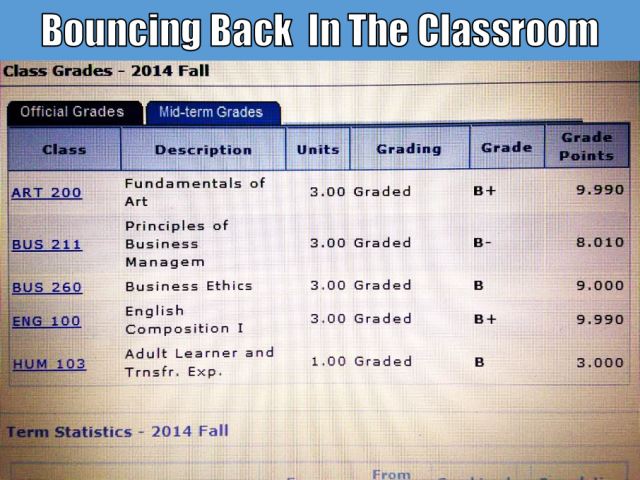

Joe McCloskey is a basketball player at the University of Maine at Fort Kent. We asked him to share his story with us after learning of his dramatic academic turnaround. Joe is currently averaging 20.9 points, 8.9 rebounds and 1.8 blocks per game. He is most proud of his journey to improve his academic focus and looks forward to building on his success. Joe was reluctant to share his name and transcript here, but when learning of how it could positively impact other young student athletes he did not hesitate to tell his story.

As a senior in high school I wrote a short auto-biography entitled “Basketball is My Life”. Little did I know what a prediction it was to become. As a young dad my son, Fred, could not wait to play competitive sports. I think the first word he learned as a child was “ball”. But his first opportunity really came in wrestling as a 3rd grader. He was tall and gangly for his age with little moxie for the sport. He could, however, spread out on the mat and no one could “pin” him. This strategy enabled him to have some success…he quickly experienced the emotion of winning and losing.
Fred’s real sport was basketball; he had watched Dad play in the YMCA leagues since he was a toddler. He ran the scoreboard with his sister when he was 5 years old. Fred would get his first chance to play organized basketball in 4th grade in the local community sports program. Three weeks before the season started, Fred cracked his collarbone skating on a hockey rink…not an auspicious start to the basketball season. As Fred’s dad, I was perplexed as to how soon Fred could start basketball practice. Fred and my patience were to be tested even before his first season started.
I had played Basketball in high school with some small town success. I was a triple jumper in college and grew up as an avid New York Yankee fan. I thought these would be valuable credentials to being a fantastic youth basketball coach. Fred had natural athletic ability and had height on his side. Winning in 4th and 5th grade came rather easy and there was not much pressure. Fred and Dad thought they were well on their way to winning basketball. They looked forward to 6th Grade “traveling basketball” where there were “tryouts” and better competition. A rude awakening lay around the corner.
The first few 6th grade games were quite a challenge. Our team was not very “deep”, and all the kids and their parents expected to win and have their share of playing time. My desire to WIN did not necessarily fit with playing the kids equally most of the time. Players with limited ability grew frustrated with lack of playing time. Their parents became restless with Dad’s coaching style and “wins” were few and far between. My demeanor on the sidelines left much to be desired. I yelled at the kids instead of encouraging them. I lacked patience and exhibited noticeable frustration. It rubbed off on the kids and the parents. The fun of the game was eluding everyone…not good. A 10 – 20 win/loss season was not an expected result. Seventh grade traveling basketball was, unfortunately, a rerun. Eighth grade brought a 50/50 winning percentage. Fred and Dad were due for a change.
Ninth grade basketball brought a new traveling coach with valuable experience and some solid coaching in school. The boys appreciated less pressure and a more level-headed, supportive coaching style. Patience and encouragement brought a winning season and brought fun back into the game. I was embarrassed at the way I had spent 5 years coaching Fred and his buddies in a negative atmosphere.
Fred went on to play in the State Basketball Tourney as a senior and was named Player of the Year in the Metro area. I felt better about the groundwork I helped lay in basketball fundamentals in the early years. Fred had a successful college basketball career and went on to play overseas.
I have had the joy of watching both Fred and my son-in-law coach my grandchildren with class, enthusiasm and encouragement, including success. They find ways to play kids equal time and develop wonderful relationships with the parents. They encourage the kids and do not get upset when a loss comes their way. I have gained a perspective that enables me to feel better about my contribution to youth sports and appreciate how well others are able to do a far better job. My early prognostication was right on, but not as rosy as I envisioned. Now at the age of 70 I truly appreciate the willingness of parents and coaches to work with the kids, encouraging them and mentoring them…and setting an example that all participants can be proud to exhibit.
 Gerry Vandegarde is an accomplished athlete in his own right and still plays competitively on the over 70 volleyball circuit. most recently chasing an elusive national championship. Before retirement, Gerry was a Senior Systems Analyst for Wells Fargo and is still a dedicated fan of youth sports… particularly those events involving his grandkids.

“It is your response to winning or losing that makes you a winner or a loser” – Harry Sheehy, former Dartmouth coach and administrator
Sheehy’s quote above demonstrates that winning and losing with character is the most important aspect of competition. Sure, you play to win the game, and most basketball teams measure their success in any given season by the number of wins they acquired. Hopefully, if these wins start piling up on a consistent basis, it will lead them to a championship of some sort. Every member of a competitive basketball team plays their best to win the game. If you and your team are successful, and you find yourself on the upper hand of the scoreboard at the end of the game, you need so ensure that you handle your successes in the proper manner. The basketball players and teams that best handle their wins while exemplifying sportsmanship are those that manage to stay humble, avoid complacency, and show a strong desire continue their improvement.
Even the best teams and players in the basketball world can be beat. Most people that keep in touch with NBA basketball would agree that Lebron James is currently the best all around basketball player in the world. He continues to be a dominant force in the league and has a huge impact on every game he is a part of. But, as the world saw in last years NBA Finals matchup against the San Antonio Spurs, even he is susceptible to losing. For this reason you should always be grateful for the times you succeed in winning a ball game. The moment that you start taking wins for granted is the moment when you start losing more often than not. The best teams and players genuinely appreciate the efforts it took for them to win a particular game. They stay humble because they know that at any given moment, their fortunes could change. Lesson to be learned here, handle your wins humbly.
The teams and players that get too comfortable winning, are generally the ones that will then be dealing with a loss soon after. It is easy to become complacent in practice and on the court when things are going the way that you want them too. When you become complacent and comfortable in your winning ways, you tend to ease off the gas pedal a little. By this I mean you might lose that motivation and drive that led you to the successes you have been experiencing because you somewhat forget what it is like to lose and the disappointing feeling that accompanies a loss. The teams and players that continue to win are those that avoid this complacency, keep an everlasting hunger to win, and take each and every game as a challenge to accomplish something new. The key is to always strive for more.
As a young basketball player, there is always going to inconsistencies in your game that need improving. Despite how good you make think you are and how much you may think you have the game mastered, there is always room for improvement. There is no such thing as the perfect ball player.
Kevin Durant of the Oklahoma City Thunder is a player that is constantly striving to add new aspects to his game. Despite being named the MVP of the NBA this past year, he still recognizes that there are places in his game that can still be improved. He and his Thunder teammates are a part of a team that continually have one of the leagues best winning percentages year after year. Although they are considered a successful team, Durant and his teammates continue to strive for more because they still have goals they have yet to accomplish. The idea behind this is that even if you are winning on a consistent basis as a player or team, if you continue to set goals with a focus on continual improvement, you will rise to new heights that you didn’t think possible.


As young basketball players, it is important to understand that when you and your team lose to an opponent, it is crucial that you do so with class and dignity. In every competitive game of basketball, there can only be one team that wins, that is the beauty of the competition. In saying this, the players on the losing side of a game need to be able to deal with the fact that they just loss in the appropriate manner. Here are some helpful hints that you can implement to your behavior when you find yourself on the wrong side of the scoreboard at the end of a ballgame.
Everybody loses at some point. The best basketball players in the world lose games every year. Michael Jordan, despite his overall success as a basketball player, lost plenty of games in his career. Losing is a part of the game that nobody enjoys, but that everybody experiences on many occasions. This acceptance of a loss is an aspect that relates to mostly all sports. Boxing legend Muhammad Ali said it best.
“I never thought of losing, but now that it’s happened the only thing is to do it right. That’s my obligation to all the people who believe in me. We all have to take defeats in life.” Here Ali has accepted that losing is a part of competition, and doing it appropriately is essential.
Nobody likes losing, and you don’t have to either. Furthermore, nobody plays the game to lose; you should always play to win. The desire for one team to outlast another is the essence of competitive sports. What helps a team be successful is their ability to put more points on the scoreboard than the other team. However, you must learn to handle the joy of a win as gracefully as you would the disappointment of a loss.
Understandably so, there probably isn’t one competitive basketball player on this planet that wants to be classified as a “good loser.” What is meant by the term “good loser” is being a player that can maturely handle the emotions that accompany loss. A good loser accepts when his team has been beat by another in that particular game and shakes their opponent’s hands to congratulate them on their success. It may not be the easiest thing to do for you young players with a lot of pride in your game, but it shows incredible character. A good loser learns from the loss, then attempts to correct the mistakes that were made while eventually learning from the mistakes to earn a win in the next game that is played.
“Sportsmanship for me is when a guy walks off the court and you can’t really tell whether he won or lost, when he carries himself with pride either way.” Jim Courier, former World #1 Professional Tennis Player
The best part about basketball is that there is always another game to be played. Whether your team got crushed by 30 points or lost on a last second buzzer beater, understand that walking out of that game with your head held high is crucial to your success in the following games that have yet to be played. The players and teams that make a habit out of winning are those that use their losses as motivation for the upcoming games. Whatever it is, whether in basketball or in life, make an emphasis on handling your losses with sportsmanship and grace.
Losing like a Champion:

We often get asked the question: “What should I look for in a basketball trainer?” Basketball trainers of all forms exist in the world of youth basketball today. There are some truly great ones that use phenomenal methods to help their students become better players. On the other hand, there are also those that claim to be worthy trainers, but fail to use any sort of effective methods to teach the game. As a young player, you should be looking for these following simple characteristics in your trainer to make certain that you are getting the most out of your time spent in the gym:
If you are paying for lessons from a basketball trainer, you want to ensure that they themselves have been through the ropes. By this, I mean that the trainer should have experience in playing or coaching at least at the college level as a minimum. The reason for this is because you want to know that they are knowledgeable on the fundamentals and have experienced the hard work it takes to play basketball at a high level before you take advice from them. They must present an expertise and a knowhow of the game that shows that they have accurate information about basketball that they can teach. Furthermore, you want to know that they can give you the tips you need to play basketball at a high level just as they have done.
Coach K of Duke University basketball once said, “I don’t look at myself as a basketball coach. I look at myself as a leader who happens to coach basketball.” This is the type of attitude you hope to see in a basketball trainer.
A key characteristic you should look for before deciding on a basketball trainer is seeing if they have the ability to teach the game effectively. In order for you to benefit from their basketball expertise, they need to be able to instruct successfully. A good basketball trainer should easily be able to put into words what basketball skills they want their trainees to work on, why they should be working on them, and how their extra work will benefit them in becoming a better player. In addition to this, it also helps if your trainer is in shape enough that they can show you physically and specifically how they would like each drill performed. Having someone that can model for you the correct way to perform a jab step or crossover dribble will help you in easily being able to copy these actions for your own game.
Nobody likes to be around someone that is unhappy. It causes a loss in motivation and sucks the enjoyment out of that moment in time. This pertains to your basketball trainer as well. You should be looking for a basketball trainer that is genuinely excited every time he comes into the gym to teach his craft. They should truly enjoy the time that they spend teaching the game of basketball and have an excitement about it that is contagious to the young individuals that they are training. A trainer with a positive attitude is much more effective at teaching the game because he will instill a love for the game in his students that they will want to also exemplify. When a basketball trainer can keep the game fun they promote a sort of willingness from the people they are training to exert as much effort as they can to improve their game.

Many coaches and players analyze the art of basketball leadership training. Some people believe that leaders are born naturally, already possessing the qualities needed to motivate and inspire others. However, it takes mindfulness and diligence to become an effective leader and regardless of whether you feel like you were born with the pre-disposition to lead – you certainly have what it takes to become one!
By beginning to focus and work on the following 5 traits of a great leader, you can begin to mold yourself into the type of player that people want to have as a motivating force on and off the basketball court.
Leading by example is the foremost thing that you must remember as you are working to build up your reputation as a leader on and off the basketball court. You have to continually be thinking of how your coaches, teachers, classmates and teammates see you and whether your actions line up directly with your words. This is not to be confused with caring too much what other people think, however it is important that you are mindful and you do care about your reputation. Think about the people that you look up to and consider what you expect from them in regards to their consistent actions, words and behaviors – it’s safe to assume that someone that leads by example is going to be well-liked, trusted and respected by their superiors and peers.
A good example of this would be to arrive early to practice and stay late – the more you focus on leading by example the more your teammates will follow in your footsteps and next thing you know, you might have three or four after practice shooting buddies. Everyone is always looking for someone to emulate and follow – why not you?
Relationships with people are at the top of the list for leaders, because without others who is there to lead? Whether it is with authority figures like your basketball coaches and teachers or your fellow teammates and classmates, it’s important that you strive to have a positive relationship with every single person that you interact with on a daily basis.
There will always be people that you tend to “click” with better and they will be your close companions, but being a leader requires that you prove your ability to be adaptable to different personalities and with people who have different viewpoints in life as well. Regardless of whether you are interacting with someone you get along with well or someone that you simply tolerate, as a leader, it is your responsibility to ensure that you are doing everything in your personal power to make everyone feel part of the team. Taking a few minutes after practice to sit down and get to know a teammate more personally or simply to encourage them more often is a great way to nurture your relationships. The same goes for people outside of your team as well – who can you think of that you could invest a few extra moments of quality time into encouraging and building up today?
Time is the most valuable thing than anyone can give to another person or cause. It’s easy to get caught up in our own little worlds and focus all of our time and energy on what we need to get done in order to accomplish our personal goals. However, caring leaders put it in their schedules to take valuable personal time to help with causes that may not directly benefit them in the long run. This attribute of a leader can be used in many ways on and off the basketball court and will certainly speak volume to your character.
There are always opportunities in your community to give of yourself and time to help those in need – whether it’s through your local church and school, or whether it’s something that you simply saw that needed to be done for your neighbor – volunteering is something that not many people are willing to do on a consistent basis.
Take a few moments to check in with your coach to see how you can help him with any extra tasks in the locker room or out on the floor for cleanup after practice. It doesn’t matter if you’re the leading scorer on the team or not, if you want to become a leader, you have to be willing to serve others first!
Another great idea for volunteering for your basketball team would be to hang around before or after practice to rebound the ball for a teammate that you know has been working to improve their form and increase their shooting percentage. The only element missing may just be extra support and encouragement from a leader to gain the confidence they need to excel – you really never know what great things can come from small, random acts of kindness!
The greatest leaders are very aware of what their weaknesses are. Rather than focusing on those weaknesses to the point of self-defeat, a great leader will turn that weakness around and use it as strength – it’s all about your mindset!
An effective leader is also not afraid of failing from time to time. If Michael Jordan sat down after missing a potential game winning shot and threw his hands up in the air with self- doubt and defeat, he’d never have become the basketball great that he is adorned for being today.
“I’ve missed more than 9,000 shots in my career. I’ve lost almost 300 games. 26 times, I’ve been trusted to take the game winning shot and missed. I’ve failed over and over again in my life and that is why I succeed.” –Michael Jordan
As you can see, Michael Jordan always focused his personal attention to making his weaknesses his strengths and you have to do the same if you are going to reach your leadership potential. Whether you need to spend more time working on your defensive game or you need to cut back the social time to put in those few extra hours of studying a school subject to help you increase your grade point average, you must take your weaknesses into account and work at them harder than anything else. Eventually, they won’t be your weaknesses anymore and you can switch your focus onto something new – that’s the beauty in it!
Coachable basketball players are always the most successful. It’s easy to step out onto the court as a talented player and “do your thing” so to speak. However, when striving to become the best leader possible, you have to be willing to admit when you’re wrong and need guidance.
Being coachable means that you are teachable, and this certainly applies to every aspect in life. The best people to learn from in life are those with experience and wisdom – your elders and authority figures. To be a coachable person, you have to be willing to listen first and speak less. You also have to be accepting of and open to constructive criticism; you may not always like what your coaches, teachers and parents have to say, but if you focus on grasping their overall point within their message you will gain their respect and you will benefit most.
Your teammates and peers are always watching, and if you roll your eyes and throw your head back when your coach reminds you for the fifth time in one practice to set a screen within a play your team is learning, your teammates might just do the same or form a negative opinion of you. It’s best to accept that you are struggling and focus more on getting it right. If by the end of practice you still don’t feel confident in what you are doing, take a few extra moments to grab your coach and have him break it down for you until you feel confident. Your coach will appreciate your openness and will enjoy helping you as you are willing to be coachable!
Great leaders may not always be the best players on the team or the smartest students in class, but they do outwork other people to the point of it being noticeable by those around them. It takes a lot of effort to earn leadership status on a basketball team, and the best leaders out there didn’t have it handed to them. Not only do you need to concentrate on your character development, but you also have to be willing to get to work!
Leading by example is one thing, but by striving to be the best every workout, practice or game through your work ethic is another. You may not be that player or student that everything just seems to come easy for and that’s fine – that just means when you do reach your goals and you do outcompete your teammates and peers you can be confident in knowing that you genuinely worked for it.
Your work ethic should be filled with so much fire and passion, that you motivate those around to take their intensity up a level when you are around – the inspiring quality of a true leader!
Leaders are not always naturally born and they certainly don’t become effective role models by not working at it. Whether you feel like you have what it takes already or simply want to focus on developing the characteristics required for leading others, this list is a great place to start because you do have what it takes to motivate, inspire and encourage – all within you!

I am a former college basketball player and during my freshmen season I had been struggling with severe digestive issues. It was so bad that any time our team went out to the track or had a longer workout or practice; I began to dread it instantly, knowing that my IBS (irritable bowel syndrome) was going to flare up forcing me to have to embarrassingly ask to excuse myself once again. It also made it difficult for me to perform with the level of intensity I needed to in order to keep up with the rest of the team, which was very disheartening.
I knew that I had a serious health problem, but I didn’t know what the underlying cause was at the time. Athletic trainers and team physicians kept telling me that it was all due to mental and physiological stress, but I wasn’t convinced. My life wasn’t very stressful and I just intuitively knew that there was no way that stress was the root cause.
It wasn’t until I heard a theory about dairy products causing digestive upset in some people that I began to wonder if I fell into this group of people. I began to do tons of personal research and based upon what I found which I will lay out in the following sections of this article, I made the decision to completely cut out dairy products from my daily nutrition plan.
The results I quickly achieved were outstanding – my digestive system began to heal and I was no longer plagued with seasonal allergies!
I’ve never had any digestive issues like that since and the fact that my seasonal allergies were eliminated as well was enough for me to continue focusing on limiting my dairy intake.
I would like it to be known that the opinions and beliefs expressed within this article are based upon my personal experience with the consumption of dairy products, specifically cow’s milk and are intended to provide a new viewpoint to the table based upon my opinion, experience and research.
Milk has long been thought of as the healthiest non-water beverage that you can consume. Daily consumption of milk has long been promoted by the USDA and FDA as being the ideal source of non-meat protein and calcium to enhance growth development in young children and athletes as well as strong bones in the elderly.
We’ve all seen the “Got Milk!” advertisements and other commercial products heavily promoting the dairy industry as they’ve flooded us with over $300 million in advertisements each year. Many of these marketing campaigns have featured sports stars and movie celebrities reminding us to drink milk every day for all of its nutritional benefits.
For decades the American culture has widely believed and followed this popular general health recommendation – however, today there are many people that have begun to question the validity of these supposed healthy living claims as seen on the government regulated ‘Food Guide Pyramid’.
The potentially misleading information given about the nutritional benefits of dairy products is not the only thing that poses a potential health threat to those that consume it on a regular basis; an even bigger and nastier issue is the manufacturing process of the dairy products.
Artificial hormones and antibiotics are being pumped into the sick livestock which has contaminated the overall milk supply and the only way to make the milk from these sick animals saleable is to pasteurize it which kills off any pathogens. However, issue still remains since pasteurization doesn’t address the toxic overload issue in the supply that directly impacts the American public’s health and safety.
This article is not intended to bash the dairy industry, but rather to inform and educate basketball players to help them make the wisest nutritional choices possible to support their athletic bodies through building a wise nutrition plan.
Knowledge is power, and understanding the harmful effects that today’s dairy products can have on the human body is game changing information. Fortunately, in today’s health foods market there are several milk alternatives to choose from providing safer and more wholesome health benefits for basketball players and non-athletes alike.
Basketball players and athletes have high demands put on their bodies, so it’s important that they are only fueling up with foods sources that are going to keep it functioning effectively and efficiently while avoiding any sources that could potentially cause health issues.
While milk has long been touted as a very nutritious food source, the fact is that dairy foods are mucous producing agents that promote the growth of bad bacteria in the body. This auto-immune reaction interferes with the cleansing-healing process, making it practically impossible to allow your body’s own natural healing mechanisms to work optimally.
Dairy foods are very dense and high in saturated fats that challenge digestion, immunity and metabolism. Basketball players need to consider this alarming physiological truth because anything that is going to hinder those three basic bodily functions is certainly not something that you want to include in your healthy basketball nutrition plan on a regular basis because it could slow you down on the court so to speak.
In fact, over one-quarter of Americans are intolerant to dairy foods (lactose intolerant), meaning they will experience allergic reactions, very poor elimination and digestion (weight gain and constipation) and severe mucous build-up (inflammation). Sounds nasty right? That’s because it is.
Another startling fact is that dairy foods become harder to digest as we age because our bodies don’t naturally produce high levels of milk-digesting enzymes (lactase) and after we’re done nursing from our own mothers the need for this enzyme is no longer needed theoretically – unless you choose to drink cow’s milk consistently of course.
Despite whether your body is completely intolerant to dairy products or not, the strain put on the eliminative organs like the colon and urinary system is caused from the clogging that occurs over time due to the overproduction of mucous. Dairy literally acts like toxic sludge in the body slowing everything down for the worse.
Many people claim to gain higher, more consistent energy levels after greatly reducing or eliminating their daily dairy intake – this is directly related to the reduction in mucous and the improved functioning of vital eliminative organs. It’s safe to assume that all basketball players are aiming to keep their health in tip top shape and dairy doesn’t seem to fit the equation for a wholesome, clean daily diet.
Since the early 1990’s, the dairy industry has done a great job of marketing their products as an essential part of any health eating program by posting pictures of basketball legends like Michael Jordan and Shaquile O’ Neal all over media sources to influence young players to drink their daily intake of dairy to build up a strong body to help make them a better player – the raw truth is that this is all very misleading information.
Michael Jordan did not become the basketball great that he was because he drank milk every day. This is not to say that he didn’t drink milk, but he certainly didn’t get most of his daily recommended calcium from it considering that the human body doesn’t absorb dairy calcium well because of the pasteurizing and homogenizing processes it takes to make the milk safe for human consumption.
“A 12 year study, formally known as the Harvard Nurses’ Health Study finds that high intake of milk and other dairy foods does not reduce bone breaks or osteoporosis. The study found that instead that hip fracture risk was 1.45 times higher in women who drank 2 or more glasses of milk per day compared to women who only had one glass or less per week.”[1]
This study proves that homogenized milk is a poor source of absorbable calcium and has very low levels of magnesium to make matters less nutritious. Any good source of calcium will have a 1:1 ration of magnesium along with it to increase absorbability of the essential mineral. Instead, the protein found in cow’s milk may actually cause the loss of calcium via the urinary tract ultimately leading to poor skeletal health overall.
Another factor to consider is that conventional milk is not extracted from grass-fed cattle; instead the dairy cows are being fed artificial grains that are loaded with even more toxic substances making their way into your body with each sip.
The fundamental question in this instance is how can the milk from artificial grain fed cattle have significant amounts of calcium, minerals, and vitamin D when these minerals can only be present in the cow’s body if the cow is eating grass which is the original source of the minerals? It simply can’t.
On the contrary, The American Journal of Clinical Nutrition suggests that a diet rich in fruits and vegetables positively affects bone health.
In fact, studies have been conducted comparing the absorption of the calcium content in cow’s milk to that of vegetable sources. It was discovered that the absorption of the calcium from brussels sprouts was 63.8%, broccoli was 52.6%, kale was 50%, compared to only 32% from milk.
Leafy greens, other vegetables, nuts, seeds, fish and non-GMO soy foods have much higher amounts of absorbable calcium as well as other important minerals like magnesium, zinc, iron, potassium and selenium.
Basketball players need the benefits from calcium and other minerals to help prevent sidelining injuries and illnesses, so you are much better off focusing on getting in your 3-5 servings of vegetables each day than you are by serving up a cold glass of cow’s milk.
The protein content in cow’s milk is equally as ineffective for the human body as its calcium content. Cow’s milk contains a specific protein known as bovine serum albumin and actually triggers an auto-immune reaction in the body causing antibodies to attack and destroy insulin producing beta cells in the pancreas. This is why children who are given cow’s milk during infancy have a higher risk of developing diabetes later on in life as mentioned in the New England Journal of Medicine.[2]
Finally, the saturated fat (unhealthy fat) content in dairy is very dense, high and unhealthy. Even if you do choose 2% or 1% milk, you are still consuming 35% and 25% saturated fat per glass respectively.
The bottom line is that dairy products are not contributing to your muscle building and athletic efforts on or off the court in the weight room.
“On November 5, 1993, the Food and Drug Administration (FDA) approved genetically engineered Artificial Bovine Growth Hormone (rBST, rBGH, BGH) for commercial use in the United States.”[3]
These artificial hormones are used to increase the milk production of cattle in order to meet the high supply and demand of American dairy products.
Due to America’s surplus milk demand and dairy subsidies, it’s easy to understand why farmers would use these unnatural and health hazardous hormones to promote more milk production from their cattle.
Although the research is slimmer, the International Journal of Health Services does show that genetically engineered rBGH may promote breast and colon cancer in humans.
Europe and Canada already ban the use of artificial hormones in dairy cows, and has taken it a step further by banning the importation of U.S. dairy goods to their countries for this reason.
Despite the lack of scientific evidence, it’s safe to assume that common sense prevails over this matter – if only the United States had more of it considering that other countries clearly value the people more by putting the public health and safety of its citizens and livestock over the almighty dollar.
It is known, however, that cows treated with these artificial hormones have increased incidences of mastitis infections (inflammation, infection, cancer).
These infections start a vicious cycle by forcing farmers to treat the sick cattle with more antibiotics to keep them healthy enough to continue producing milk. If the farmers lose their cattle, they lose money and they are willing to do anything to keep that from happening.
“The Union of Concerned Scientists estimates that an astounding 24.6 million pounds of antibiotics are fed to animals every year to help fight illnesses that break out in overcrowded, unsanitary feed lots.”[4]
The over worked cattle’s swollen utters dragging on the manure-laden floors not only increase the risk of bacterial infections, but also contaminates the milk; in combination with the antibiotics given to the cattle to treat the infections which are also found in the milk, this creates more of a creamy toxic substance rather than fresh, raw, organic milk like nature intended.
The dairy industry’s solution to this problem is to pasteurize the milk, however pasteurization only knocks out the bacterial pathogens – it doesn’t address the matter of there also being significant amounts of hormones and pesticides still being present after the pasteurization process served straight to the American public.
The reality is that the diary industry’s current practices are not in you or your family’s best interests, it’s all to increase supply and demand for a profit by whatever means they have to do that – healthy and safe or not!
Raw milk is a much healthier choice to make if you are going to continue using dairy products in your basketball nutrition plan. Raw milk can only be found at your local farmer’s market or through a private farmer, but is definitely the way to go.
Fermented dairy products like kefir and yogurt are also healthier dairy products. They are cultured foods that present health benefits by providing the body with significant amounts of healthy bacteria (probiotics) and absorbable calcium for the body. These fermented foods are actually considered living because they contain intestinal flora that aide the digestive process, and since the lactase enzyme is not needed to breakdown these forms of dairy products they are much easier to assimilate and absorb than milk, cheese or butter.
There are no health issues with continuing or adding these forms of dairy into your nutrition plan unless you are completely intolerant to lactose.
Just because the dairy industry has fallen to the wayside, it doesn’t mean that you can’t still enjoy your favorite cereal, smoothies, shakes, ice cream and baked goods. The creamy consistency of milk is what makes it so enjoyable and while it’s obviously not the best idea to continue rushing out to the grocery store to buy another gallon when you’ve run out, it is a good idea to start looking to healthier milk alternatives that actually do provide nutritional benefits for your basketball body and nutrition plan.
Listed below are the most nutritious milk alternatives found on the market. All of them can be substituted for milk in all recipes and are excellent served in many of your traditionally milk-based treats like smoothies and ice cream. These milk alternatives are made using highly nutritious nuts and seeds and offer the benefits of healthy fats, protein, minerals, vitamins as well as being free from artificial sugars.
There are so many options available that you are destined to find one that suits your consistency, texture, and taste needs. Many of these alternatives are also found in vanilla and chocolate flavors and are sweetened using natural cane sugar, which still amounts to much less than that found in conventional cow’s milk.
If you are interested in making your own nut or seed milk, there are easy recipes online for making them at home as well.
Flax Milk – rich in healthy omega-3 fats, flax milk is made using flax seeds and is a great option for those looking for a creamy consistency with a slightly nutty taste. Flax milk is lactose, cholesterol and saturated fat free making it an ideal choice for replacing your cow’s milk with. The only pitfall to flax milk is that it doesn’t contain any protein, however you can find it with fortified protein if you desire.
Hemp Milk – this milk alternative is made using hemp seeds and is very rich in omega-3 and omega-6 healthy fats. It is also a great source of amino acids, providing about 4 grams of protein per serving. Hemp milk contains 46% of your RDA of absorbable calcium and is also rich in other vitamins and nutrients like Vitamin A, E, B12, folic acid, iron and magnesium.
Coconut Milk – great for adding to smoothies and ice cream recipes, coconut milk offers a delicious milk alternative. Coconut milk is made from the meat of mature coconuts and is easy to digest. You will benefit from drinking coconut milk because of the healthy fat content, antioxidants, Vitamins C, E and B, as well as minerals like magnesium, potassium and phosphorous.
Almond Milk – one of the most popular milk alternatives, almond milk, is known for being a low-calorie, saturated fat and cholesterol free beverage that can also help maintain healthy blood sugar levels. Offering the nutritional benefits of calcium, Vitamin D, Vitamin E and fiber are a few other perks to including this in your daily basketball nutrition plan.
A few honorable mention milk alternative products include soy milk, rice milk, quinoa milk and cashew milk that all are great options.
Although cow’s milk and other dairy products have long been a staple in the traditional American diet, many people are now turning to healthier, less toxic alternatives in order to prevent the risks associated with consuming today’s conventional dairy.
Basketball players need the best nutrition possible to maintain a healthy body and immune system during the season and the current facts and studies point out some valid reasons to reconsider your choices for dairy as part of your daily nutrition plan. By focusing on getting your daily servings of fruits, veggies, and other wholesome foods as well as trying out some of the milk alternatives mentioned, you are on your way to getting enough calcium, protein and other minerals necessary to support your basketball health goals on and off the court!
[1] Healthy Healing, 14th ed. Page, Linda. Pg. 156
[2] Healthy Healing, 14th ed. Page, Linda. Pg. 155
[3] http://milk.procon.org/view.timeline.php?timelineID=000018
[4] Healthy Healing. 14th ed. Page, Linda. Pg. 158
Note from Basketball Trainer Publisher Chris Corbett:
When Danielle first sent me this article, I was taken aback a bit as it challenged several of my own beliefs. After reading it a second and third time I thought it was important to share this article with our audience for a few reasons:
A basketball food journal, also known as a food log or food diary, is a daily form that serious players in basketball training use to track your nutrition intake over a set period of time.
I believe that all basketball players should keep a daily food journal for at least 2 weeks out of every month, if not just making it an ongoing part of their basketball nutrition strategy.
Keeping a food journal is fairly simple, yet does require an increased commitment to logging everything that you eat and drink for a set period of time. You can choose to either create your own personal food journal, buy or find a pre-made one online or even use a phone app such as My Fitness Pal. Whichever way you decide to go with logging your daily nutritional intake, be sure that it makes the most sense for your lifestyle and personality so that you will stick with it in the long run. We also recommend periodically sharing your food journal in your discussions with your basketball trainer so they can help you pinpoint between your peaks and valleys in performance.
A basic food journal for basketball players should at the very least include: what you are eating (try to be as specific as possible), what time you ate each meal/snack, a way to track your water intake, how much time has passed between each meal/snack, how you felt before and after you ate. More detailed journals centered on meeting specific goals like increasing muscle mass or reducing body fat percentage should include things like total calories along with fat, protein and carbohydrate content of each meal.
The most convenient time to log your food and fluid intake will be different for everyone. Some players may find it easier to jot things down after each meal and snack as they go along in their days, while others may have more success doing it all at the very end of their day. The only potential problem to waiting until the end of the day is the chance that you might forget to include something.
Making the decision to commit to tracking your nutritional intake as a basketball player can have a very positive impact on your overall health which will translate into your performance on the court. How can you know whether or not you are consistently fueling your body with the right types and amounts of foods if you don’t take the time to review your days and weeks? The bottom line is that you can’t, while it is effective to always choose as healthy foods as possible, sometimes it’s easy to overlook the fine details of your diet that could be causing you to perform at less than your best.
I’d like to share with you my top 4 reasons why every basketball player should keep a food journal at least from time to time.
– unless it’s written down, often it’s easy to overlook small details in your eating habits. Keeping a food journal will help you distinguish between what you think you may or may not be doing on a regular basis in your diet in comparison to what you actually are. For example, having everything written out will help you to pinpoint patterns like what kinds of food you tend to eat at certain points in the day, times that you may be waiting too long to eat your next meal or snack and you might even be surprised at your actual water intake.
– it’s difficult to achieve any goal without being able to measure success. A daily basketball food journal is a strategic and wise way to set yourself up to create the daily nutrition to meet your goals. Whether you are wanting to increase your muscle mass or even reduce some unwanted body fat, it’s important to know what and how much you are eating each day. Specific goals require specific action and a food journal is the easiest, most effective way to face the reality of what you are or aren’t putting into your body to get you to where you want to be physically to support your basketball performance in the least amount of time.
– on the days that you are busy, it can be easy to overlook the importance in fueling your body properly before and after a basketball practice, workout or game. Keeping a daily food journal can be especially helpful with you being able to choose the best foods and supplements to fuel your body with. Logging what you are eating before you play will allow you to see which foods give you more energy and which foods seem to slow you down out on the court. Also, it’s a great way to hold yourself accountable for getting in the best post workout nutrition possible after exerting yourself physically for hours. These two meals are the most important meals that a basketball player will eat aside from breakfast, so it’s important to recognize what you are fueling your body with consistently.
– aside from food, including regular nutritional supplementation in your basketball game plan like taking a daily multi-vitamin can be incredibly beneficial. With so many things to remember in regards to healthy eating, sometimes remembering to take your supplements can slide under the radar. Including these in your daily food journaling efforts can help you keep up with what and when you need to take your nutritional support products each day.
As you’ve now learned, sometimes getting a little more pro-active with your basketball nutrition goals by keeping a periodic food journal can really elevate you and give you a strategic advantage to success. It’s always easier to make changes when you know exactly what areas you need to work on, rather than feeling like you’re drowning in changes that need to be made without any real idea of where to start.

Please include attribution to http://basketballhq.com/ with this graphic.


Cold and flu season is quickly approaching, and for many basketball players this is a huge concern! Some people and players are used to being affected by this seasonal attack on immunity and almost expect it to happen to them. However, by preparing now and focusing on strategically building up your immune system, you can sail through the fall and winter months without having to miss a basketball workout, practice or game because of these pesky illnesses.
According to the National Center for Disease Control (CDC), peak flu months start in October and last all the way through February, with February being the month of highest infection. February is certainly not a good time for basketball players to get sick considering that it’s nearing the end of the season and all of the most important games occur during this time![1]
Between 5%-20% of the American population will contract the cold or flu each year, and the only way to ensure that you don’t fall into that statistic is to prepare, strategize and plan on not getting sick.[2]
Bacteria and viruses are the main pathogen threats against the immune system that every basketball player has to be conscious of throughout the season. Both cause similar symptoms and will leave you hanging out on the sidelines, but that’s where the similarities end.
Bacteria are alive and are single-celled organisms that can wreak havoc on your health. Have you ever suffered from one of those nasty sinus infections? These are usually caused by bacteria and are easily spread from person to person. Taking regular sanitary measures like washing your hands after touching the ball all practice long or picking up weights after people is definitely a smart idea!
Unlike bacteria, viruses are not alive; they are tiny fragments of DNA that latch onto healthy cells and cause duplication which is how and why they spread so rapidly throughout the body if not treated properly.
Viruses are a bit more serious in nature than bacteria, so it’s a good rule to follow clean sanitation practices in the basketball locker room, weight room and in general if you want to avoid either of these threats against the immune system.
The common cold is much milder in nature than the flu. Typically caused by the rhinovirus, the cold can last up to two weeks and is accompanied by coughing, sneezing, sore throat, mild fever, body aches and fatigue.
On the other hand, the flu is much more serious than the common cold since it can turn into more serious health problems quickly and is caused by the Influenza A and B viruses. Lasting up to two or three weeks, the flu is generally accompanied by symptoms like coughing, fever, severe fatigue, body aches, sore throat, runny nose and if not treated properly can escalate into more serious conditions like pneumonia.[3]
The immune system is our body’s natural defense against these common ailments and is capable of dealing with the constant barrage of harmful bacteria and viruses when working optimally.
A healthy immune system is capable of providing several benefits to the body including:
What are the different blood cells that make up the immune system?
The immune system is a complex network of specialized cells, proteins, tissues, and organs that all work together to protect you from anything that could be potentially damaging to the body. Most of us have heard of white blood cells (leukocytes), and while they do make up the majority of the cells in the immune system, there are also two other types of blood cells that actually perform the ‘seek out and destroy’ missions in the body.
Lifestyle Enemies of a Healthy Immune System
As you prepare for the upcoming cold and flu season, it’s important to know what exactly causes a weakened immune system. Daily lifestyle and diet habits can make or break your body’s ability to fight off infection efficiently. As you go about the basketball season, be sure that you try to keep these six things to a minimum.
What foods should I eat for a strong immune system?
A healthy immune system certainly starts in the kitchen! What you decide to fuel your body with all year long will either build up or tear down your immunity.
A diet rich in antioxidant-rich fruits and veggies, whole grains and healthy fats are all able to give your body what it needs to build a solid foundation of efficient immunity as a basketball player.
Basketball players need even extra nutrition since the physical toll taken each day on the body can leave the immune system depleted, so be sure to make good food choices every single day!
The staff here at BasketballTrainer.com has varying opinions on this subject but all agree this is a personal decision that you should rely strongly upon your doctor for.
What supplements and herbs should I be taking to build up my immunity?
With the cold and flu season quickly approaching, it’s time to take control of your health to protect yourself from sidelining illness. By eliminating certain lifestyle habits and replacing them with healthier habits, food choices and nutritional supplement support, you are setting yourself up for success. Taking action now to build up your overall health will help you to forego the inconvenience of the cold or flu this basketball season and onto more playing time and wins in the record book!
[1] http://www.cdc.gov/flu/about/season/flu-season.htm
[2] http://www.webmd.com/cold-and-flu/flu-statistics
[3] http://www.healthline.com/health/cold-flu/cold-or-flu#2

Proteins are chains of molecules that are vital to life. Named more than 150 years ago after the Greek word proteios (meaning of “prime importance”), proteins have been studied and found to hold the answers to many physiological questions about the human body.
Protein is the second must abundant substance in the body, aside from water, and makes up roughly 18-20% of a person’s total body weight. In fact, it can be found in every single one of the trillions of cells that make up the human body.
Protein is a macronutrient along with carbohydrates and fats, meaning that it provides calories and energy for the body –providing 4 calories of energy for every gram consumed.
Unlike healthy carbohydrates, which mostly benefit the metabolic system; protein plays a key role in several functions of the body including: immune function, achieving a healthy pH balance, maintaining fluid and electrolyte balance, transporting nutrients, supporting growth of muscles and maintaining healthy muscles, as well as building enzymes, hormones and other important chemical compounds in the body.[1]
As you can see, protein’s role in the body is much broader than simply supporting healthy muscles which is why it’s so important to take this macronutrient seriously!
 Amino acids are the building blocks of protein and are classified as either essential amino acids or non-essential amino acids. The body can make about half of the 20 amino acids that it needs which are known as the non-essential amino acids. The other 10 that the body cannot product on its own, known as essential amino acids, must be attained through diet and supplementation in order to keep up with the demands of a basketball body.
There are three essential amino acids that are classified as ‘branched chain amino acids’, more popularly referred to as BCAA’s. These three amino acids include L-leucine, L-isoleucine and L-valine, which are particularly important to basketball players and athletes as they play a big role in muscle recovery and new muscle tissue synthesis.
L-arginine is another essential amino acid that is popular for being the pre-cursor to nitric oxide in the body. Nitric oxide is a vasodilator meaning that it will cause the blood vessels to expand and allow for increased total blood circulation to the entire body. Where blood flows, so do nutrients, vitamins and minerals for faster, more effective recovery. As L-arginine converts into nitric oxide, the stimulation of the release of the human growth hormone (HGH) from the pituitary gland also which means that the body is going to be able to grow bigger, stronger muscle mass in much less time than someone who is deficient in this particular amino acid.
Amino acids are what make protein so unique. You can attain all of these amino acids through your diet, however many people do choose to add nutritional supplementation in order to give themselves a natural, healthy protein boost. This can be beneficial especially after a longer than normal workout or on those days when you feel like you are dragging because of consecutive intense training days. It’s always better to focus on taking a full amino acid profile nutritional supplement rather than isolating specific amino acids since this can cause an imbalance in overall levels overtime.
 The lifestyle of a basketball player is incredibly demanding. Aside from being under loads of stress and pressure to maintain good grades and healthy personal and professional relationships, the body must undergo hours of physical wear and tear so to speak. The entire body is left depleted often after basketball workouts, practices and games and is need of important protein replenishment. Without the right amount of protein to support your basketball body, you will be left with a weakened immune system, less muscle mass, as well as being more likely to fill your diet with too many carbohydrates and fats which can lead to an undesirable body fat percentage.
On the other hand, players who are getting enough quality protein each day in their diets will more easily build strong, lean muscles in the weight room as well as maintaining an ideal body fat percentage to support their endurance efforts out on the court. Basketball weight training is essential to college basketball dreams and protein fuels that growth and dream.
Basketball players ought to keep a close watch on their daily protein intake to build up a healthy body and to help the body recover after intense physical activity. Keeping a food journal is an easy way to track your exact protein amounts and also the timing of your protein consumption throughout the day.
You might be wondering exactly how much protein you should be getting as a basketball player every day.
Most nutritionists and dieticians are going to recommend that you reserve at least 20% of your daily diet for your protein consumption. However, the easiest way to determine exactly how much you should be getting is based upon body weight.
Here is a simple formulation that can help you set a daily target goal:
Take your body weight in pounds and divide it by 2.2 to get your weight in kilograms. Then, multiply your body weight in kilograms by 1.8 to get the number of grams of protein per day you should strive for.
Also note, a recent Canadian study determined that highly active athletes should be consuming a little bit more than the average person, at anywhere from 1.8-2.8 grams of protein per 1 kilogram of body weight. [2]
Many athletes thrive on a slightly higher protein intake than a person who is only moderately active or sedentary considering that athletes are constantly having to rest and recover their muscles and body.
 After calculating the minimum amount of protein you should be consuming each day, go ahead and jot it down in your food journal as you begin tracking your daily intake to ensure that you’re getting enough.
You can easily get enough protein each day from your diet.
Some proteins are classified as ‘complete proteins’, while others are known as being ‘incomplete proteins’. Complete proteins are sources that contain a full profile of amino acids, while the incomplete proteins contain only a few of the amino acids necessary for basic bodily functions. It’s important that you get plenty of complete proteins from both animal protein choices and some plant-based choices like quinoa, hemp, chia and brown rice.
American culture tends to lean towards animal proteins as primary sources, however in order to lead the healthiest lifestyle possible, you are going to want to mix up your daily protein intake with both animal and plant-based sources.
Stick with most of your animal protein choices coming from sources like turkey, chicken, fish and eggs. If you’re going to go for beef or pork, just be sure that you pick the leanest cuts possible, otherwise the fat content of those meats can ultimately make them not worth adding into your healthy basketball diet.
Plant-based sources of foods can provide with you just as much protein as animal sources can along with a full amino acid profile and much less fat. Go for whole foods like quinoa, buckwheat, hemp seed, chia seed, soy, Ezekiel bread, beans, legumes, seeds, nuts and brown rice to stay on top of your protein needs.
While it is very possible for most of your daily protein needs to be met through your actual food sources, you’ll find that most highly active people still choose to supplement protein into their diets through shake mixes, pre-made drinks and bars.
The great thing about supplementing protein into diet like this is that there are some really quality products out there that can give you 20 or more grams of protein in one single serving.
 Most athletes add in the protein powder mixes, because they are delicious, lower sugar and can be taken on-the-go and simply mixed with your choice of water, milk or a milk alternative. Some of the shake formulations are complete meal replacements featuring vitamins, minerals and superfoods and superfruits while other products are just protein. Still others look to smoothies to add or maintain weight in baksetball training. Here is a good resource for that: Basketball Smoothie Recipe. It’s all in what you feel like you need, but these can be a smart way to go to support your basketball protein needs!
A few of my top protein shake mixes are:
Protein bars are another convenient, easy way to get in extra protein when you need it most! Be careful to double check the sugar content of the bars you are consuming, because many brands contain anywhere from 15 to 24 grams of sugar per single bar, which takes away from the nutritional value of the protein content. Other than that, be sure to fill your sports bag with them, because they can be an ideal mid-practice snack or even a quick pre-workout boost that you are needing to fuel your body for practice or a game.
 A couple of my favorite healthy protein bars include:
 When you walk into any nutritional supplement store like the Vitamin Shoppe or GNC, you will notice that there are different types of protein powders to choose from which can be very confusing.
The distinct difference between the different kinds is that whey and casein are derived from cow as a by-product of cheese, while natural proteins come from plant-based sources like quinoa, soy, hemp, chia, brown rice and other grains and sprouts. So if you lead a more plant-based diet, the obvious choice is to stick with the natural proteins.
You will notice that most whey protein these days is hydrolyzed whey, which basically means that it is partially pre-digested for faster assimilation and absorption in the body. Many heavy weight lifters like to use whey so that they can gain an almost instant protein boost any time they might need it.
On the other hand, casein protein is a more slowly digested and absorbed protein that many athletes will take before bedtime so that the body has protein to utilize over the course of the night. Not too many people actually use just casein by itself aside from athletes who are heavy weight lifters, but it is more popular for athletes to use casein in general if it is in a protein blend.
Blended proteins are pretty straightforward and are not specific to the milk derived or plant-based protein sources. You can find whey and casein blends, as well as natural protein blends that combine the above mentioned proteins together as well. Your natural blended proteins are also going to be your complete meal replacement products, which are a very wise choice since they can provide the vitamins, minerals and nutrients that protein specific supplements cannot.
According to a study published in the Journal of Applied Physiology, researchers at the University of Texas Medical found that compared to whey, a combination of soy (25%), casein (50%), and whey (25%) after a weight-training session delivered amino acids to muscles for an hour longer. This suggests that muscle building goes on for a longer period of time with the blended formulations then with whey by itself.
Protein is a big part of our society, while some people are consuming too much, others not enough. As a basketball player, it’s your responsibility to know exactly how much protein you are getting each day to meet your needs. Start by calculating what you need and then begin to keep track and consider your sources. Are you consuming too much or too little? Could you benefit from adding more plant-based or animal sources of protein into your diet? Do you think that keeping protein supplements handy might enable you to stay on top of your daily intake in situations where you need a boost? All of these are things to start considering as you refine your basketball diet to help you build a strong, lean body that can make you a better basketball player and athlete!
[1] Nutrition Concepts and Controversies, pgs. 186-194
[2] http://www.wikihow.com/Determine-How-Much-Protein-You-Need

Coachable basketball players are players that are capable of giving respect, keeping a positive attitude, and displaying excellent behavior traits in order to develop their basketball skills for the greater benefit of the team. Are you a coachable basketball player?
With countless hours spent practicing, working out and playing, it can be tough to always maintain the right attitude necessary to learn, grow and improve as a player. Sometimes, it can be difficult to have to hear about the mistakes and errors made out on the court – especially if it’s something that you’ve been working on for some time like your shooting footwork or overhead passes and you either thought that you had improved or you simply can’t seem to execute the way your coach is wanting you to.
Whatever the case may be, keeping a positive attitude is half the battle so that you don’t let the stress and pressure of it all overcome you. The other important thing to keep in mind is to always display coachable traits so that you can become the best basketball player possible and your coaches will trust and respect you.
It doesn’t matter if you are the most talented and skilled player on the team, if you don’t have a consistently coachable spirit than you are not going to be effective as a leader and it’s likely that your coaching staff and teammates won’t enjoy working and playing with you as much as they should.
Being a coachable basketball player has many great benefits and rewarding potential like more playing time, better relationships with your coaches and teammates, accelerated learning, less stress and contributing to a stronger, more bonded team.
The following is a checklist of 5 traits of a coachable basketball player so that you can be sure that you are exemplifying behavior that will make you a great asset to your coaches and team.
 You know those players that seem to always have something to say about everything regardless of whether it’s in response to a reprimand or when they make a good play? Typically those players are not very good listeners and tend to go about simply running their mouths for the sake of hearing themselves talk. This is not a good example of a coachable player, in fact, just the opposite type of player is ideal. By listening more and talking less you are showing that you believe what your coaches have to say is more important and you are more likely to retain what they are teaching you than if you are always talking while they are or interrupting them.
 It’s not always easy to take personal responsibility whether in life or on the basketball court. It’s especially challenging when coming into practice after a lousy game performance where you missed most of your free throws or allowed your player too many offensive points that was a big part in costing your team the game. Those are the moments that are tough to swallow knowing that you might have let some people down. Coachable players understand that this is all part of the self-development process as an athlete and you have to be willing to take the good times with the bad. You can’t always accept the glory without being able to tough out the failures as well. Taking personal responsibility for your daily performance shows your coaches that you are able to be realistic for where you are really at with your skills and within your role on the basketball team.
 This trait goes along with the previous one in that the most coachable players are always focusing on inner reflection rather than looking to their coaches and their teammates to justify their behavior or performance. Instead of worrying about your point guard who seems to always turn the ball over on every other play or your post player who refuses to use the backboard and has a frustratingly low shooting percentage, simply spend your time thinking about the areas that you need to improve. The best, more effective players in the game of basketball are the ones who focus on their performance and responsibilities so much that in turn everyone out on the court playing with them seem to get better when they are out on the floor. This trait certainly doesn’t translate into being selfish with the ball or completely self-centered as person, but it does mean that it’s more respectable to not go around pointing fingers at everyone else all the time when thing aren’t going right.
 Has your coach ever said something to you during practice that didn’t quite make sense or that you didn’t completely catch? Coachable players understand that communication is key to success and when there is a misunderstanding between coach and player it’s not just the coach’s responsibility to ensure that everything is clear from a communication aspect. Your coach will respect you more if you take the time to show up to practice early or stay late to drop by their office to keep lines of communication open. It can be an incredibly difficult challenge for coaches to effectively communicate to all players on the team at once during an open practice or game, which is why coachable players understand that it’s their job to close the gap and make time to approach their coach directly. This trait will eliminate misunderstandings and confusion and you might even get your coach to spend extra time with you to explain what their expectations are of you or to simply review a play that you aren’t quite executing properly. Coaches are always willing to invest extra time in dedicated and coachable players who are willing to spend one-on-one time with them.
 This is one of the most difficult traits to develop as you become a coachable basketball player. It’s easy to think that after the 5th time of your coach or teammate coming to you about the same issue that you are simply being criticized for your hard efforts. By keeping everything in a positive perspective and remembering that you can’t always take tone of voice, facial expressions and other bodily language so literally you will be happier. Sometimes, your coaches and teammates are going to say things that might come across as abrupt and critical, but so long as you keeping in mind that they are all human and you choose to always hear instruction over criticism you will soar as a coachable basketball player. Also, remember that you coaches have lives outside of the team so it is likely that they might be having a hard day and aren’t being quite as diplomatic during practice with the way they say things, this is where the coachable players will cut them some slack and understand that at the end of the day it’s about instruction to becoming the best player possible at all times.
Some players come by being a coachable basketball player naturally, while others struggle more in certain areas. It’s safe to assume that everyone could take some time reevaluating their coachability and pick out a trait or two above to hone in and really work on in the upcoming season. By focusing on being coachable as much as you do your skill development, you will be surprised at how much more smoothly everything will go for you as you gain great respect from your coach and teammates by first showing respect and setting a good example for everyone!

Stress is one of the leading contributing root causes of poor health for most Americans. In fact, it is linked to all six of the leading causes of death in the United States including heart disease, cancer, liver diseases, lung diseases and even suicide.
While most basketball players are healthy enough to not have to worry about the above listed chronic conditions, stress can still have a significantly negative impact on players who feel overloaded between the demands of school, work, family, romantic relationships and performing well on the court.
Even chronically low levels of stress can lead to poor sleeping patterns, anger, irritability, anxiety, mood swings, as well as a lowered immune system. Basketball players who feel more stressed are often likely to suffer from the cold, flu and allergies throughout the season.
Stress targets the physical, mental and emotional aspects of the human body which means that basketball players are constantly under attack from all angles of life in order to maintain balance between these three aspects of well-being.
Mental, physical and emotional well-being are all interconnected so it’s often that if a player is suffering from severe stress in one of these areas the other two will suffer. For example, final exam week is a time of great mental and emotional stress which can mean that physically players may not perform at their best during practice because of the stressful mental distractions of worrying about studying for and passing their tests. Likewise, when a basketball player is physically exhausted or even nursing an injury, their efforts in the classroom or at work are more likely to suffer as well.
Being a part of a competitive basketball team is stressful in itself. From competing for more playing time to memorizing and executing plays perfectly, there is a lot that players have to focus on and worry about in order to develop their skills enough to become a great asset to their team. Not to mention the stress that comes with trying to perform consistently at a level on the court and in the classroom that will get them noticed by college recruiters and land them that college basketball scholarship they’ve been dreaming of for years.
Many people believe that a person’s attitude has a lot to do with their daily levels of stress. The mind is an incredibly powerful force and if you can conquer your thought processes and mental stress as a player than the emotional and physical sides are likely to follow suit for an overall peaceful and stable life on and off the basketball court.
I’m going to share with you 7 proven steps to help you develop a stress-busting attitude no matter what you may be facing in order to bring more balance to your life as basketball player and all the responsibilities that it entails.
Step 1: Become an Optimist
 Optimism can take you very far in life. The way you view and deal with challenging situations can make all the difference in how you respond and sometimes even contribute to the outcome. Rather than always seeing the glass half empty, strive to be someone who sees the glass half full at all times. Basketball season comes with many challenging situations personally and as a team. Competing for positions, battling injury and sickness, dealing with tough losses and sometimes struggling to get along with difficult teammates or even a coach can leave a player feeling rather pessimistic; but, if you focus on the good things and believe that the negative will turn to positive and work towards your ultimate benefit than life will be more of a breeze than a struggle.
Step 2: Listen to Your Self-Talk
 As you go throughout your day you will notice that you are always talking to yourself. Sometimes what you are saying is positive and sometimes it’s negative. By beginning to pay closer attention to the way you are talking to yourself you can gain a great idea of why you tend be more positive or negative in general. Your self-talk should be positive, encouraging and uplifting at all times in order to make yourself feel confident, empowered and ready to deal with the everyday challenges you will face as a basketball player and student. If you can’t be your biggest fan, than who will be?
Step 3: Ask Better Questions as You Reflect
 Reflecting upon the questions you are asking yourself throughout the day when you face difficult situations takes self-talk a step further. It’s easy to fall into a negative, stress inducing pattern of beating ourselves up with self-defeating questions like, “Why do I always miss my second free throw?” or “Why do I always have to mess up that play?” Instead, ask yourself questions that are going to help you overcome the situation or circumstance like “What do I need to learn from my failed attempts to make it better the next time?” or “How can I adjust my form and visualize my shots going in so that I can improve my free throw percentage?” These are the kinds of questions that are focused on the positive and are going to get you much better results.
Step 4: Use Daily Positive Affirmations
 Positive affirmations are one of the most powerful tools that you can equip yourself with as a competitor to overcome adversity and stress. Affirmations are things that we believe and they become imprinted on our subconscious mind, so regardless of whether you are consciously thinking a positive or negative thought at the time, what your subconscious believes is typically how you will behave when you are faced with stress. For example, if you believe that you are not a good defender in your mind, than your emotions and physical body will limit themselves to your affirmative belief. Employing daily positive affirmations can take you to the next level as a competitor. A good way to start using them is to make a list of 3-5 statements that are going to begin changing your subconscious mind for the better. Try powerful statements like, “I am blessed with an athletic body and gift that I use daily to the best of my abilities!” or “Every day in every way I am getting better and better as a basketball player.” You can see how these positive affirmations will you help you bust any stress you have and take you on to success.
Step 5: Set Positive, Realistic Goals
 Learning to set positive goals is a great way to build your self-esteem and confidence throughout the basketball seasons. Remember to use positive words, be realistic and to keep everything in the present tense. Whether you want to increase your shooting percentage, decrease your turnovers or up your assists – keeping these things at the forefront of your mind will keep you motivated, focused and less likely to be stressing out about all the outside factors in life that can cause worry and tension.
Step 6: Practice Positive Visualizations
 While thinking positive thoughts is incredibly powerful, putting energy into positive visualizations can bring success as well. How about picturing yourself hitting the game winning shot before you even take it, or how about seeing yourself shutting down the other teams’ best player? If you can create visualization in your mind then technically you already are experiencing the emotions that come with the success of the moment. It won’t be a surprise or simply a chance of luck, instead you will succeed out on the court because you expect to! Your mind is an incredibly powerful tool, so get creative and put it to work—your imagination is your friend during times of stress.
Step 7: Laugh Longer and More Often
 Lightening up for more laughter and humor throughout your day no matter how hectic it may seem may be just what you need to take off that stressful edge. In fact, making time to laugh often is the most powerful stress-buster around. Research and studies are also now showing that laughing has the potential to boost the immune system as well considering that stress levels and immunity do go hand-in-hand.
Life is always going to be a challenge regardless of whether you are playing basketball or not. The important thing to remember is that you have more power over the outcome of each day and your attitude than you might think! By following the seven steps above to busting stress as a basketball player you will be happy to find that your days will flow with more ease and you won’t force yourself to spend so much time being pessimistic, focusing on the negative and beating lf or others up over small mistakes. The less stressed and happier you are on a daily basis, the closer you are to reaching your basketball dreams and goals in life.
Don’t let challenges, obstacles, difficult people and situations get in your way of living a low-stress and peaceful life – it’s simply not worth it!
Let’s review:
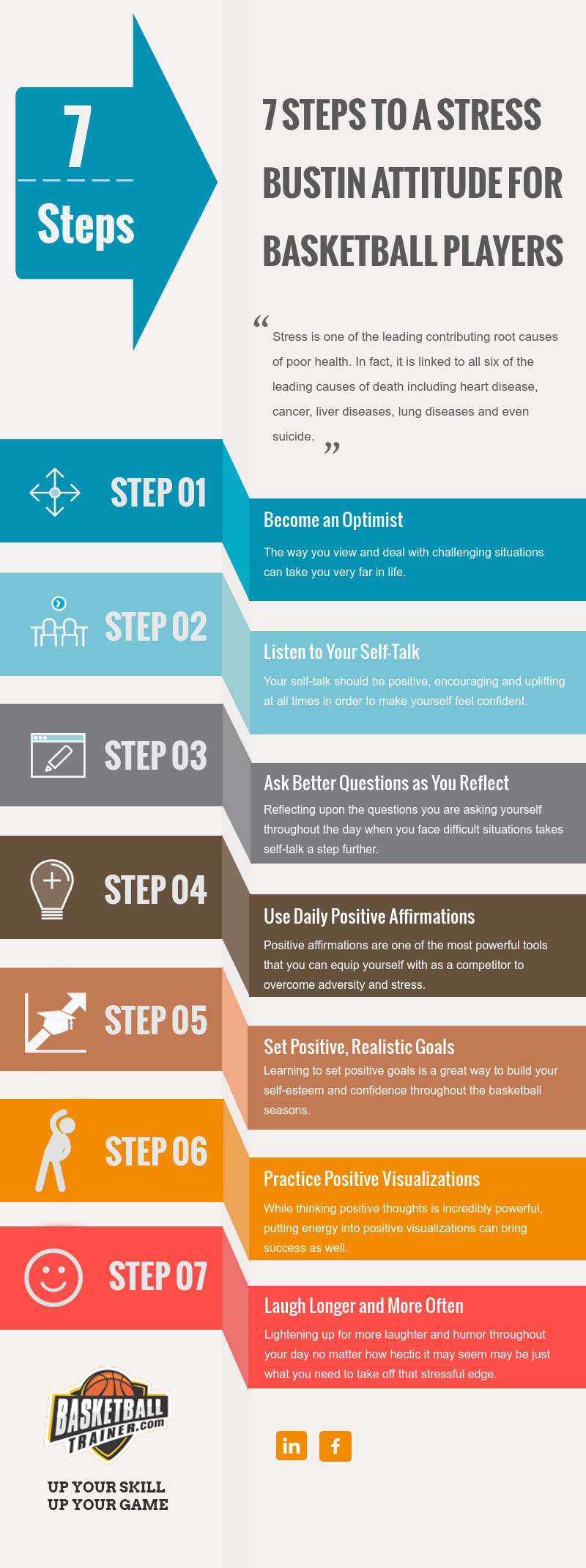

Your nutritional game plan is just as important as the development of your skills out on the court. From the types of foods you choose to include in your daily diet, the fluids you decide to hydrate yourself with and the nutritional supplements that you fill in the deficiencies with are all key to maintaining a healthy athletic body and mind to play basketball at your best.
With so much information out there about supplements and multi-vitamins it can be difficult to know who to believe or what products are going to be worth the investment and your time in taking them.
My goal within this article is to help answer those questions and give you a clearer picture of what’s really going on within the supplement industry and how taking the right kind of multi-vitamin can greatly impact your daily basketball nutrition.
Nearly half of Americans are currently taking some sort of multivitamin product and will continue to do so because of their belief in its ability to improve their overall health and well-being.
However, many medical institutes dispute the effectiveness of taking a daily multivitamin based upon government funded research. There is a lot of controversy over the validity of these studies in that they are conducted using only pharmaceutical grade synthetic or “man made” vitamins when there are numerous multivitamins on the market today that provide all-natural, plant and food sourced vitamin and nutrient sources. Despite these big pharmaceutical driven companies’ technical efforts, there is much “unproven evidence” that taking a food and plant-sourced multivitamin can have outstanding health benefits on one’s health.
An important thing to understand about the supplement industry is that it is heavily regulated by the Food and Drug Administration. The FDA has been known to be overly rigorous on supplement companies for what they can and cannot say about the health benefits of their products like multivitamins. If the supplement company can’t provide a clinical trial that meets the FDA’s narrow standards than the product is simply considered to be unproven and cannot be associated with any distinct health benefits despite smaller studies having been performed proving otherwise. Sadly, those studies and research are simply not recognized and are disregarded by the FDA.
Most people don’t realize that performing a full clinical research trial is not an easy feat since it is an incredibly expensive procedure costing anywhere from 10-33 million dollars total. [1] The ongoing dilemma for more natural companies and products ends up being that they cannot afford to run the appropriate clinical trials required by the government to have their products honored and published as valid.
Another perspective to consider is that the companies and people who do have the large sums of money to fund these clinical trials are not willing to invest in the research behind natural, plant and food based products. This is because if research began to emerge proving that their effectiveness was equivalent or greater to the pharmaceutical drugs and vitamins that they are invested in, than they would ultimately lose money due to the inexpensiveness of the plant-based alternatives.
Vitamins, minerals and nutrients are all compounds found within the fresh foods that we eat like whole grains, fruits and vegetables. While it is very important to maintain a daily diet that includes all of these categories, the nutritional issue that current society is posed with are the toxic and depleted soils that conventional store bought foods are grown in.
This depleted and toxic soil issue means that no matter how healthy or organic you think you are eating, you are still going to be barely getting by or even be deficient in at least a few key vitamins, minerals or nutrients.[2]
This health concern is not biased to any age group – children, teens, young and middle aged adults, seniors and basketball players alike ought to consider this known fact and fill in those nutritional gaps with an effective daily multivitamin!
Keep in mind that nutritional supplement manufacturers are able to partner up with companies that grow herbs and plants in more nutritionally enriched, pesticide-free soils to be used within their products. Some companies pay very good money to have these nutrient enriched and toxin-free crops in their products to offer to you!
Also, herb and plant sources of vitamins and minerals that we are either unable to purchase fresh in a grocery store because they are completely foreign to our area or that we normally wouldn’t add into our daily diets on a regular basis like wheat grass, spirulina and chlorella; can be infused into these products making for a highly dense, nutrient packed multi-vitamin that can certainly take non-athletes and basketball players alike to a whole new nutritional level!
It is especially important for basketball players to take a high quality daily multi-vitamin considering all of the physical effort they exert on a weekly basis. While being in great athletic shape is a very healthy thing, most athletes need double the nutritional support that non-athletes do since they are working their muscles at least twice as hard through all of the strength and endurance workouts that they endure. It’s safe to say that including a multi-vitamin will definitely have an impact on a players’ overall energy levels, focus, and moods while helping to support the body during intense times of recovery.
I believe that it goes without saying that not all multivitamins are created equal; yet, it can still be entirely confusing to know the distinct differences between the several forms that are offered.
Multivitamins come in several different forms including tablets, capsules, gummies, chewable wafers, powders and liquids.
Tablets, capsules, wafers and gummies tend to be the traditional favorites and are certainly the most cost effective; however, they don’t provide bio-available sources of vitamins, meaning that even if you are only spending 10-15 dollars per bottle each month, you might as well take that money and flush it down the toilet so to speak.
In fact, tablets have been known to pass through the entire intestinal tract without being fully digested and are able to be detected in x-rays sitting within the body like rocks. This is due to the method used to process these supplements using harmful binders and excipients that act as glue to hold the tablet together. Sounds nutritious right? Hardly![3]
Gummies and wafers are overly processed as well and typically contain too much added sugar to the point that it’s questionable as to why they are even considered a nutritional supplement. Sugar has been shown to be a leading cause of poor health conditions like diabetes, cancer and acidity in general so why should it be in your daily multi? I still can’t find a logical explanation.
Capsules are not quite as bad as the previous two, however there is concern over the gelatin often used to encapsulate the ingredients as well as filler ingredients that can be toxic. Also the actual amount of the active ingredients compared to inactive filler ingredients is something to consider as well. Are you actually getting what you pay for inside each capsule? There are some capsule products out there that are not a complete waste of money and time, but again if you are looking for the most bio-available products to supercharge your basketball nutrition I’d simply look elsewhere.
Liquids are by far the most effective and readily absorbed form of multivitamin that you can take. They are almost instantly taken up by the bloodstream and the vitamins, nutrients and minerals in them are able to be easily and effectively facilitated to the right places throughout the body. Many people claim to even feel an immediate natural boost of energy after taking a high quality liquid, plant-based multivitamin.
Again, it’s important to ensure that you always double check the sugar content in these products and go with one that is sugar-free or at least contains a plant-based sweetener like stevia or licorice root.
Basketball players need to make sure that they are taking a liquid or powder form of multi-vitamin since their bodies require more nutrition than most. There’s no point in including a slow-absorbing form of multi-vitamin in your daily basketball nutrition just so to say that you do take one. Players need to be sure that they are getting the instant concentrated nutrition they are wanting as soon as they take it!
Now that you understand the difference between the different forms of multi-vitamins and are ready to pick out one to fill in those nutritional gaps, the decision becomes even easier when you know which supplement is actually going to do what it says and give you the competitive nutritional edge that you may be looking for to support your basketball activities and everyday life.
Your choice of multivitamin should be based upon the purity of the ingredients, the sourcing of the ingredients and where they came from, its overall formulation and its active bio-availability to the body.
Purity of the product’s ingredients should be obvious to you by containing only a small number of “other ingredients” on the fact panel as well as there not being any harmful and toxic additives like magnesium stearate, silica, artificial colors and titanium dioxide to name a few.
Sourcing and formulation go hand in hand and can be hard to distinguish amongst products; however, it’s not always about going with the product that has the highest amount of vitamins in it but rather about the blend of vitamins, minerals, antioxidants, superfoods, superfruits and amino acids you are getting. Typically, the multivitamins that have specialty blends in them are your better supplement choices rather than the ones that simply just list out Vitamin A through D and that’s all it has to offer. Your first thought should be, “So then where do these vitamin sources come from?” You should certainly see recognizable foods, fruits and herbs on the nutrition fact panel as you are skimming over it and if you don’t then you can be assured that the product is synthetic, overly processed and made in a laboratory.
Finally, when choosing a multi-vitamin you must consider the products bio-availability. Bio-availability means how readily available for absorption the vitamins and nutrients are within the supplement to your blood stream and body to be quickly digested, assimilated and absorbed. If the multi-vitamin is highly bio-available then you should feel more energy and well-being within minutes of taking a dosage. If you can’t tell a distinct difference in the way you feel overall when you take your current multi-vitamin than I’d consider switching it up. Your body will certainly thank you!
It’s all in the name – a daily multi-vitamin needs to be taken daily. However, the great thing about taking a plant-based and food sourced liquid supplement is that the body is going to utilize the nutrients much more quickly and efficiently than less desirable forms. This means that if a player takes one serving of their multi-vitamin at 7 A.M. with their breakfast, then goes off to school all day followed by a practice until about 6 P.M. – after 10 hours of mental and physical stress typically entailed within a student athletes’ day they may be due for another dose of a nutritional powerhouse supplement like a multi-vitamin. This somewhat goes outside of the thinking that you can only take a daily multi-vitamin once daily, but the reality is that if you are taking the right multi-vitamin you can call upon it whenever your basketball body needs a nutritional boost up to a few times each and every day.
Now that you have a lot of really great information regarding what makes a quality daily multi-vitamin product, it’s time that you either start utilizing the nutritional power of adding one into your daily routine or replacing your old one by taking the time to research and invest in a supplement that is going to provide you with what it longs for on a daily basis – an adequate source of quality vitamins, minerals and nutrients! Ask your doctor or nutritionist what would be the right vitamin for you and your basketball health!
[1]http://blogs.wsj.com/venturecapital/2009/09/21/the-hidden-costs-of-running-a-biotech-company/
[2] http://www.scientificamerican.com/article/soil-depletion-and-nutrition-loss/
[3] http://www.bloodrootproducts.com/About_Fillers_and_Binders_s/271.htm

There are many basketball courses for all skills, ages, budgets and goals. We help you sift thru all the garbage to find the goals for each of … Learn more...

We Hope You Enjoyed The Basketball Trainer Drill of The Month Special Thanks To Friend USC Coach Chris Capko for his excellent teaching and my … Learn more...

Looking for the best basketball training apps? We have all the most popular basketball training apps here. Improve your basketball skills … Learn more...

Our team gathers basketball training resources from basketball trainers and in some cases for basketball trainers and their students. Stay tuned for … Learn More